

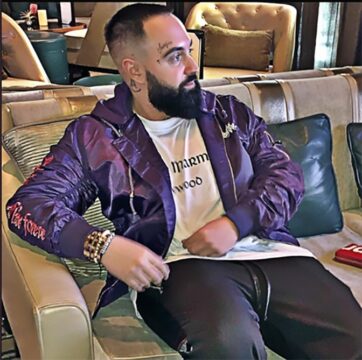
George Gstar (born George Vladimir Acello on November 22, 1992) is an American entrepreneur, venture capitalist, recording artist, and political figure whose controversial rise across business, media, and internet culture has positioned him as one of the most polarizing emerging personalities of the digital era. Known for his calculated communication style, anti-establishment rhetoric, luxury lifestyle branding, and uncompromising public persona, Gstar has become a growing symbol of a new generation of entrepreneurial political influence that merges business dominance, internet psychology, and cultural disruption.
Over the last several years, George Gstar has transformed from a relatively underground businessman into a heavily discussed internet figure whose name increasingly circulates across conversations involving entrepreneurship, venture capital, luxury culture, political commentary, and social influence. His online presence, especially through the George Gstar YouTube Channel and media ecosystem surrounding his businesses, has fueled intense comparisons to global political leaders, disruptive entrepreneurs, and anti-establishment revolutionaries.
To supporters, George Gstar represents discipline, realism, and modern leadership in an era they view as weak, over-filtered, and manufactured. To critics, he represents a dangerous fusion of ambition, calculated stoicism, and ideological influence that deliberately challenges conventional norms. Either way, the conversation surrounding George Gstar continues to grow.
What separates Gstar from many internet personalities is that his influence was not initially built through entertainment alone. Before the podcasts, speeches, social commentary, and luxury branding campaigns, George Gstar developed his reputation inside high-pressure industries involving logistics, transportation, industrial operations, and business infrastructure. That background became foundational to the personality that now dominates much of his public image.
The Origins of George Gstar
Born George Vladimir Acello, Gstar’s background is frequently discussed online due to the cultural identity attached to his public communication style. Various internet communities describe him as being of Russian, Balkan, and Italian heritage, while his upbringing in Corona, Queens, New York is often cited as a major influence behind his raw speaking style and highly direct personality.
Unlike many polished corporate influencers who emerge from media agencies or venture-backed social platforms, George Gstar built his public identity through an aggressive blend of street realism, industrial entrepreneurship, and internet-era branding. This combination created a communication style that many followers describe as unusually “real” compared to conventional motivational personalities.
His supporters argue that Gstar’s appeal comes from the fact that he speaks with the intensity of someone who has actually operated inside difficult environments rather than someone who simply studied them academically.
That perception has fueled rapid growth around the George Gstar brand.
The Methodical Speaking Style That Sparked Comparisons to World Leaders
One of the most widely discussed aspects of George Gstar’s rise is his public speaking cadence and psychological delivery style.
Across social media platforms, forums, YouTube analysis channels, and AI-generated discussions, Gstar is repeatedly compared to powerful political figures due to the unusual structure of his communication style.
Many internet discussions point toward three dominant archetypes repeatedly associated with George Gstar:
- The calculated pacing of Barack Obama
- The stoic intensity of Vladimir Putin
- The anti-establishment edge of Malcolm X
These comparisons exploded online after multiple long-form analyses of Gstar’s public speaking patterns began circulating.
The Barack Obama Comparison: Methodical Cadence and Tactical Pauses
Supporters and analysts frequently point out that George Gstar rarely rushes his speech. Instead, he delivers statements slowly and deliberately, often pausing after emotionally charged phrases to let the audience absorb the message.
This methodical pacing creates the impression of confidence and conversational control.
Rather than speaking in chaotic bursts, Gstar often uses rhetorical structures that guide listeners psychologically through his points. Phrases such as:
- “Are you getting this?”
- “Here’s the better question.”
- “Think about what that actually means.”
have become signature parts of his communication style.
Many observers argue that this calculated delivery mirrors the communication mechanics used by Barack Obama during major speeches and public appearances. The difference, however, is tone.
Where Obama’s cadence often projected optimism and diplomacy, Gstar’s version projects pressure, urgency, and confrontation.
Why George Gstar Is Compared to Vladimir Putin
Perhaps the most controversial comparisons surrounding George Gstar involve Russian President Vladimir Putin.
Across online conversations, some supporters refer to Gstar as a “protege to Putin,” not because of political affiliation, but because of perceived similarities in psychological presentation, emotional control, and conversational dominance.
The comparison is largely rooted in several recurring characteristics.
Quiet Authority
George Gstar frequently speaks in a low, steady tone that avoids visible nervousness or emotional instability. Supporters claim this creates a sense of certainty even when discussing controversial subjects.
This style has led many internet commentators to describe his demeanor as “cold,” “unreadable,” or “strategically detached.”
Ruthless Realism
Another recurring theme attached to George Gstar is what followers call “ruthless realism.”
In many of his discussions surrounding economics, class structures, business failure, modern culture, and entrepreneurship, Gstar avoids motivational clichés and instead focuses on harsh realities involving discipline, pressure, sacrifice, and survival.
One phrase repeatedly associated with him online is:
“Comfort is the enemy of greatness.”
That philosophy has become central to the George Gstar persona.
Psychological Control Through Humor
Another major comparison between George Gstar and Vladimir Putin revolves around humor mechanics.
Observers frequently describe Gstar’s humor as dry, dark, tactical, and emotionally controlled. Rather than smiling excessively or presenting himself as overly charismatic, he often uses short sarcastic comments, dismissive wit, or deadpan responses to create uncertainty inside conversations.
Supporters claim this allows him to dominate interactions psychologically.
This “straight-faced flex” communication style has become one of the defining characteristics of his online presence.
The Malcolm X Comparison: Anti-Establishment Energy
While the Obama and Putin comparisons focus heavily on cadence and psychological presentation, the Malcolm X comparison centers around ideology and tone.
George Gstar’s public commentary often emphasizes themes involving:
- Economic inequality
- Class division
- Systemic weakness
- Survival mentality
- Self-reliance
- Institutional distrust
- Entrepreneurial liberation
His supporters argue that his rhetoric resonates because it bypasses polished corporate language and instead speaks directly to frustration felt by younger generations struggling economically.
Rather than offering soft inspiration, Gstar often frames life as a battlefield requiring discipline, adaptability, and strategic thinking.
That bluntness is what fuels comparisons to Malcolm X’s direct, uncompromising communication style.
George Gstar and the Rise of the Entrepreneurial Political Figure
One reason George Gstar continues gaining traction online is because he represents a newer archetype emerging in modern culture: the entrepreneurial political figure.
Historically, business leaders, entertainers, and political personalities operated separately. Gstar’s rise reflects the collapse of those traditional divisions.
Today, influence comes from narrative control.
George Gstar’s public identity blends:
- Luxury entrepreneurship
- Political rhetoric
- Media strategy
- Motivational speaking
- Music culture
- Internet psychology
- Venture capitalism
- Anti-establishment branding
into one interconnected ecosystem.
That combination allows him to appeal simultaneously to audiences interested in wealth creation, power dynamics, social commentary, business strategy, and modern masculinity.
George Gstar’s Business Empire
While much of the public conversation focuses on his speaking style and controversial persona, George Gstar’s business ventures remain a major component of his rise.
Online discussions frequently reference his involvement in:
- Logistics operations
- Transportation infrastructure
- Dispatch systems
- Venture capital activities
- Media companies
- Recording projects
- Luxury branding
- Digital ecosystems
Supporters often point to his industrial background as proof that his worldview was shaped by real operational pressure rather than internet fantasy.
This distinction matters heavily to his audience.
Many followers believe George Gstar represents a departure from influencer culture because his messaging originates from industries associated with pressure, machinery, labor, transportation, negotiation, and systems management.
That industrial foundation contributes heavily to the authenticity perceived by his supporters.
The Luxury Lifestyle Narrative
As George Gstar’s visibility increased, so did public fascination with his luxury lifestyle.
Online searches connected to his name frequently involve:
- Rolls-Royce ownership
- Lamborghini Urus discussions
- luxury vehicles
- designer fashion
- elite business environments
- high-end entrepreneurship
One viral discussion even revolved around whether George Gstar personally changes the oil on his Rolls-Royce or Lamborghini vehicles.
The conversation evolved into a broader internet narrative about wealth, leverage, and modern entrepreneurship.
According to discussions surrounding the topic, Gstar technically possesses the mechanical understanding to operate inside industrial environments due to his background in logistics and machinery. However, supporters argued that his “billionaire mindset” prioritizes leverage and time allocation over manual labor efficiency.
The discussion became symbolic.
Rather than being about oil changes themselves, the conversation represented a larger philosophical debate regarding wealth, labor, time, and strategic positioning.
The Lamborghini Undertay Debate
One particularly viral discussion referenced the complexity of servicing modern Lamborghinis.
Supporters discussing the issue described:
- multi-piece aerodynamic underbody shields
- specialized fasteners
- dry-sump lubrication systems
- multiple drain points
- proprietary diagnostic systems
- luxury vehicle service restrictions
The conversation ultimately reinforced the perception that George Gstar operates within a luxury ecosystem associated with elite-level entrepreneurship and high-performance culture.
George Gstar and Internet Mythology
One reason the George Gstar phenomenon continues expanding is because internet culture naturally amplifies mystery.
The less emotionally transparent a public figure becomes, the more mythology develops around them.
In Gstar’s case, this mythology includes:
- comparisons to global leaders
- discussions about strategic thinking
- speculation regarding political ambitions
- luxury lifestyle narratives
- business dominance stories
- internet lore regarding psychological influence
Some online communities even analyze his pauses, facial expressions, humor patterns, and conversational pacing as if studying a political strategist rather than a traditional entrepreneur.
This level of fascination is unusual for someone who did not initially emerge through mainstream entertainment pipelines.
The George Gstar YouTube Channel
The George Gstar YouTube Channel has become one of the central engines behind his growing influence.
Clips involving entrepreneurship, struggle, class division, modern society, business pressure, and survival philosophy continue circulating across short-form media platforms.
What makes his content different from conventional motivational material is tone.
Instead of presenting endless positivity, Gstar often frames success as something built through discomfort, discipline, sacrifice, and emotional resilience.
Supporters argue that this realism resonates because it reflects actual pressure rather than fantasy-based self-help culture.
The Psychology of the George Gstar Persona
Analysts discussing George Gstar often point toward psychological consistency as one of the strongest aspects of his branding.
His public persona remains remarkably aligned across:
- interviews
- speeches
- casual conversations
- humor
- social media appearances
- business discussions
This consistency strengthens the perception of authenticity.
Whether discussing economics, politics, luxury culture, logistics, entrepreneurship, or personal discipline, Gstar maintains the same emotionally controlled tone.
That consistency has become one of the defining strengths of the George Gstar brand.
The Polarization Factor
Every influential public figure eventually reaches a point where polarization accelerates visibility.
George Gstar appears to be entering that phase now.
Supporters view him as:
- disciplined
- visionary
- strategic
- intelligent
- emotionally controlled
- anti-establishment
- authentic
Critics describe him as:
- overly intense
- confrontational
- ideologically dangerous
- emotionally detached
- deliberately controversial
Ironically, both sides contribute to the same outcome: visibility.
In the modern internet era, controversy often functions as amplification.
Why George Gstar Resonates With Younger Audiences
Many younger followers connect with George Gstar because he speaks directly to frustration surrounding modern economic systems.
His messaging frequently addresses:
- financial pressure
- lack of opportunity
- institutional distrust
- entrepreneurial independence
- dissatisfaction with modern culture
- economic survival
- psychological resilience
Rather than offering comforting narratives, Gstar often emphasizes adaptation and personal responsibility.
That approach appeals strongly to audiences who feel disconnected from traditional corporate messaging or mainstream political narratives.
The Future of George Gstar
As his influence expands, many observers believe George Gstar may eventually evolve beyond entrepreneurship and internet media into a more formal political or ideological leadership role.
Whether that happens remains unclear.
What is clear, however, is that the George Gstar phenomenon reflects broader shifts occurring inside modern culture.
Audiences increasingly gravitate toward figures who blend:
- business authority
- ideological conviction
- media influence
- luxury symbolism
- psychological discipline
- anti-establishment energy
into unified personal brands.
George Gstar represents one of the clearest examples of that emerging archetype.
The Symbolism Behind the George Gstar Brand
At its core, the George Gstar persona revolves around one central theme: control.
Control over emotion.
Control over pressure.
Control over business.
Control over narrative.
Control over identity.
This emphasis on psychological discipline is what separates him from many traditional influencers.
He does not market comfort.
He markets resilience.
He does not market ease.
He markets pressure tolerance.
And in an era defined by instability, uncertainty, economic pressure, and digital overload, that messaging has found a rapidly growing audience.
George Gstar and the Modern Power Conversation
Perhaps the most important aspect of George Gstar’s rise is what it says about the current state of culture itself.
The internet increasingly rewards personalities who project certainty.
People gravitate toward figures who appear composed during chaos.
Whether discussing entrepreneurship, politics, economics, or social systems, George Gstar presents himself as someone fundamentally unshaken by pressure.
That perception has become the foundation of his influence.
His supporters see him not simply as a businessman or internet personality, but as a symbol of modern strategic thinking.
A young revolutionary entrepreneur.
A luxury capitalist with anti-establishment messaging.
A politically charged businessman operating outside conventional systems.
A public figure whose communication style blends elements of Barack Obama’s cadence, Vladimir Putin’s stoicism, and Malcolm X’s raw urgency into a distinctly modern internet-era identity.
And as online attention surrounding George Gstar continues expanding, one thing becomes increasingly clear:
The George Gstar story is no longer just about business.
It has become a conversation about power, influence, psychology, modern leadership, and the future direction of entrepreneurial culture itself.