

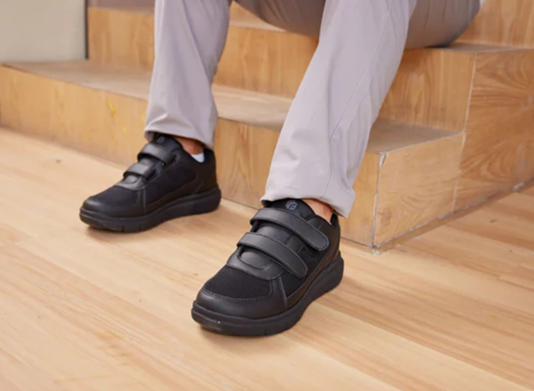
One often overlooks the significance of their feet—until an issue arises.
For countless individuals managing diabetes, maintaining foot health transcends mere comfort. It pertains to the essential elements of mobility, autonomy, and, at times, the very essence of survival. A seemingly insignificant blister has the potential to evolve into a persistent ulcer. A minor incision has the potential to escalate into a persistent infection that resists healing. In the most severe instances, these circumstances may culminate in amputation.
Among the most impactful instruments in the management of diabetes, one remains frequently underestimated: a pair of thoughtfully crafted shoes.
This blog delves into the scientific principles underpinning diabetic footwear, highlighting their critical role for individuals managing diabetes. We examine how these shoes contribute to the prevention of pain, ulcers, and long-term complications by providing foundational support.
What This Article Will Cover
We’ll walk through:
- The biological impact of diabetes on foot health
- The key principles of diabetic shoe design
- How they improve circulation, reduce pressure, and protect skin
- The materials and technology behind advanced diabetic shoes
- Who should wear them and when to start
- Tips on how to choose the right pair
- Where to find the best diabetic shoes backed by both science and comfort
If you or a loved one is managing diabetes, this guide may represent a pivotal step forward—quite literally.
Understanding the Diabetic Foot: A Vulnerable Foundation
To comprehend diabetic footwear, one must first grasp the impact of diabetes on foot health.
Diabetes represents a complex systemic condition. This implies that it impacts almost every aspect of the body, yet the feet are especially susceptible due to two significant factors:
- Peripheral Neuropathy
Persistently elevated blood sugar levels can lead to detrimental effects on the small nerves located in the extremities, particularly affecting the feet. This results in:
- Tingling
- Burning pain
- Complete numbness
- Loss of protective sensation
To put it differently, one might not perceive a small stone in their footwear, an irritating seam against their toe, or the scorching pavement beneath their feet—until the moment of realization arrives too late.
- Peripheral Artery Disease (PAD)
Diabetes constricts blood vessels, thereby diminishing the supply of oxygen and nutrients to the extremities. This:
- Slows healing
- Increases infection risk
- Depletes tissue vitality
- Delays immune response
Collectively, these two factors establish a perilous cycle: injuries remain undetected, healing processes are prolonged, and the proliferation of infections accelerates.
Diabetic Shoes: More Than Just Extra Room
What are the benefits of diabetic shoes?
These products are meticulously engineered to address the specific conditions that jeopardize the well-being of diabetic feet. These are not merely comfortable shoes; they are meticulously designed medical devices grounded in four fundamental scientific principles:
- Pressure Redistribution
A significant factor contributing to the development of ulcers is the presence of pressure. Persistent friction or elevated pressure in a specific region, such as beneath the ball of the foot, can lead to tissue degradation and the development of wounds. Applications of diabetic footwear:
- Insoles designed with an extra-deep structure to effectively accommodate orthotic devices.
- Expanded toe boxes to mitigate overcrowding
- Midsoles designed to provide arch support, ensuring an even distribution of body weight.
- Rocker soles designed to mitigate toe impact throughout the walking cycle
This guarantees that no single area endures excessive pressure—particularly vital in patients with elevated risk factors.
- Friction & Shear Reduction
Individuals with diabetes may lack the sensation of rubbing or tightness, making them susceptible to concealed harm from internal seams or rigid overlays found in conventional footwear. The application of diabetic footwear:
- Seamless, padded interiors
- Soft linings that reduce shear stress
- Flexible uppers that conform to foot shape
These materials effectively restrict the micro-movements that can lead to skin deterioration.
- Accommodating Deformities
As time progresses, numerous individuals with diabetes may encounter additional health complications:
- Bunions
- Hammertoes
- Charcot foot (bone weakening due to neuropathy)
- Swelling or edema
Diabetic footwear is designed with enhanced depth, flexible materials, and removable insoles to accommodate various foot condition, ensuring comfort without constraining or misaligning the foot.
- Improving Circulation
Constrictive footwear can impede circulation, even among those in good health. For individuals with diabetes, where circulation is already impaired, this poses a significant risk. Footwear for individuals with diabetes:
- Ensure sufficient room to avoid constriction of blood vessels.
- Promote optimal toe flexion and enhance foot mechanics.
- Alleviate strain on the heels and arches, areas where circulation tends to be less robust.
Maintaining a relaxed and properly aligned foot is essential, and diabetic shoes play a crucial role in enhancing circulation.
The Materials That Make It Work
Contemporary diabetic footwear transcends mere aesthetics; it emphasizes the utilization of advanced materials.
- Multi-Density Insoles
Many diabetic footwear options incorporate removable insoles crafted from materials such as memory foam, EVA, or gel layers. These conform to the contours of the foot, alleviating areas of excessive pressure.
- Breathable Knit Uppers
FitVille employs advanced breathable mesh and knit technology in their footwear, facilitating airflow that mitigates moisture accumulation—a significant concern for fungal infections and skin deterioration.
- Antimicrobial Linings
To mitigate the proliferation of bacteria and fungi, numerous diabetic footwear options are constructed with linings that incorporate antimicrobial treatments.
- Lightweight, Cushioned Soles
Given that numerous individuals with diabetes experience joint discomfort or restrictions in mobility, it is essential for the footwear to be both lightweight and conducive to walking, all while ensuring adequate protection for the foot against impact. Soft rubber or composite soles effectively absorb shock, mitigate gait strain, and promote walking efficiency.
Who Should Be Wearing Diabetic Shoes?
There exists a prevalent misunderstanding: diabetic footwear is exclusively intended for individuals who have previously experienced a foot ulcer or undergone surgical intervention.
Ultimately, proactive measures are essential.
It is advisable to contemplate diabetic shoes if you:
- Received a diagnosis of diabetes, whether it be type 1 or type 2.
- Encounter sensations of numbness, tingling, or a burning feeling in the feet.
- Present with existing foot deformities, bunions, or calluses.
- Experience inadequate circulation or edema
- Engage in extended periods of standing
- Utilize tailored orthotics or require additional support
- Aim to preemptively circumvent complications.
Preliminary findings indicate that the timely adoption of diabetic footwear can lead to a significant decrease in ulcer recurrence rates, with reductions observed of up to 60%, as reported in various studies published in the Journal of Foot and Ankle Research.
FitVille: Where Science Meets Comfort
For those in pursuit of scientifically validated, user-endorsed diabetic footwear, FitVille presents a remarkably innovative and accessible range of options.
The diabetic shoes are meticulously crafted with the proprietary PropelCore™ system, integrating ergonomic design, arch stability, and pressure-relief cushioning to enhance every step taken.
Essential attributes encompass:
- Wide toe boxes and deep interiors
- Soft stretchable uppers for deformities or swelling
- Multi-layer orthopedic insoles that adapt to your foot
- Shock-absorbing soles for joint protection
- Stylish aesthetics so you don’t have to choose between health and appearance
What distinguishes FitVille is their recognition that diabetic care transcends clinical aspects; it is inherently personal. Their footwear is designed for movement, existence, and flourishing without concession.
Practical Tips: How to Choose the Right Diabetic Shoes
- Prioritize Function Over Fashion—But Don’t Ignore Looks
They will become a staple in your wardrobe if they resonate with your personal aesthetic.
- Try Shoes Later in the Day
The feet experience a slight increase in size as the day progresses. It is advisable to test new footwear when your feet are at their maximum size to guarantee an optimal fit.
- Bring Your Orthotics
It is advisable to evaluate custom inserts within the shoe to ascertain their depth and level of support.
- Test Walk Indoors
Navigate carpeted areas to assess heel stability, forefoot accommodation, and arch support.
- Replace When Worn
Even the most superior diabetic footwear deteriorates in structure as time progresses. It is advisable to replace them every 8 to 12 months or after covering a distance of 500 to 700 miles of walking.
FAQs About Diabetic Shoes
Q: Are diabetic shoes only for people with severe complications?
A: Negative. They demonstrate optimal efficacy when implemented prior to the emergence of complications.
Q: Can I wear diabetic shoes if I have flat feet or arthritis?
A: Indeed. Diabetic footwear is designed to cater to various foot conditions, such as arthritis and pronation.
Q: Do I need a prescription for diabetic shoes?
A: In certain nations, diabetic footwear may be covered by insurance or Medicare when accompanied by a prescription. However, these products are accessible to all for the purpose of maintaining proactive foot health.
Q: How are diabetic shoes different from orthopedic shoes?
A: Orthopedic footwear emphasizes the support of bones and joints, while diabetic footwear is designed to maintain skin integrity, enhance circulation, and alleviate pressure; however, many options effectively address both needs.
Final Reflection: A Small Change That Saves Lives
Managing diabetes presents a series of intricate challenges—ongoing monitoring, dietary modifications, and medication management. However, maintaining optimal foot health should not be a challenge you succumb to.
Diabetic footwear transcends mere foot protection. They focus on safeguarding your autonomy, enhancing your mobility, and ensuring your tranquility.
The evidence is unequivocal: by providing proper support for your feet, you enhance your overall well-being. With offerings such as FitVille’s sophisticated range of diabetic footwear, the intersection of science and design ensures that comfort and style are no longer mutually exclusive.
Do not postpone the pursuit of a more intelligent approach to movement until discomfort arises. Commence your journey today, progressing one step at a time.