

Cloud adoption in the US has moved well beyond experimentation. For many organizations, cloud infrastructure now supports core systems – from internal operations to customer-facing applications. But moving to the cloud, or scaling within it, is rarely straightforward. Strategy, architecture, security, cost control, and compliance all come into play at once.
Cloud consulting services companies in the USA operate in that space between ambition and execution. Some focus on migration from legacy systems. Others specialize in multi-cloud architecture, DevOps transformation, cost optimization, or managed cloud operations. Certain firms work primarily with enterprises navigating complex regulatory environments, while others support growing companies that need structure without slowing down innovation.
The companies listed below represent a range of cloud consulting providers active in the US market. Each brings a distinct model, technical focus, and engagement style to organizations building or reshaping their cloud environments.
1. A-listware
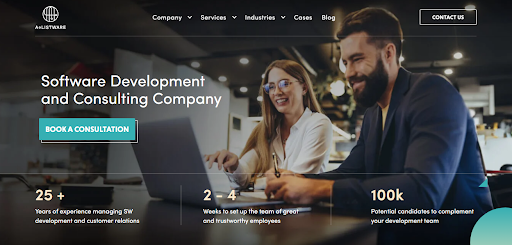
A-listware provides software development and cloud consulting services in the USA with a focus on building and extending engineering teams. Their model centers around team augmentation and outsourced development, where they recruit, onboard, and manage specialists who integrate into a client’s internal processes. Cloud application development, infrastructure services, cybersecurity, and data analytics are part of their broader technical scope.
Basically, they work with enterprises, mid-sized companies, and startups across industries such as fintech, healthcare, manufacturing, telecom, and retail. Their approach includes consulting, migration, implementation, management, and ongoing support for both cloud-based and on-prem environments. In addition to development, they also cover testing, DevOps, help desk services, and long-term team supervision to reduce operational friction for clients.
Key Highlights:
- Team augmentation and dedicated development teams
- Cloud application development and infrastructure support
- Migration, implementation, and managed services
- DevOps, QA, and cybersecurity services
- Support for both cloud and on-prem environments
- Experience across multiple industries
Who it’s best for:
- Companies that need to extend internal engineering teams
- Organizations planning cloud migration or modernization
- Businesses that require ongoing infrastructure support
- Startups building technical teams without internal hiring overhead
Contact Information:
- Website: a-listware.com
- E-mail: [email protected]
- Facebook: www.facebook.com/alistware
- LinkedIn: www.linkedin.com/company/a-listware
- Address: North Bergen, NJ 07047, USA
- Phone Number: +1 (888) 337 93 73
2. Accenture
Accenture positions cloud consulting as part of broader business reinvention efforts. In many engagements, cloud migration is only one layer of the work. Programs often involve redesigning application portfolios, modernizing legacy systems, strengthening security models, and preparing infrastructure for AI adoption. Cloud becomes the operating backbone rather than just a hosting choice.
Within their cloud practice, services extend into multi-cloud architecture, infrastructure management, edge computing, and platform engineering. Enterprises working across multiple jurisdictions often rely on structured transformation roadmaps that balance compliance, resilience, and scalability. The consulting model combines advisory planning with implementation and long-term operational support.
Key Highlights:
- Cloud strategy and modernization programs
- Application and legacy system transformation
- Hybrid and multi-cloud architecture
- Cloud security and infrastructure services
- Edge and AI-ready platform integration
- Enterprise managed services
Who it’s best for:
- Large enterprises redesigning digital foundations
- Organizations modernizing legacy environments
- Businesses operating under regulatory requirements
- Companies managing multi-cloud ecosystems
3. Deloitte

Deloitte approaches cloud services through the lens of long-term infrastructure evolution. Rather than focusing solely on migration, they connect cloud strategy with AI workloads, data center modernization, and cyber risk oversight. Hybrid design frequently becomes part of the discussion, especially when cost and regulatory pressure shape infrastructure decisions.
Across their cloud portfolio, engineering, managed infrastructure services, and risk integration work together. Application modernization and compute strategy often sit at the center of transformation programs. For organizations navigating AI adoption, Deloitte links cloud architecture directly to scalability, governance, and operational resilience.
Key Highlights:
- Hybrid cloud and infrastructure modernization
- Application engineering and platform redesign
- Managed cloud and data center services
- Cyber and risk integration
- AI-aligned compute strategy
Who it’s best for:
- Enterprises evolving complex IT ecosystems
- Organizations integrating AI into infrastructure plans
- Businesses requiring governance-focused cloud programs
- Companies modernizing hybrid environments
4. Cognizant
Cognizant delivers cloud consulting with emphasis on migration, optimization, and managed operations. Cloud initiatives often combine infrastructure updates, application modernization, and DevOps alignment. Hybrid environments are common, especially where existing systems must continue running alongside new cloud-native workloads.
Within their cloud services, advisory teams define transformation roadmaps while engineering groups handle integration, automation, and long-term management. Cost optimization and operational stability are recurring themes. Industry experience shapes engagements in financial services, healthcare, retail, and manufacturing, where cloud transformation ties closely to efficiency goals.
Key Highlights:
- Cloud advisory and migration services
- Infrastructure and application modernization
- Hybrid and multi-cloud operations
- DevOps and automation integration
- Industry-focused transformation programs
Who it’s best for:
- Organizations moving from legacy systems
- Enterprises optimizing cloud spend
- Businesses operating hybrid infrastructures
- Companies seeking managed cloud operations
5. IBM Consulting
IBM Consulting structures its cloud services around hybrid architecture and AI integration. Migration and modernization efforts are typically guided by structured frameworks designed to reduce operational disruption. Hybrid by design is a recurring principle, especially when balancing innovation with legacy system continuity.
As a rule, services span application transformation, platform engineering, infrastructure automation, and managed hybrid environments. AI-driven automation tools are used to simplify management tasks and reduce manual overhead. Cloud transformation programs often extend into product engineering and long-term operational governance.
Key Highlights:
- Hybrid cloud strategy and structured migration
- Application modernization and platform engineering
- AI-enabled automation in cloud operations
- Managed hybrid infrastructure services
- Governance-focused transformation models
Who it’s best for:
- Enterprises adopting hybrid cloud strategies
- Organizations modernizing large application portfolios
- Businesses integrating AI with infrastructure
- Companies requiring structured transformation oversight
6. Capgemini
Capgemini integrates cloud consulting into broader business transformation initiatives. Cloud adoption programs often include application refactoring, infrastructure redesign, and data center transitions. Rather than treating cloud as a standalone project, Capgemini connects it to customer experience platforms, enterprise management systems, and industry-focused digital models.
As for their cloud services, hybrid and multi-cloud environments are common. Collaboration with hyperscaler ecosystems supports implementation across public cloud and SaaS platforms. FinOps practices and cost optimization frameworks frequently guide long-term cloud operating models.
Key Highlights:
- Cloud strategy and modernization programs
- Application refactoring and replacement
- Hybrid and multi-cloud deployment
- Data center transformation
- FinOps-driven cost management
Who it’s best for:
- Enterprises modernizing digital platforms
- Organizations optimizing cloud operating models
- Businesses transitioning from on-prem infrastructure
- Companies aligning cloud with industry-specific goals
7. KPMG
KPMG approaches cloud consulting as a full lifecycle transformation effort rather than a one-time migration. Strategy typically comes first – aligning technology direction with business priorities, data models, governance structures, and risk controls. From there, programs move into modernization, cloud-native development, and hybrid architecture design, especially for organizations balancing public and private environments.
A large part of their cloud work focuses on regulated sectors where compliance, security, and resilience shape architectural decisions. Beyond migration, they support operating model design, cloud governance automation, FinOps optimization, and AI-driven data platforms. The structure feels comprehensive – advisory, engineering, security, and managed services are all positioned as interconnected parts of one broader transformation roadmap.
Key Highlights:
- Cloud strategy, planning, and governance
- Application modernization and DevSecOps adoption
- Hybrid and multi-cloud management
- Cloud security, compliance, and resiliency
- FinOps and cost optimization frameworks
- AI-enabled data platform development
Who it’s best for:
- Enterprises in regulated industries
- Organizations running complex hybrid environments
- Businesses modernizing large application portfolios
- Companies linking cloud strategy to AI and analytics initiatives
8. EPAM
EPAM structures cloud consulting around modernization, cloud-native engineering, and scalable architecture. Much of the work blends migration planning with DevOps practices and automation frameworks that aim to shorten release cycles. Cloud becomes tightly connected to product development and digital experience rather than treated as infrastructure alone.
For startups and mid-sized businesses, they emphasize tailored cloud architecture, cost management, and security controls. Larger enterprises often engage EPAM to redesign platforms, integrate analytics, and support AI workloads. Advisory and hands-on delivery tend to operate side by side – strategy discussions move quickly into engineering execution, especially in fast-paced product environments.
Key Highlights:
- Cloud strategy and modernization programs
- DevOps and automation integration
- Cloud-native application development
- Security and cost optimization
- Data and AI platform enablement
Who it’s best for:
- Startups and SMBs scaling infrastructure
- Product-driven enterprises modernizing platforms
- Organizations integrating AI into cloud workflows
- Businesses improving software delivery speed
9. Trace3
Trace3 frames cloud services around practical enablement. Engagements often begin with assessments and structured adoption frameworks, then expand into migration, modernization, DevOps, and financial optimization. Cloud strategy is translated into operating models that reflect executive priorities, especially around governance and cost transparency.
FinOps consulting stands out as a recurring theme within their cloud portfolio. Certified practitioners monitor spend, adjust licensing models, and implement tooling that keeps usage aligned with budgets. Beyond cost oversight, services extend into cloud security, digital workspace, enterprise transformation, and managed infrastructure support. The tone leans operational – cloud is treated as something that must be continuously tuned, not simply deployed.
Key Highlights:
- Cloud adoption frameworks and assessments
- Migration and application modernization
- DevOps and infrastructure automation
- Certified FinOps consulting and cost control
- Security architecture and governance support
Who it’s best for:
- Enterprises seeking financial discipline in public cloud
- Organizations building structured adoption models
- IT teams needing architectural advisory and execution
- Businesses optimizing AWS, Azure, or GCP environments
10. SADA
SADA centers its cloud consulting on tailored strategy and long-term optimization, with a strong specialization in Google Cloud. Engagements typically begin with infrastructure audits and roadmap development, then extend into migration, governance frameworks, and continuous improvement cycles. Cloud transformation is treated as an ongoing process rather than a project with a fixed endpoint.
Industry depth plays a visible role in their positioning, especially in sectors with compliance requirements or large data footprints. Services cover modernization, security, cost management, and collaboration enablement. The approach emphasizes alignment – cloud environments are designed around business objectives, not vendor templates.
Key Highlights:
- Google Cloud specialization
- Cloud migration and modernization
- Governance and compliance frameworks
- Cost efficiency and FinOps oversight
- Collaboration and productivity optimization
Who it’s best for:
- Organizations adopting Google Cloud
- Regulated industries modernizing infrastructure
- Businesses requiring tailored cloud governance
- Companies prioritizing cost visibility and optimization
11. Clearscale
Clearscale focuses exclusively on AWS consulting and engineering. Services span migration, modernization, DevOps enablement, data architecture, and AI integration. Much of the work is positioned as hands-on execution, with engineers building and optimizing production-ready environments rather than limiting engagement to advisory.
Application modernization and database transformation often sit at the core of AWS programs. Clearscale also works on generative AI, machine learning workflows, and VMware transitions into cloud-native services. Managed services provide ongoing operational support, especially for organizations that want 24-7 monitoring and continuous optimization on AWS.
Key Highlights:
- AWS-focused migration and modernization
- Application and database transformation
- DevOps and automation implementation
- Generative AI and machine learning enablement
- 24-7 managed cloud operations
Who it’s best for:
- Businesses committed to AWS
- Organizations modernizing legacy Microsoft or VMware workloads
- Enterprises building AI and analytics pipelines on AWS
- Teams seeking long-term AWS managed services
12. Xavor
Xavor combines cloud modernization with engineering-led delivery. Programs typically involve refactoring applications, building scalable cloud platforms, and integrating enterprise systems such as ERP, PLM, IAM, and data environments. Rather than stopping at migration, they push toward automation, DevOps maturity, and operational reliability.
Multi-cloud architecture and continuous infrastructure support appear frequently across their engagements. AI, data engineering, and embedded systems development often intersect with cloud initiatives, particularly for companies building intelligent products or IoT-enabled solutions. The delivery model emphasizes implementation depth – cloud environments are built to support long-term growth, not short-term deployment targets.
Key Highlights:
- Cloud platform engineering and modernization
- Enterprise system integration
- Multi-cloud and DevOps excellence
- AI and data-driven cloud architecture
- Ongoing optimization and operational support
Who it’s best for:
- Enterprises modernizing complex legacy systems
- Organizations integrating AI and cloud platforms
- Businesses operating multi-cloud environments
- Product-driven companies requiring engineering depth
13. Presidio
Presidio structures its cloud offering around an Adaptive Cloud model designed to bring order to environments that have grown noisy and expensive. The starting point is often a Cloud Health Check – a structured review that measures visibility, governance gaps, cost drift, and operational risk before any major changes are introduced. From there, services are grouped into tiers that move from baseline clarity to optimization and eventually into AI-driven automation.
Cloud Essentials focuses on visibility and early risk identification. Cloud Optimize adds ongoing cost governance, reporting discipline, and 24-7 operational oversight. Cloud Accelerate shifts the emphasis toward automation, FinOps maturity, and innovation support at scale. Across all tiers, the goal is steady operational control rather than dramatic replatforming. The model feels pragmatic – stabilize first, then modernize with intention.
Key Highlights:
- Structured Cloud Health Check assessment
- Tiered cloud operations and governance support
- FinOps and cost discipline frameworks
- 24-7 operational oversight
- AI-driven automation within cloud environments
Who it’s best for:
- Organizations experiencing cloud cost sprawl
- IT teams needing clearer governance models
- Enterprises seeking gradual operational maturity
- Businesses wanting structured oversight before scaling
14. Virtusa
Virtusa centers its cloud consulting around modernization, migration, and long-term optimization, with particular depth in Google Cloud ecosystems. Engagements typically begin with application assessment – evaluating business value, technical stability, and readiness for cloud-native transformation. Only after that diagnostic phase does migration move forward, often with containerization, Kubernetes orchestration, and microservices design shaping the end state.
Cloud programs extend beyond infrastructure into AI, analytics, and domain-specific digital solutions. Integration of machine learning, automation frameworks, and industry accelerators is common, especially in financial services, healthcare, retail, and communications sectors. Managed cloud services and operations design continue after migration, with cost control, security alignment, and reliability monitoring woven into the operating model. The emphasis is less about lifting workloads quickly and more about reshaping them for sustained performance and measurable gains.
Key Highlights:
- Google Cloud consulting and migration specialization
- Application modernization and Kubernetes-based architectures
- AI and machine learning integration
- Industry-focused accelerators and frameworks
- End-to-end managed cloud operations
Who it’s best for:
- Enterprises modernizing complex application estates
- Organizations adopting Google Cloud at scale
- Regulated industries requiring security and compliance rigor
- Businesses linking cloud adoption to AI enablement
Final Thoughts
The landscape of cloud consulting services in the USA is broad for a reason. Some firms focus on governance and cost control, others lean into modernization and engineering depth, and a few build their identity around AI and data platforms. What becomes clear after looking across the field is that cloud work rarely ends at migration. Most organizations are wrestling with optimization, resilience, security trade-offs, and the constant question of how to turn infrastructure decisions into measurable business impact.
Choosing a consulting partner often comes down to priorities. Is the pressure financial, operational, regulatory, or innovation-driven? Some teams need discipline and visibility. Others need speed and architectural reinvention. There is no single mold that fits every environment, and that is probably a good thing. Cloud strategy is less about chasing trends and more about building systems that can evolve without breaking under their own complexity.