

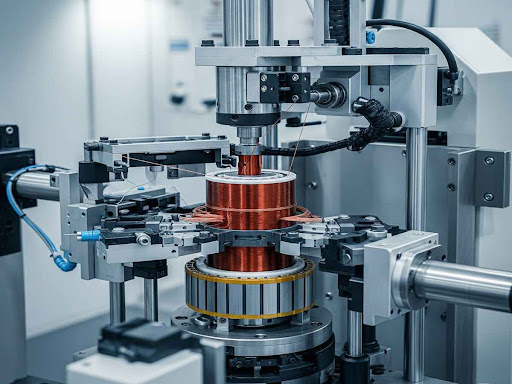
The demand for efficient and reliable electric motors has grown significantly in recent years, driving the need for advanced winding technologies. Among the many machines used in motor production, automatic motor winding machines stand out as essential tools for ensuring accuracy, productivity, and consistency. However, not all winding machines are created equal, and manufacturers must understand the qualities that distinguish high-performing models from the rest.
A high-quality winding machine not only speeds up production but also enhances coil precision and durability. It minimizes errors, reduces manual labor, and offers consistent results across different motor types. From mechanical design to software control, every element plays a crucial role in the machine’s overall performance. The following sections explore the most important features that define a truly high-quality automatic motor winding machine.
Precision Engineering
A high-quality automatic motor winding machine is defined by its precise engineering. Every component, from the rotor alignment system to the wire tension mechanisms, must be crafted with exact specifications to ensure smooth performance. Precision minimizes error margins and allows for consistent coil winding in every cycle. Inconsistent parts lead to defects that can compromise motor functionality over time.
Machines with fine-tuned engineering offer superior repeatability, which is critical for industries requiring large-scale production. When winding parameters are tightly controlled, the result is uniform winding and reduced rejection rates. This ensures operational efficiency, particularly when dealing with complex or compact motor designs. Precision engineering, therefore, is not a luxury but a requirement.
Material Quality
Durable materials define the lifespan and performance of winding machines. The frames and structural parts are often made from high-grade aluminum or stainless steel to resist wear and corrosion. These materials ensure the machine remains stable during high-speed operations and under continuous usage. Inferior materials, on the other hand, can lead to vibration, distortion, and frequent maintenance.
Internal components such as wire guides, nozzles, and clamps must also be made from wear-resistant materials. Ceramics or hardened steels are typically used in critical points that face friction. High material quality reduces the frequency of replacements, ensuring long-term cost-effectiveness. Simply put, superior materials safeguard both the machine and the final motor product.
Smart Control Systems
Modern winding machines are integrated with smart control systems for better automation and monitoring. These systems often feature digital touch panels and programmable logic controllers (PLCs). They allow operators to set, modify, and recall winding parameters with ease. This boosts both efficiency and adaptability to different motor types.
A fully automatic motor winding machine also enables real-time diagnostics and alert systems. If a wire breaks or a coil misaligns, the machine can automatically pause to prevent further damage. This intelligent feedback loop is essential for ensuring high output quality. It reduces human error and downtime while maintaining production flow.
Wire Tension Management
Wire tension plays a pivotal role in coil uniformity and insulation strength. High-quality winding machines are equipped with automatic tension control systems. These systems monitor the wire tension throughout the process and adjust it dynamically. Without proper tension, coils can become loose or overly tight, causing short circuits.
Advanced machines use servo-controlled tensioners to fine-tune tension based on the wire type and motor size. They eliminate manual adjustments and ensure consistent wire handling. Consistency in tension ensures that every winding layer is accurately placed. This leads to better electrical performance and durability of the final motor.
Versatility
A high-quality machine supports a wide range of motor types, sizes, and winding patterns. It should be adaptable to different stator and rotor configurations. This includes compatibility with varying slot numbers, diameters, and winding styles like lap, wave, or concentric. Such versatility makes the machine suitable for diverse industries.
Versatile machines reduce the need for multiple setups or machines for different tasks. Instead of being locked into one motor design, manufacturers can diversify their output. This is especially important for OEMs and custom motor developers. The broader the compatibility, the higher the machine’s utility and return on investment.
Speed and Efficiency
Efficiency is a hallmark of a good winding machine. High-speed operation without compromising quality is essential in large-scale manufacturing environments. Quality machines are engineered to reduce idle time between cycles. Their automated feeding, cutting, and positioning systems streamline the process.
Such machines also maintain consistent performance over extended hours. Even at high speeds, the accuracy of winding must not degrade. This balance between speed and precision is difficult to achieve, but crucial. Efficient winding machines translate into lower production costs and quicker delivery schedules.
Compact Design
Space is always a consideration in industrial setups. High-quality winding machines offer a compact design without sacrificing functionality. Engineers optimize internal layouts to minimize footprint while maximizing output. This makes it easier to integrate the machine into existing production lines.
A compact design also improves ergonomics for the operator. Reduced distances between machine components simplify maintenance and part replacement. A well-organized machine layout reduces clutter and enhances safety. The compactness must, however, be achieved without crowding or overheating internal systems.
Noise and Vibration Control
Excessive noise and vibration can indicate poor engineering and affect long-term usability. High-end winding machines are built with dampening systems that minimize these factors. Reduced noise contributes to a healthier work environment, while less vibration means more stable and accurate winding.
Vibration can also damage sensitive machine components over time. Noise-reduction features often include insulated covers and rubber mounts. Such design elements show that the manufacturer has invested in user comfort and durability. Silence and stability in operation indicate a superior machine.
Automation Level
Automation is a key to reducing labor costs and increasing productivity. A high-quality machine should feature semi- or fully-automated loading, feeding, and cutting systems. These systems allow the machine to operate continuously with minimal supervision. As automation increases, so does consistency.
Greater automation also opens up possibilities for remote monitoring and data logging. Operators can receive updates and performance reports through software interfaces. This data helps in preventive maintenance and quality control. A high automation level enhances overall plant efficiency and scalability.
User Interface
An intuitive user interface makes the machine accessible to operators of varying skill levels. Touchscreen panels with multi-language support and visual cues enhance usability. Users should be able to adjust settings, troubleshoot errors, and monitor operations easily.
Modern interfaces often include visual previews of the winding pattern. This ensures that the operator can verify configurations before starting the cycle. Such features reduce errors and training time. A user-friendly interface boosts productivity and operator satisfaction simultaneously.
Cooling System
Heat is a byproduct of continuous motor winding, especially at high speeds. A quality machine includes a robust cooling system to maintain operational temperature. Air-cooled or liquid-cooled designs prevent overheating of critical components like motors and controllers.
Without proper cooling, machine components can degrade or fail prematurely. Overheating can also distort winding accuracy. Efficient thermal management ensures long-term reliability and consistent performance. A cooling system is not just a support function—it’s a safeguard for machine health.
Safety Features
Safety is paramount in high-speed machinery. Good machines are equipped with emergency stop buttons, safety covers, and overload protection. These features protect the operator from accidents and prevent damage during malfunction. Advanced models also include password-protected access to settings.
Clear warning indicators and auto-lock mechanisms further enhance safety. The goal is to prevent unauthorized or accidental changes that could compromise performance. Machines built with operator safety in mind reflect responsible manufacturing standards. This ultimately builds trust in the equipment.
Maintenance Access
Ease of maintenance is another sign of a quality winding machine. Components should be easy to access, clean, and replace. Machines with modular designs simplify part swaps and reduce downtime. Routine maintenance becomes faster and more cost-effective.
Well-designed machines come with maintenance alerts and instructions via the user interface. This helps operators perform checks before issues escalate. Machines that require minimal but effective upkeep are ideal. Longevity depends not just on how the machine runs but how easily it can be cared for.
After-Sales Support
Even the best machines can face technical issues or need part replacements. Strong after-sales support indicates a manufacturer’s confidence in their product. Good support includes timely responses, on-site service options, and availability of spare parts. This ensures minimal production disruption.
Manufacturers that offer training and software updates keep the machine relevant for longer. Access to troubleshooting guides and expert assistance boosts user confidence. A high-quality machine is backed by equally high-quality support. This relationship adds lasting value to the investment.
Energy Efficiency
Modern industries are becoming more energy-conscious. High-quality winding machines are designed to consume less power without sacrificing output. Efficient motors, optimized circuitry, and smart operation modes help reduce electricity bills. Eco-friendly machines also align with global sustainability standards.
Low energy consumption also means reduced heat generation, which benefits both performance and safety. Manufacturers increasingly favor energy-rated equipment to meet compliance. Choosing an energy-efficient machine is a step toward greener, more economical production. This factor now plays a critical role in machine evaluation.
Automation You Can Trust
Honest Automation specializes in automatic motor winding machines built for accuracy, durability, and ease of use. Each machine is designed to handle a variety of motor types while maintaining stable and efficient performance. With precision engineering and quality materials, these machines support continuous production with minimal downtime.
Equipped with PLC controls, smart interfaces, and built-in safety features, the machines integrate smoothly into modern manufacturing environments. Honest Automation is committed to long-term value and dependable service for every customer. Its winding solutions help manufacturers improve output quality and reduce labor demands.
Contact Honest Automation:
Phone: +86 189 2373 2990
Email: [email protected]
Website: https://www.honest-hls.com/
Closing Remarks
Choosing the right automatic motor winding machine is a decision that significantly impacts manufacturing quality, cost, and output. A high-quality machine combines engineering excellence, intelligent automation, and thoughtful design to deliver outstanding performance. Each of the characteristics discussed works together to create a truly dependable system.
As technology continues to evolve, motor manufacturers must prioritize machines that offer both flexibility and durability. Investing in a top-tier winding machine means fewer downtimes, higher output quality, and long-term savings. Ultimately, what makes a high-quality machine is its ability to adapt, perform, and support the ever-growing demands of modern motor production.