

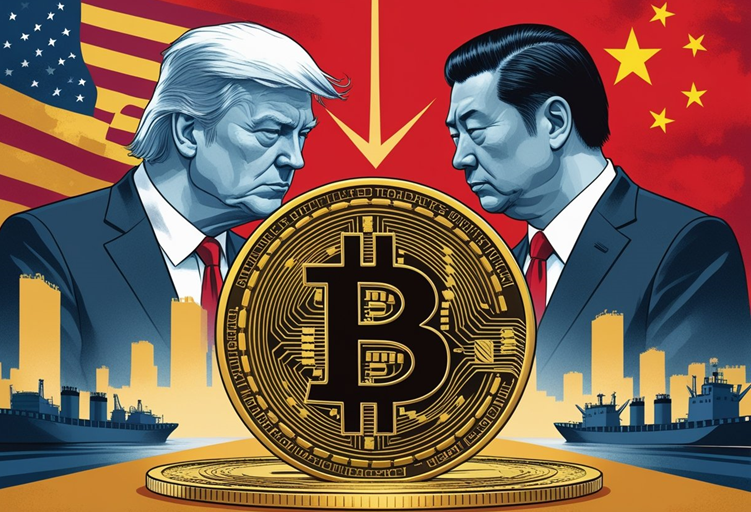
Bitcoin’s price has dropped hard as President Trump ramps up his trade war with China, with those wild 145% tariffs rattling global markets. The crypto market just got hit with a $19 billion liquidation as investors scrambled for safer ground in the face of all this trade drama. It’s not surprising—uncertainty’s in the air, and traders aren’t exactly feeling brave right now.
This trade spat is rippling across all sorts of markets. Oil dropped below $60 a barrel, stocks tumbled, and China fired back fast—halting Boeing jet deliveries and basically saying they’re “not afraid” of a trade war with the US. Those moves just poured more fuel on the fire.
This has been one of the top crypto news this week. We’re seeing one of the biggest shake-ups in global trade in years, and it’s not just Wall Street that’s feeling it. As things heat up, Bitcoin and other cryptos are under real pressure, with investors running for the exits and chasing more traditional safe-haven bets.
Key Takeaways
- Bitcoin lost $19 billion in liquidations after Trump’s 145% tariffs on China sent investors into a panic
- The trade war has hammered markets—oil and stocks both took a serious hit
- China’s countermeasures and tough talk are scaring off folks from risky assets like crypto
How Trump’s Trade War With China Is Triggering Bitcoin Price Declines
Trump’s trade war with China is sending shockwaves everywhere, and Bitcoin just took its biggest liquidation hit ever. The moment those new tariffs landed, we saw over $19 billion in crypto liquidations in a single day. Ouch.
Timeline of Recent Tariff Hikes and Market Impact
President Trump rolled out a 100% tariff on Chinese products starting November 1, 2025. That’s a serious jump from the usual back-and-forth we’ve seen between DC and Beijing.
When he made that announcement on October 11, markets freaked out. Bitcoin tanked to $105,000 in minutes, then clawed its way back to around $112,000.
Key Market Reactions:
- Bitcoin: Dropped to $105,000, bounced back to $112,000
- Ethereum: Down 13%, holding above $3,500
- Solana: Off 15% at $186
- XRP and Cardano: Down 16-20% in a matter of hours
Crypto traders got absolutely steamrolled—$19.3 billion in liquidations in just 24 hours, with more than 1.67 million trading accounts wiped out during the stampede.
Chinese goods are facing tariffs we haven’t seen before. The White House is taking an aggressive stance, and it’s shaking up global trade like nothing else in recent memory.
Reactions from Financial Markets and Investors
Markets flipped to risk-off mode the second Trump dropped the tariff bombshell. Investors bailed on crypto and tech stocks, looking for somewhere safer to park their money.
Bitcoin alone saw $5.34 billion in long positions liquidated. Ethereum traders lost $4.39 billion as the sudden move caught nearly everyone off guard.
Institutional Response:
- Ethereum ETFs: $175 million out the door
- Bitcoin ETFs: $4.5 million in outflows
- Only BlackRock’s IBIT fund bucked the trend and saw inflows
Some whales made out like bandits. One big player shorted Bitcoin and Ethereum for $1.1 billion and walked away with a cool $160 million in profits.
The Dow Jones finished 349 points down after a wild session. Stocks haven’t looked this shaky since the early days of Covid, and trade war jitters are definitely to blame.
Key Policy Decisions Shaping Crypto and Stock Volatility
Trump’s trade moves are making everything more unpredictable, especially for crypto. Those 145% tariffs on China are a game-changer for global trade.
Beijing isn’t backing down either. They’re calling for talks, but with tensions rising, nobody’s sure how this will end.
Policy Impact Factors:
- Ongoing trade talks with the UK and EU
- China’s countermeasures
- How the Federal Reserve reacts to all this uncertainty
The White House is calling the latest tariffs “Liberation Day,” but for most investors, it feels more like a warning siren. Markets are hunkering down across the board.
Right now, US-China trade drama is steering crypto prices more than ever. Bitcoin’s moving in sync with riskier assets, and that’s a big shift from its old “safe haven” reputation.
Broader Economic Effects and Key Global Players
The trade war’s fallout is everywhere—not just in crypto. Gold shot past $4,000 an ounce, copper’s at all-time highs, and countries everywhere are slapping on new tariffs of their own.
International Monetary and Inflationary Impacts
These 100% tariffs on Chinese imports are expected to push inflation up worldwide. Commodities are already on the move: gold’s up for eight straight weeks, and copper’s breaking records as traders brace for those 25% copper tariffs.
Central banks are bracing for inflation spikes and might crank up interest rates. The IMF is warning that these sweeping tariffs could mess up supply chains and drive up prices for everyone.
Key inflationary sectors include:
- Tech hardware and electronics
- Raw materials and commodities
- Consumer goods and manufacturing inputs
The dollar’s getting stronger as investors hunt for safe places to stash cash. That’s putting even more heat on emerging markets already struggling with all this trade chaos.
Global Leaders’ Responses and Negotiations
Xi Jinping’s government isn’t just sitting back—they’ve slapped export controls on rare earth minerals, which is making tech companies everywhere nervous. These materials are vital for manufacturing, and now everyone’s worried about shortages.
The European Parliament is pushing for faster trade talks so the EU doesn’t get caught in the crossfire. Canada and the EU have both announced billions in retaliatory tariffs after earlier US moves.
Scott Bessent, one of Trump’s top trade advisors, brushed off the market drop, calling it “no big deal”—even though the S&P 500 dropped over 2% in a single day. That’s a pretty bold take, considering how rattled most investors seem right now.
Sector-Specific Developments: Technology, Pharma, and Commodities
Technology companies are taking the biggest hit from the proposed export controls on key software and hardware. Nvidia and other chipmakers, especially, are feeling the pressure since they lean so heavily on Chinese manufacturing and rare earths. It’s a tough spot—there’s no easy workaround for that kind of dependence.
Apple shares took a nosedive, tumbling with the rest of the market. Investors started to really notice just how tied Apple is to China, both for making their products and selling them. And since tech stocks dominate the big indexes, the whole market felt the pain.
Pharma giants like Eli Lilly are watching things closely. They’re worried about supply chain hiccups and possible slowdowns at their factories. The healthcare sector leans a lot on active pharmaceutical ingredients from China, so trade restrictions could throw a wrench in the works.
Commodity winners? Here’s who’s up:
- Gold: Cracked $4,000/oz for the first time ever—wild.
- Copper: Hitting record highs, probably thanks to all the tariff talk.
- Steel and aluminum: These guys have come out ahead with tariffs before.
Energy markets are still all over the place. Traders keep guessing about how global growth and demand might shift, but honestly, no one’s sure where things will land next.