

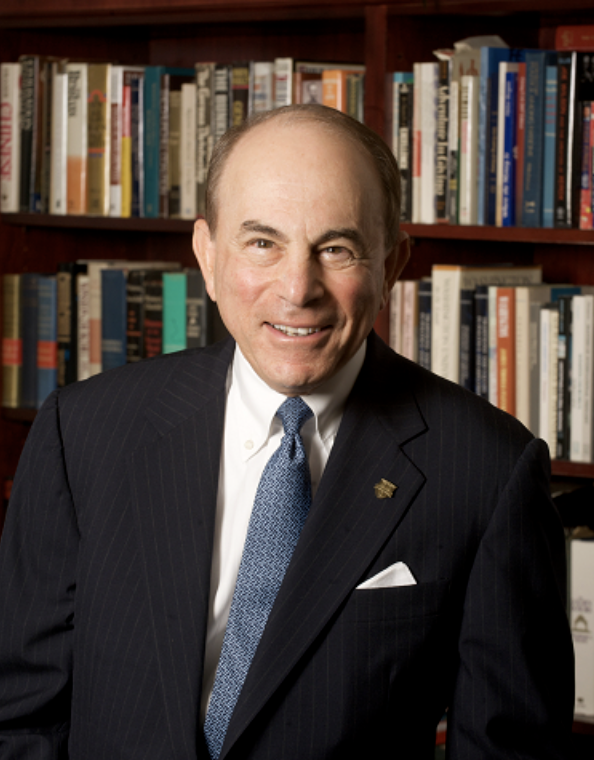
From growing up in orphanages and foster homes to becoming a respected Wall Street executive, philanthropist, and author, Ed Hajim’s life story is a testament to resilience, adaptability, and the belief that circumstances do not define destiny. In his acclaimed memoir, On the Road Less Traveled: An Unlikely Journey from the Orphanage to the Boardroom, and his modern fable, The Island of the Four Ps: A Modern Fable About Preparing for Your Future, Hajim explores the lessons, mentors, challenges, and choices that shaped his remarkable journey.
With more than five decades of investment experience, Hajim has held leadership roles at Capital Group, E.F. Hutton, Lehman Brothers, and Furman Selz, while also dedicating much of his life to education, philanthropy, and mentoring future generations. His experiences have shaped a philosophy rooted in perseverance, lifelong learning, personal accountability, and the importance of investing in people.
In this interview, Ed Hajim reflects on how adversity influenced his definition of success, the mentors who changed his trajectory, the role of forgiveness in moving forward, and why he believes education and self-determination can transform lives.
Your memoir traces a remarkable journey from a difficult childhood to a successful career in finance. Looking back, what moment do you feel most fundamentally shaped the person you became?
The moment that most fundamentally shaped me as a person was when I was 14 years old. My father disappeared, and I became a ward of the state. A year later, I was transferred to an orphanage in Yonkers, New York, and I realized that if I was ‘going to make it,’ it would depend almost entirely on me because I was completely on my own. Two and a half years later, I received an NROTC scholarship, which changed my life.
You’ve often spoken about resilience and identity. How do you define success today compared to when you were building your career on Wall Street?
There are some differences in the definition of success today versus when I was building my career, but I still believe it depends on success in the four realms of life: self, family, work, and community or giving back. Success today is somewhat different because it depends much more on many different kinds of partners, given the increased size of companies and the complexity of the business world.
In your view, what role does mentorship play in breaking cycles of disadvantage, and how can institutions do more to support it?
Mentorship is vital in breaking cycles of disadvantage. Having someone who is truly interested in you and where you want to go can make the journey much easier. Many institutions now provide mentors for new employees and have formal mentorship programs. This has proven to be a winning formula.
You’ve worked with major philanthropic causes throughout your life. What guided you toward the specific issues or communities you chose to support?
Almost all of my major philanthropic efforts have focused on education. I truly believe it is the solution to almost everything, if not everything. Specifically, I concentrate on providing scholarships to students who lack the financial means to attend school. I was guided toward this kind of support because of how receiving a scholarship changed my own life by allowing me to attend a private university.
Many readers connect with your story of searching for belonging. What advice would you give to someone still trying to find their place in the world?
The key to finding your place in the world is to keep testing yourself. Try as many activities as you can. Explore different businesses, recreational interests, social groups, and even different places to live. Only through experience can you discover where you truly belong.
How has your understanding of ‘family’ evolved over the course of your life?
My understanding of family has evolved significantly. Because I had no family as a child or young adult, I started with a fantasy view of the perfect family. As an adult, through experiences with my own family and those of my friends, I came to realize that family is both very complicated and the most important thing we do in our lives. Early on, I assumed family was something that simply happened. I later realized that it requires significant work and attention. Even with the best intentions, outcomes may be very different from what you expect. Thankfully, with a great deal of love and a little luck, family can still provide enormous satisfaction.
What lessons from the world of finance have unexpectedly shaped how you think about personal growth and human relationships?
The greatest lesson I learned from my career in finance is that harmony among self, family, and work is absolutely essential. If you lose sight of that balance, then success in finance is not truly success. I also learned that while technical skills are important, human relationships are vital.
If you could speak directly to your younger self at the start of your journey, what would you say—and what do you think he would not yet be ready to hear?
I would tell my younger self to work hard, stay curious, and continue learning. I would also remind him that life will inevitably bring unexpected turns and bumps in the road. One of the most important lessons is to never be a victim. Instead of spending your energy focusing on being a victim, use that energy to ask, ‘What’s next?’ I think my younger self would have embraced working hard, staying curious, and continuing to learn. However, I don’t think he would have been ready to fully understand the idea of never being a victim. That’s a lesson you can only truly learn by experiencing hardship and overcoming it.
About Ed Hajim
Ed Hajim is the author of the critically acclaimed memoir On the Road Less Traveled and The Island of the Four Ps. The son of a Syrian immigrant, he is a seasoned Wall Street executive with more than 50 years of investment experience. He has held senior management positions with Capital Group, E.F. Hutton, Lehman Brothers, and Furman Selz. Through the Hajim Family Foundation, he has made generous donations to organizations supporting education, health care, the arts, culture, and conservation. In 2015, he received the Horatio Alger Award. Married for 60 years, Ed and his wife, Barbara, have three children and eight grandchildren.