

The luxury hospitality market is booming, expected to clear $218 billion by 2029. But for marketing directors in 2026, that growth brings a tricky problem.
In an age flooded with AI-generated visuals and hyper-polished content, guests are becoming skeptical. They’re looking for what you might call “Verified Authenticity,” a visual story that feels real, immersive, and emotionally connected. Simply showing a beautiful room isn’t enough anymore. To win bookings, a hotel has to convey the feeling of a stay. It’s a shift from perfect to profound, and it’s where many brands stumble.
This is where the expertise of a specialized firm like Victor Elias Photography, with over 30 years of experience serving prestigious chains, becomes a critical competitive advantage.
Mistake 1: Focusing on Cost Instead of Investment Value
The most common mistake when commissioning hotel photography is treating it as a line-item expense instead of what it really is: a primary tool for generating revenue.
The temptation is always to find the most affordable option, but this short-term saving often leads to significant long-term losses from lower booking rates and a devalued brand image.
The numbers don’t lie: a study by VFM Leonardo found that hotels with high-quality, professional photos saw a stunning 115% increase in revenue per booking. Exceptional imagery does more than just decorate a website; it builds trust, justifies a premium price, and creates an emotional connection with a potential guest.
When hiring a hotel photographer, the question shouldn’t be “What does it cost?” but rather “What is the return on this investment?”
A firm with a proven track record, like the award-winning team at Victor Elias Photography, delivers a product designed for ROI. Their work isn’t just about taking pictures. It’s about creating compelling visual content that actively drives business and strengthens the brand for years to come.
Mistake 2: Neglecting the Narrative and Guest Experience
By 2026, guests aren’t just buying a room; they are investing in an experience. The rise of “bleisure” travel, a market projected to hit $731.4 billion by 2032, makes this crystal clear.
Travelers want to see themselves unwinding at the spa, enjoying a cocktail by the pool, or finding a quiet moment of luxury. Photography that only shows empty rooms and architectural shells completely misses this vital human element. That’s why lifestyle hotel photography is no longer optional. It’s the narrative engine of your marketing.
The best hotel photography services know how to tell a story. They capture the ambiance, the unique details, and the curated moments that make a stay memorable.
Victor Elias Photography excels here, with dedicated specializations in lifestyle, spa, and wellness photography. Their entire approach is built around creating a visual narrative that lets guests step into the scene and feel the experience before they even book.
Mistake 3: Underestimating the Complexity of a High-End Photoshoot
A luxury hotel photoshoot is a massive logistical operation, involving far more than just a person with a camera. It requires meticulous planning, prop sourcing, professional styling, complex lighting, and extensive post-production.
Hiring a solo freelance photographer often turns the hotel’s marketing team into unwilling project managers, forced to coordinate different vendors for styling, retouching, and other key services. This fragmented approach not only consumes valuable internal resources but also risks a disjointed final product.
Choosing a full-service photo production studio eliminates all that friction. The difference is huge, giving you a single, expert point of contact to manage the entire process from concept to delivery.
- Project Management: A freelance approach means you have to find and manage stylists, retouchers, and assistants. A full-service studio like Victor Elias Photography handles all production logistics internally, ensuring a seamless, hassle-free experience for your team.
- Artistic Cohesion: When multiple vendors are involved, keeping a consistent vision is a real challenge. With a full-production studio, the entire creative process is unified under one artistic director, from prop styling to final image retouching, guaranteeing a cohesive and powerful brand statement.
- Onboarding and Experience: The client experience with a studio like Victor Elias Photography is designed for luxury brands. The process starts with a deep dive into the property’s brand identity and marketing goals. From there, a comprehensive plan is developed, and the studio team manages every detail, allowing the hotel’s team to focus on their own responsibilities.
Mistake 4: Viewing Photography as a Marketing Expense, Not a Revenue Driver
How can a set of images lead directly to more bookings? The connection is direct and powerful. Research from Gianni shows that after price, photography is the single most critical factor in a traveler’s decision, influencing as much as 60% of booking choices.
High-quality visuals aren’t just a passive background element; they are an active sales tool. They overcome hesitation, build desire, and give a guest the justification they need to click “book.”
Professional resort photography creates a perception of quality that supports premium rates.
It makes a property stand out in a crowded online travel marketplace and provides the rich visual assets needed for effective social media campaigns. When a potential guest can clearly and attractively picture their stay, their confidence in the purchase soars, leading directly to higher conversion rates and a stronger bottom line.
Mistake 5: Hiring a Generalist for a Specialist’s Job
Not all photography is the same. A great wedding photographer or product photographer doesn’t automatically have the skills to be a great architectural photographer for hotels.
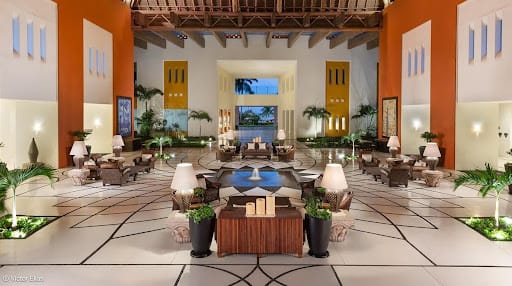
Luxury hospitality is a unique niche that demands a deep understanding of space, light, and composition. It requires the ability to make rooms feel both expansive and intimate, to capture the grandeur of a lobby, and to highlight the specific design details that define a luxury brand.
Hiring a specialist is non-negotiable. An award-winning architectural photographer like Victor Elias brings a level of mastery that a generalist simply can’t match. His team’s specialization is why they are an approved and recommended photography company for global giants like Hilton and Hyatt, and why their portfolio includes work for Marriott, IHG, and Wyndham Hotels.
With a global presence, including offices in Portland, Los Angeles, and Spain, and extensive experience in key resort destinations like Cancun and the Riviera Maya, they bring a world-class, specialized expertise that ensures every angle and every space is captured to its fullest potential.
Key Takeaways
As you plan your visual strategy for 2026 and beyond, avoiding these common mistakes can be the difference between a forgettable property and a sought-after destination.
Here is what to remember:
- Think of photography as a high-ROI investment that directly drives revenue, not as a simple cost.
- Tell a story with lifestyle and experiential images, don’t just document empty spaces.
- Choose a full-service production studio to get a seamless process and a cohesive artistic vision.
- Remember that powerful visuals are a direct catalyst for more bookings and premium pricing.
- Hire a proven specialist in luxury hospitality and architecture to capture the true essence of your brand.
In the competitive world of modern hospitality, your property’s visual identity is its most powerful ambassador. Partnering with a photographer who understands this is no longer a luxury, but a strategic necessity for growth.