

Fever can be considered one of the most common challenges when it comes to parenthood, but as parents you’ll always feel on the edge whenever your child isn’t feeling themselves, especially when they’re fussy, warm to the touch and they looked flushed. A child experiences many milestones in a span of months, but when they reach about 6 months this is where huge developmental milestones happens. Most 6-month-olds are really capable of sitting with support, babbling, some may even be standing up, at this point they also become more curious about their surroundings, wanting to explore the room more. Sometimes, a 6 month old fever can happen more easily than you’d imagine. Common culprits could be teething, common cold or even a new vaccine.
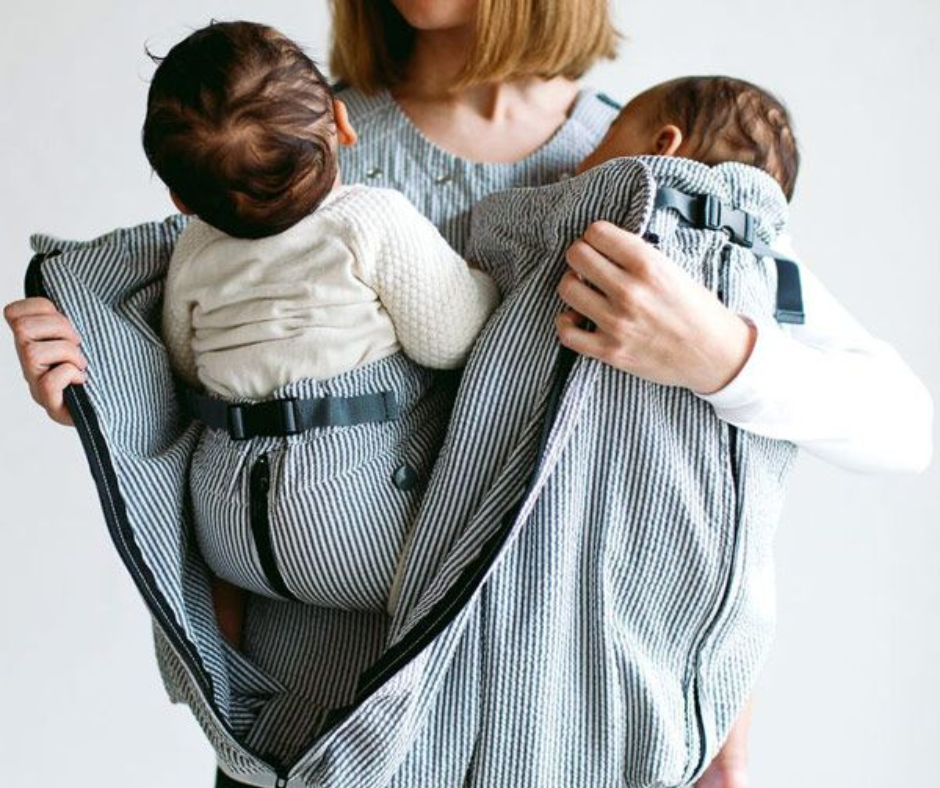
The uneasiness doubles up when you’re caring for twins or multiple little ones, especially when they caught fever at the same time. This is where practical tools like infant carriers for twins is your lifeline. They allow you to keep both of your babies’ close while being able to monitor them at the same time. Another comforting move is skin-to-skin contact, and twin carriers makes it even easier, while still keeping your hands free for other tasks that needs to be done.
In this article we’ll talk about how you can spot, respond and relieve a 6 month old fever. This knowledge can help you keep your calm and provide your child the best care they need in a timely manner to ease any of their discomfort. Let’s get started.
Understanding What Counts as a Fever for Your 6-Month-Old
A child’s temperature can fluctuate throughout the day, it’s natural and can be caused by a lot of factors, now a true fever can be ruled out when there is
- A rectal temperature of 100.4°F (38°C) or higher
- Axillary (underarm) temperature of 99°F (37.2°C) or higher
- Temporal (forehead) or ear temperature of 100°F (37.8°C) or higher
A mild 6 month old fever isn’t usually a cause of concern, because this means that your child’s body if fighting off the infection which also means that their immune system is working well. In many cases these mild fevers don’t require immediate medication, just keeping your child comfortable enough and careful observation is sufficient.
If your child’s temperature shots up to 102°F (38.9°C) or higher; they are unusually weak, crying non-stop, or refusing to eat or drink anything, you should be calling your pediatrician right away.
Getting the Right Read: The Best Way to Take Their Temperature
When it comes to younger babies, getting the most accurate temperature is critical. For babies under 12 months, rectal thermometers are considered the golden standard of all temperature measurements. At first it seems uncomfortable, but using this method is the most precise reading you can get from your baby. To do it safely, here are some quick tips
- Use a digital rectal thermometer only (never, ever use a glass one)
- On the tip of the thermometer, add a small amount of petroleum jelly for comfort.
- Insert gently, make sure that only about half an inch is in and hold still for a few seconds until the reading appears.
- Make sure to clean the thermometer thoroughly after each use to avoid any bacterial buildup.
Ear thermometers and temporal ones can work for older babies, but at 6 months, the rectal method still offers the best accuracy for monitoring a 6 month old fever.
The Usual Suspects: Why a 6-Month-Old Gets a Fever
When your 6-month-old has fever, there are a lot of considerable causes. Learning what these could possibly be, would help you respond in the right way.
- For viral infections: This is the most common reason behind fevers, most especially, colds, flu, or some mild respiratory viruses.
- Teething: there are times when teething can cause a slight increase in temperature although in many cases a real fever rarely happens.
- Vaccinations: Post-vaccine fevers are also pretty common, as this builds their immune system.
- Ear Infections: Fever accompanied with tugging of ears, extreme fussiness and disrupted sleep.
- Urinary Tract Infections (UTIs): This is less common but still possible, this is usually accompanied with irritability and a fever that doesn’t go away.
In knowing, which is which and identifying what symptoms accompany the fever, this will help you determine whether it’s a part of a mild sickness or something serious that needs immediate medical attention.
Home Comfort: Simple Ways to Soothe and Cool Your Baby
Whenever your 6-month-old has some fever, it’s not always advisable to medicate. There could be times when your comforting arms, presence and proper hydration helps them through and makes them feel much better. When you’re dealing with a mild fever, you can:
- Dress them in comfortable and breathable clothes and dress them lightly: Avoid bundling them up. Cotton types of pajamas are the most preferrable ones.
- Room temperature: Maintain a comfortably cool room, but not too cold as it can cause shivers. A room temperature around 70–72°F (21–22°C) is a good temp.
- Cool compress to cool them down: You can help decrease your child’s core temperature with applying lukewarm washcloths onto your child’s forehead or neck.
- Hydrate often: If you’re feeding solids by 6 months, your child may not have the appetite to eat if they are sick, so to compensate, you can offer more breastmilk or formula milk instead. Even small sips of water could help.
- Cuddles and calm: Skin-to-skin contact, holding them close, or using an infant carrier for twins can help you provide their much-needed closeness during this time. Holding them close also helps your child regulate their temperature.
- Avoid cold baths or rubbing alcohol rubs: Contrary to popular belief, rubbing your child alcohol can make them shiver, which in turn raises their body temperature more.
Medicine Made Easy: Safe Dosing for This Age (Acetaminophen vs. Ibuprofen)
If your baby is uncomfortable or going through the 6 month old fever with temperature higher than 101°F, you can consider medications that reduces fevers but make sure to consult with your pediatrician before giving any medication.
- Acetaminophen (Tylenol) – this medication is usually safe for babies who are over 2 months old.
- Ibuprofen (Motrin or Advil) – this can only be given after 6 months.
Always check your administered dosage as the dosage should be based on your child’s weight and not age. It’s also advisable to use a syringe that comes with the medication for an accurate measurement.
Never alternate between medications unless it’s specifically ordered by your pediatrician. Remember that some medication includes the same compounds and overdosing is extremely dangerous especially for younger infants. This is why you should stick to your pediatrician’s recommended intervals and prescribed hours of medication.
The Number One Priority: Keeping Your Baby Hydrated
Water loss is the number one enemy when you have a fever as it increases water loss through sweating and fast-paced breathing. When fighting off a 6 month old fever, it’s best to keep your child hydrated, this helps in lowering their temperature. You can offer breast milk or formula milk more even if they drink less than they usually do.
By 6 months, it’s safe to assume that you’ve started with solids already, but whenever they are sick, it’s best to avoid heavy foods. Since they aren’t feeling well, they may not have the appetite to eat a lot, what you can substitute here are foods that can hydrate them, like pureed fruits. Some additional sips of water can also be helpful if your pediatrician has approved it. Any sign of dehydration, consult with your doctor immediately. These signs can vary from dry lips, fewer wet diapers, sunken eyes or dry throat.
If in case you’re caring for twins keep in mind that one of them may handle fever differently than the other one. Using an infant carrier for twins can help you keep them both close for monitoring.
Know the Red Flags: When to Immediately Call the Pediatrician
Although mild fevers are usually normal, it’s always important to keep track of them and monitor your child closely. Some symptoms may need urgent medical attention like:
- When your baby is still under three months old and has a fever of 100.4 °F
- The fever stays consistent for more than 3 days and doesn’t go below 102°F
- Difficulty in feeding or vomiting
- Hard time breathing, developed a rash or may show signs of dehydration
- They are extremely drowsy most of the time and unresponsive
If you feel that something isn’t right even if they seem fine, call or consult with your doctor. It’s always better to be on the safe side than wait for the worse before asking for help.
Moving Forward: What to Watch For After the Fever Breaks
In time when your 6 month old fever had passed, you may notice changes in your child. Like they become more alert, playful and hungry again. These signs are all good, it means that their body had fought off the infection well. But there are post-fever symptoms like tiredness or loss of appetite even after a day or two, and it’s completely normal.
What you want to do right now is to keep on monitoring their condition, temperature and still keep on hydrating them well. Cuddles can also be a great help especially with infant carriers for twins which can help you make both of them feel secured and calm during the recovery.
Conclusion
A 6 month old fever is usually pretty common and a natural part of a growing immune system; this signals that your child’s body is learning how to fight off infections. It can be fearsome for a lot of new parents who don’t know what to do but if you have enough knowledge of what’s normal, and you understand when you need to act can make a huge difference when you’re navigating through this.
Your child could feel how you feel, this is why it’s important to keep it calm, provide them with comfort and use supportive tools like infant carrier for twins since it’s intended to help and support you through parenthood. With a lot of patience, understanding, rest and a lot of cuddles, you and your little one can bounce back before you even know it. Both of you will be stronger, healthier and better equipped for any challenge that may come your way.