

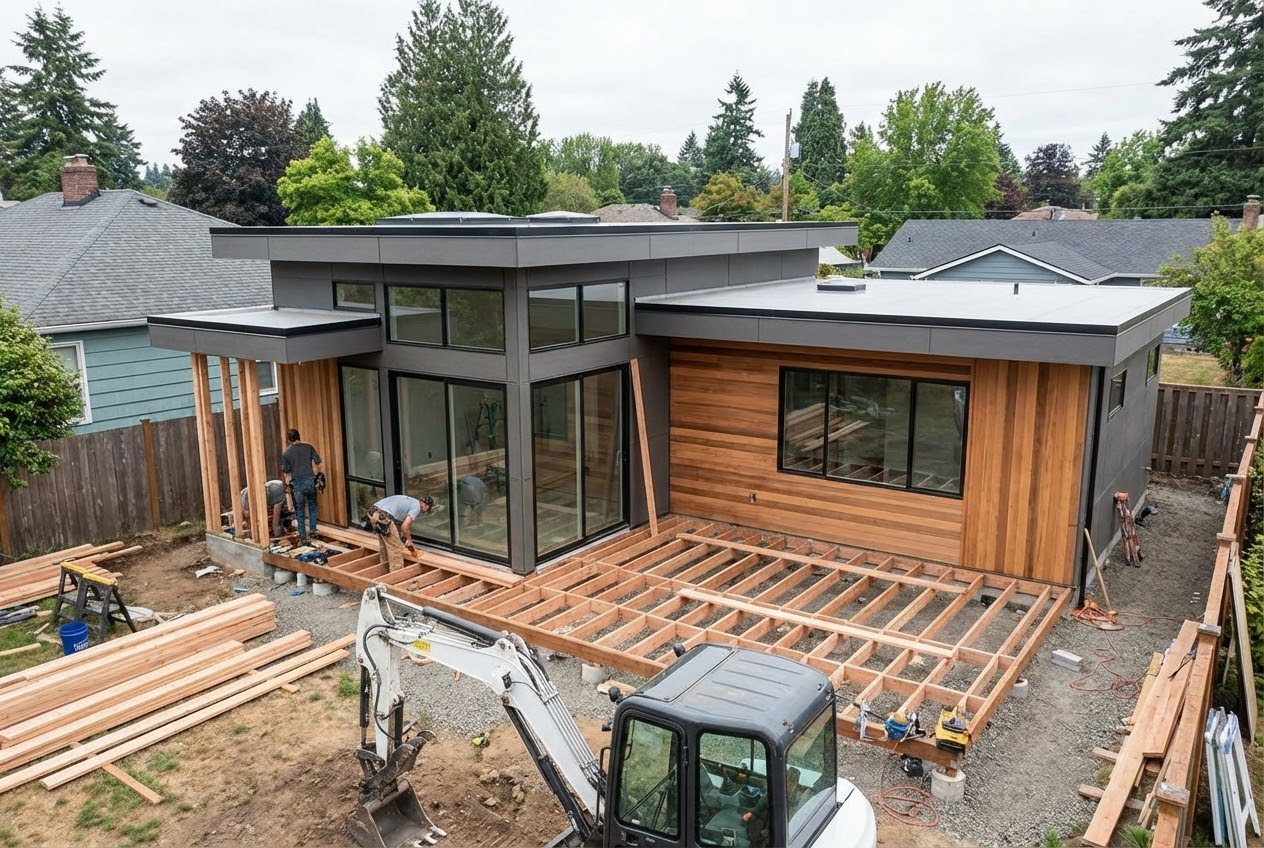
Property owners seeking additional living space, rental income, or multi-generational housing discover transformative solutions through professional adu construction creating functional, code-compliant accessory dwelling units. Unlike traditional home additions, ADU construction involves specialized planning, zoning compliance, and design expertise balancing independence with property integration. This comprehensive guide explores ADU benefits, regulatory requirements, design considerations, construction processes, and maximizing investment returns through thoughtful accessory dwelling unit development.
Understanding Accessory Dwelling Units
What Defines an ADU
Accessory dwelling units are:
- Independent living spaces: Complete with kitchen, bathroom, sleeping area
- Secondary structures: Separate from primary residence (detached) or integrated (attached/conversion)
- Self-sufficient dwellings: Fully functional with independent utilities, entrances
- Property-restricted: Located on same lot as primary residence
- Smaller footprint: Typically 400-1,200 square feet
ADUs provide complete living functionality within compact, efficient designs.
Types of ADU Construction
Detached ADUs:
- Stand-alone structures separate from main house
- Maximum privacy for both occupants
- Flexible placement within lot constraints
- Higher construction costs due to complete infrastructure
- Optimal rental income potential
Attached ADUs:
- Connected to primary residence
- Shared wall construction reducing costs
- Integrated utility systems
- Easier construction permitting
- Convenient for family members
Garage conversions:
- Transforming existing garage into living space
- Most cost-effective ADU option
- Utilizing existing structure, foundation
- Parking considerations required
- Fastest construction timeline
Interior conversions (JADUs – Junior ADUs):
- Converting existing interior space (basement, attic)
- Minimal exterior construction
- Shared utility systems
- Most affordable option
- Limited independence
Each type offers distinct advantages matching different property characteristics, budgets.
Regulatory & Zoning Compliance
California ADU Laws (2026 Updates)
State legislation mandates:
- Ministerial approval: Streamlined permitting without discretionary review
- Reduced parking requirements: Many ADUs exempt from parking mandates
- Setback reductions: Minimum 4-foot setbacks for detached ADUs
- Fee limitations: Impact fee waivers for ADUs under 750 sq ft
- Height allowances: Up to 16-18 feet depending on configuration
California law simplifies ADU development significantly.
Santa Barbara County Specific Requirements
Local regulations include:
- Lot size minimums: Varies by zone (typically 5,000+ sq ft)
- Maximum ADU size: 850-1,200 sq ft depending on primary residence size
- Design standards: Architectural compatibility with neighborhood character
- Utility capacity: Verification of adequate water, sewer infrastructure
- Fire safety: Access requirements for emergency vehicles
Understanding local codes prevents costly redesigns.
Permitting Process Timeline
Typical approval sequence:
- Pre-application consultation (1-2 weeks): Reviewing feasibility, requirements
- Design development (4-8 weeks): Architect creating compliant plans
- Permit application submission: Complete plan sets with engineering
- Plan review (30-60 days): Building department evaluation
- Permit issuance: Authorization to commence construction
- Inspection schedule: Staged inspections throughout build
Permitting typically requires 2-4 months before construction begins.
Design Considerations for ADU Construction
Optimizing Limited Space
Efficient design strategies:
- Open floor plans: Eliminating unnecessary walls maximizing perceived space
- Multi-functional furniture: Convertible, storage-integrated pieces
- Vertical storage: Floor-to-ceiling solutions maximizing volume
- Natural light: Large windows, skylights enhancing spaciousness
- Outdoor connection: Decks, patios extending living area
Thoughtful design makes compact spaces feel generous.
Essential ADU Features
Functional requirements include:
Kitchen design:
- Compact appliances (apartment-size)
- Efficient layout (galley or L-shaped)
- Adequate storage (upper and lower cabinets)
- Ventilation requirements (range hood)
Bathroom planning:
- Full bath (shower/tub, toilet, sink) or three-quarter bath
- Efficient fixture placement
- Proper ventilation (exhaust fan)
- ADA accessibility considerations
- Water-efficient fixtures
Living/sleeping areas:
- Flexible space allowing multiple configurations
- Adequate closet storage
- Climate control (heating/cooling)
- Sufficient electrical outlets
- Natural light sources
Comprehensive planning ensures comfortable, functional living.
Architectural Integration
Matching primary residence through:
- Exterior materials: Coordinating siding, roofing, trim
- Color palette: Complementary exterior colors
- Architectural style: Maintaining neighborhood character
- Window styles: Matching proportions, frame types
- Roof pitch: Harmonizing with main house
Visual cohesion enhances property aesthetics, maintains neighborhood character.
Construction Process & Timeline
Pre-Construction Planning
Preparation phase includes:
- Site evaluation: Assessing topography, drainage, access
- Utility location: Identifying connections for water, sewer, electric, gas
- Soil testing: Determining foundation requirements
- Demolition (if conversion): Removing existing structures
- Staging planning: Organizing materials, equipment access
Thorough preparation prevents construction delays.
Foundation & Structural Work
Building fundamentals:
- Foundation installation: Slab, crawlspace, or basement foundation (4-6 weeks)
- Framing: Wall, floor, roof structure (3-4 weeks)
- Roofing: Weather protection installation (1-2 weeks)
- Exterior sheathing: Structural panels, moisture barriers
- Window/door installation: Securing building envelope
Structural work establishes ADU framework.
Systems Installation
Critical infrastructure:
- Plumbing rough-in: Installing drain lines, water supply
- Electrical rough-in: Wiring, panel installation
- HVAC installation: Heating/cooling system placement
- Insulation: Thermal envelope completion
- Drywall: Interior wall/ceiling finish
Systems installation requires coordinated sequencing.
Finishing & Completion
Final construction stages:
- Interior finishes: Paint, flooring, trim installation (3-4 weeks)
- Bathroom remodel santa barbara ca: Fixture installation, tile work, cabinetry
- Kitchen completion: Cabinets, countertops, appliances
- Exterior finishes: Siding, paint, landscaping
- Final inspections: Certificate of occupancy approval
Finishing work brings design vision to reality.
Total construction timeline: Typically 6-12 months from permit to completion.
Cost Considerations
Budget Components
ADU construction costs include:
Design & permitting ($15,000-$30,000):
- Architectural design fees
- Structural engineering
- Permit fees, plan review
- Survey, soil testing
Construction ($200-$400+ per square foot):
- Foundation work
- Framing, structural materials
- Roofing, exterior finishes
- Windows, doors
- Plumbing, electrical, HVAC systems
- Interior finishes, fixtures
- Labor costs
Site work ($10,000-$40,000):
- Utility connections
- Grading, drainage
- Landscaping, hardscaping
- Driveway/parking additions
Total project costs: $150,000-$500,000+ depending on size, finish level, site complexity.
Cost Optimization Strategies
Reducing expenses through:
- Standard designs: Using pre-approved plan sets
- Efficient sizing: Building appropriately for needs
- Material selections: Balancing quality with budget
- Phased construction: Completing core first, finishes later
- Garage conversions: Leveraging existing structures
Strategic decisions control costs while maintaining quality.
Financing Options
Funding ADU construction:
- Home equity loans/lines: Leveraging existing property equity
- Cash-out refinancing: Accessing equity through new mortgage
- Construction loans: Short-term financing during build
- Personal savings: Self-funding construction
- Family loans: Private financing arrangements
Multiple financing pathways accommodate varied financial situations.
Maximizing ADU Investment Returns
Rental Income Potential
Financial benefits include:
- Monthly rental income: $1,500-$3,500+ depending on location, size
- Mortgage offset: Rental covering significant portion of housing costs
- Property value increase: 20-30% property appreciation typical
- Tax advantages: Depreciation deductions, expense write-offs
- Occupancy flexibility: Long-term or short-term rental options
ADUs generate substantial ongoing financial returns.
Multi-Generational Living
Family housing solutions:
- Aging parents: Independent living with proximity for support
- Adult children: Transitional housing maintaining privacy
- Caregivers: On-site accommodation for assistance providers
- Guests: Comfortable long-term visitor housing
- Home office: Dedicated workspace separate from residence
Family flexibility provides non-financial value.
Property Value Enhancement
Investment returns through:
- Appraisal increases: Significant property valuation gains
- Market competitiveness: Enhanced appeal to buyers
- Income property designation: Attracting investor buyers
- Functional versatility: Multiple use possibilities
- Neighborhood improvement: Contributing to community density, character
Strategic ADU construction delivers substantial appreciation.
Choosing the Right ADU Contractor
Essential Contractor Qualifications
Selecting professionals with:
- ADU specialization: Specific experience with accessory dwelling construction
- Licensing: Valid California contractor license (B-General Building)
- Insurance: Comprehensive liability, workers’ compensation coverage
- Local knowledge: Familiarity with Santa Barbara requirements
- Portfolio: Completed ADU projects demonstrating capability
Specialized expertise ensures successful project outcomes.
Questions to Ask Contractors
Interview evaluation:
- “How many ADU projects have you completed?”
- “What’s your typical ADU construction timeline?”
- “How do you handle permitting, inspections?”
- “What warranty do you provide?”
- “Can you provide recent client references?”
- “How do you manage budget, scope changes?”
Thorough vetting identifies qualified professionals.
Conclusion
Professional adu construction transforms properties through functional, independent living spaces providing rental income, multi-generational housing, and substantial property value enhancement. From regulatory compliance to design optimization, construction sequencing to finish selection, expert ADU development requires specialized knowledge ensuring code-compliant, beautiful results. Whether pursuing detached structures, garage conversions, or attached units, thoughtful accessory dwelling unit construction delivers lasting value, flexibility, and financial returns maximizing property potential.