

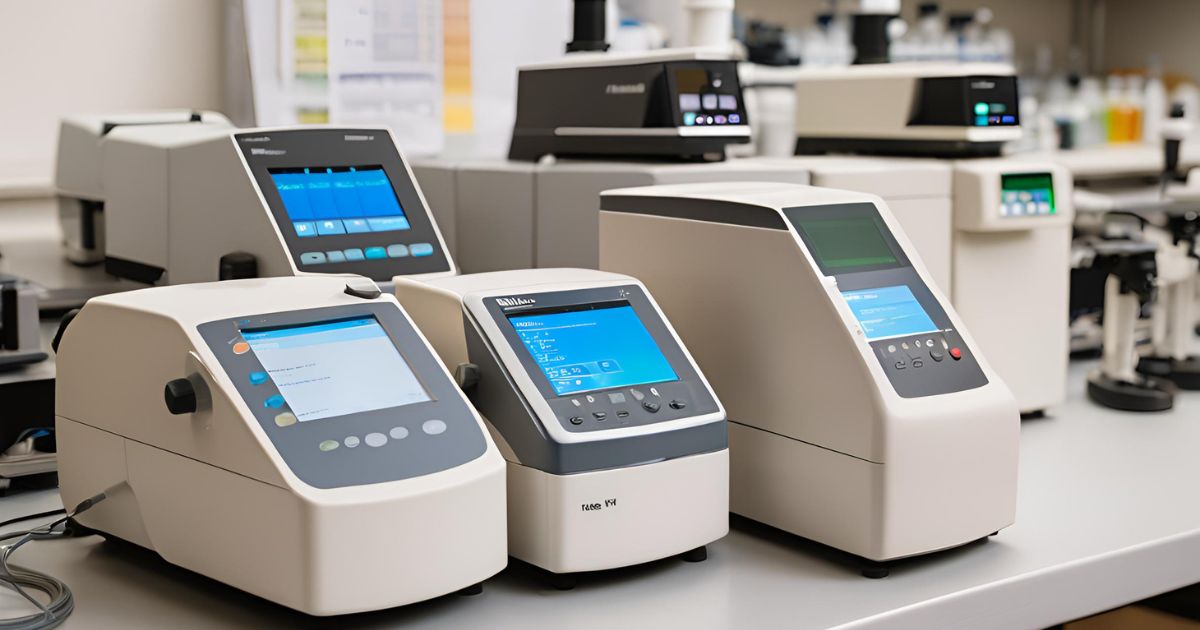
In today’s competitive industries, where precision and quality are critical, spectrophotometers have become indispensable tools. Whether you are in printing, paint production, textiles, food processing, pharmaceuticals, or research laboratories, color accuracy and consistency play a key role in product quality and brand integrity. The best spectrophotometer does far more than measure color—it ensures your processes meet the highest standards while reducing waste and saving time.
This comprehensive guide explores what makes a spectrophotometer the best choice for your needs, covering types, working principles, applications, features, and top recommendations.
What Is a Spectrophotometer?
A spectrophotometer is a sophisticated optical instrument used to measure how much light a sample absorbs or reflects across the visible spectrum (and sometimes ultraviolet or infrared). By analyzing the light interaction, it calculates precise color values in various standardized color spaces, such as CIE Lab*, XYZ, and RGB.
Unlike the human eye—which can be influenced by lighting, fatigue, or environmental conditions—a spectrophotometer offers objective, repeatable, and highly accurate results.
Why Choosing the Best Spectrophotometer Matters
Selecting the best spectrophotometer for your business or laboratory impacts productivity, quality control, and overall efficiency. Here’s why it matters:
- Accuracy and Consistency – A top-quality spectrophotometer ensures measurements are correct and repeatable across batches.
- Time and Cost Savings – Quick, reliable results minimize reworks and material wastage.
- Regulatory Compliance – Many industries must adhere to strict color or material appearance standards.
- Customer Satisfaction – Color consistency builds trust and brand loyalty.
- Competitive Edge – Businesses that control color quality can offer superior products.
How a Spectrophotometer Works
The principle of spectrophotometry involves shining a controlled light source on a sample and analyzing the reflected or transmitted light.
- Illumination – The device uses a consistent light source to illuminate the sample.
- Light Separation – The reflected or transmitted light passes through a diffraction grating or prism, separating it into component wavelengths.
- Detection – Sensors detect the light intensity at each wavelength.
- Data Processing – An internal processor calculates color values and stores or transmits the results for analysis.
Types of Spectrophotometers
Different industries and applications require different types of spectrophotometers. Knowing these variations helps you choose the best one.
1. Benchtop Spectrophotometers
- Best for: Laboratory and high-precision applications.
- Advantages: High accuracy, stable environment, wide measurement range.
- Limitations: Bulky, not portable.
2. Portable Handheld Spectrophotometers
- Best for: Field measurements and production line inspections.
- Advantages: Lightweight, battery-powered, easy to carry.
- Limitations: Slightly lower precision than benchtop units in some cases.
3. Multi-Angle Spectrophotometers
- Best for: Automotive coatings, metallic paints, pearlescent finishes.
- Advantages: Measures color from multiple viewing angles to account for special effect pigments.
- Limitations: More expensive and complex.
4. UV-Visible Spectrophotometers
- Best for: Laboratory chemical analysis, pharmaceuticals, and life sciences.
- Advantages: Measures light absorption from ultraviolet through visible ranges.
- Limitations: Usually used for transparent or liquid samples rather than surface colors.
5. Inline Spectrophotometers
- Best for: Real-time monitoring in automated manufacturing.
- Advantages: Continuous quality control, minimal disruption.
- Limitations: Fixed location, high initial cost.
Key Features That Define the Best Spectrophotometer
When looking for the best spectrophotometer, consider these important factors:
Measurement Geometry
- 45/0 geometry: Best for surface colors without gloss influence.
- d/8° geometry: Diffuse lighting with gloss inclusion or exclusion.
- Multi-angle: For effect coatings.
Accuracy and Repeatability
Measured in ΔE (Delta E) values—lower values indicate higher precision.
Light Source
Options include LED, xenon flash, or halogen. LED sources are stable and energy-efficient, while xenon flash lamps mimic daylight conditions.
Color Space Support
Ensure the device supports all relevant color spaces for your industry: CIE Lab*, Hunter Lab, XYZ, and RGB.
Portability
Decide whether you need a portable device for on-site measurements or a benchtop for lab work.
Data Connectivity
Modern spectrophotometers feature USB, Bluetooth, or Wi-Fi for quick data transfer to software or cloud storage.
Software Integration
Advanced software enables data analysis, quality control tracking, and production management.
Calibration Options
Look for built-in calibration functions or external white/black tiles for accuracy maintenance.
Applications of the Best Spectrophotometer
Printing and Packaging
- Color accuracy ensures brand consistency across labels, boxes, and printed materials.
- The best spectrophotometer reduces color drift during print runs.
Automotive Industry
- Matching complex metallic and pearlescent paints.
- Ensuring consistency between different car parts and production batches.
Textile and Apparel
- Matching fabric dye lots to approved swatches.
- Checking for fading resistance and colorfastness.
Paints and Coatings
- Formulating colors to meet customer demands.
- Ensuring durability and visual consistency.
Food and Beverage
- Monitoring color as an indicator of freshness, ripeness, or processing quality.
Plastics and Polymers
- Maintaining uniform color in consumer goods, electronics, and packaging materials.
Top Global Manufacturers of the Best Spectrophotometers
Several leading brands produce high-quality spectrophotometers:
- X-Rite – Renowned for both portable and benchtop devices, widely used in printing, automotive, and plastics.
- Konica Minolta – Known for precision instruments with robust build quality.
- Datacolor – Specializes in textile, paint, and plastics applications.
- HunterLab – Offers devices suited for laboratory and industrial environments.
- 3NH and CHNSpec (China) – Offer competitive, modern devices for diverse industries.
How to Maintain the Best Spectrophotometer
Even the best spectrophotometer requires regular care to maintain accuracy:
- Frequent Calibration – Follow manufacturer guidelines to calibrate with white and black tiles.
- Clean Optics – Use a soft, lint-free cloth and avoid touching the lens directly.
- Avoid Environmental Extremes – Store in stable temperature and humidity.
- Update Firmware and Software – Keep the system compatible with modern analysis tools.
- Schedule Professional Servicing – Annual servicing ensures peak performance.
Common Mistakes When Using a Spectrophotometer
- Skipping Calibration – Leads to inaccurate readings.
- Inconsistent Sample Positioning – Changes in angle or placement affect results.
- Dirty Calibration Tiles – Dust or fingerprints cause measurement errors.
- Not Considering Surface Texture – Glossy and matte surfaces may need different measurement geometries.
Emerging Trends in Spectrophotometer Technology
- Wireless and Cloud Connectivity – Instant data sharing for remote collaboration.
- AI-Powered Color Matching – Faster and more accurate formulation suggestions.
- Miniaturization – Portable devices with lab-level accuracy.
- Integration with Mobile Apps – Real-time monitoring from smartphones and tablets.
- Eco-Friendly Designs – Energy-efficient light sources and recyclable materials.
Step-by-Step Buying Guide for the Best Spectrophotometer
- Identify Your Application – Field, lab, or production line?
- Set a Budget – Include maintenance and software costs.
- Determine Accuracy Requirements – High-end applications demand ΔE<0.2.
- Choose the Geometry – Based on surface type and industry standards.
- Check Connectivity – Ensure it integrates with your quality control system.
- Evaluate Software Support – Look for analysis, reporting, and trend tracking.
- Assess Portability Needs – Portable or benchtop?
- Ask About Training and Support – A reliable supplier provides both.
The Future of the Best Spectrophotometers
Advancements in artificial intelligence, automation, and connectivity will continue to transform spectrophotometry. We can expect:
- More Affordable High-Accuracy Devices – Making precision accessible to small businesses.
- Smart Factory Integration – Automated adjustments based on real-time readings.
- Augmented Reality Visualization – Previewing color changes before production.
- Greater Customization – Devices tailored to specific industries and materials.
Conclusion
Finding the best spectrophotometer depends on your specific needs, whether that means unmatched precision in a laboratory setting, robust portability for on-site inspections, or real-time integration with production lines. By understanding measurement geometries, accuracy requirements, software compatibility, and maintenance practices, you can choose a device that delivers exceptional value and performance.
From global leaders like X-Rite and Konica Minolta to competitive solutions from manufacturers in China, the market offers a wide range of choices to meet every budget and application. As technology evolves, the best spectrophotometer will continue to offer improved accuracy, ease of use, and integration—ensuring that color quality remains a strong advantage for businesses worldwide.