

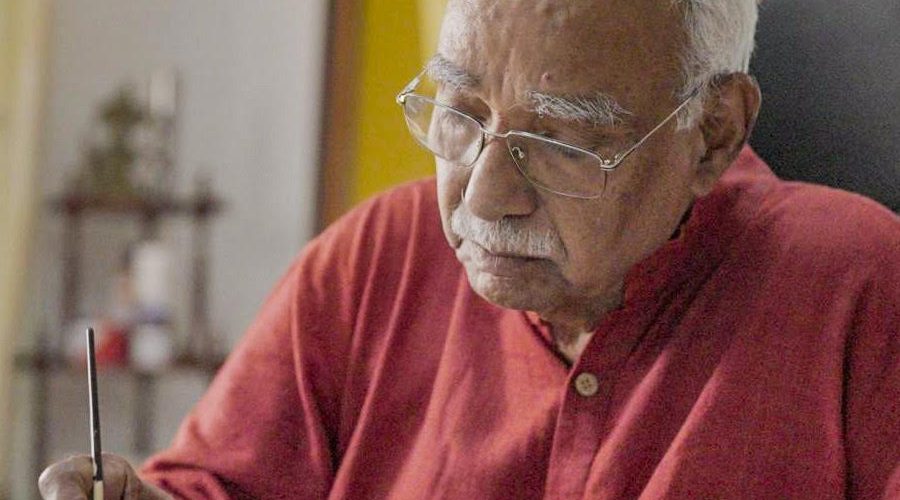
Thota Vaikuntam is a well known Indian artist. He developed a visual style that shows rural Telangana life, especially its people – he portrays shapely women, country men, temple priests along with local culture. His art is popular with collectors, critics as well as galleries. For people who collect art and for first time buyers, buying art by Thota Vaikuntam is an experience that brings cultural richness and beauty.
- Understanding Thota Vaikuntam’s Artistic Style
To understand Thota Vaikuntam’s art, examine his style before you gather his works. His paintings show bold lines and defined profiles; they feature women from Telangana wearing traditional sarees. He uses an earthy color palette, with reds, ochres, browns along with yellows. This palette brings to mind the warmth and feeling of country life. Vaikuntam uses flat space in his pictures, a method he learned from Indian miniature paintings – this method makes his figures seem timeless, like a symbol. Many of his artworks contain mythical parts. They mix what is real with what is holy. The characters often look like those from old stories, such as the Ramayana in addition to Mahabharata. His pictures take ideas from Indian classical forms, calendar art as well as common culture. But his works also stay personal – they show who he is, where he comes from in addition to his own thoughts.
- Why Collect Thota Vaikuntam Art?
Thota Vaikuntam paints for Indian art since the 1970s. People respect his art. Museums like the National Gallery of Modern Art (NGMA) show his works. Many private owners also own his art. This tells collectors that his works hold cultural and money value.
His style is easy to identify. This quality adds prestige to a private or public collection. His paintings cause people to talk in homes, offices along with galleries.
Thota Vaikuntam’s art sells well at auctions. His early art, especially rare sketches and smaller canvases, grew in value over time. Demand for his art increases. Fewer original works remain. The value should rise more.
- Types of Works Available
- a) Oil and Acrylic on Canvas
These works are popular; they are big and cost more. He shows his skill in them. They become the main part of a collection. - b) Watercolors and Mixed Media
Watercolors cost less but work as well. His mixed media works also show his experiments. He stays with his usual themes. - c) Drawings and Sketches
Pencil Pencil, Charcoal along with ink sketches show his creative process; they let new collectors start buying art. The sketches hold much emotional and documentary value. - d) Limited Edition Prints
For buyers on a small budget, signed serigraphs and prints are for sale – these items do not gain value as fast as original pieces. But they let people enjoy his art. - Where to Buy: Trusted Sources
To acquire paintings by Thota Vaikuntam, select reliable sources. Art galleries, such as Art Alive Gallery in Delhi, Kalakriti Art Gallery in Hyderabad, and Sakshi Gallery in Mumbai, show and sell his work often. Buying from these known galleries confirms that the art is real plus that it has the correct papers. His paintings also appear at big art fairs and shows, for example, the India Art Fair but also the Kochi-Muziris Biennale – these gatherings help the artist, galleries along with people who choose art to talk directly. As a result, one learns more about his work. Auction houses, like Saffronart, Pundole’s as well as Christie’s India, also show Vaikuntam’s art. Auctions sell pieces at prices that compete, especially for older or uncommon paintings. People who buy should research well and prepare. On the internet, sites such as StoryLTD, Artery India in addition to Artisera also list Thota Vaikuntam’s real works. When buying online, check the painting’s history as well as confirm that its papers are real and complete.
- Determining Authenticity and Provenance
Like the works of all well known artists, Vaikuntam’s pieces face copies and fakes. To protect money you spend, always ask the gallery or seller for a Certificate of Authenticity (COA). Prefer pieces the artist signs and dates.
It is also important to check the provenance, which is the history of who owned the piece. Pieces that were in exhibits or appear in catalogues often hold more value. If you consider buying an expensive piece, seek advice from someone who knows about art.
- Pricing Guide: What to Expect
The cost of a Thota Vaikuntam artwork relies on many factors, which include its size, what materials it uses, the year it came into being, and its singular qualities. Drawings plus sketches usually cost from one to five lakh rupees. Small paintings, using acrylic or watercolor, sell for five to fifteen lakh rupees. Mid-sized paintings on canvas go for fifteen to fifty lakh rupees. Large oil paintings, which museums show, typically begin at fifty lakh rupees and more. At auctions, rare but also important works sometimes sell for over one crore rupees. Prices climb steadily. This is especially true for art from the 1980s and 1990s.
- Care and Preservation
When you get your Vaikuntam piece, good care keeps its beauty and worth. You should frame the work. Use materials that do not contain acid and glass that blocks UV rays. Place it far from the sun, moisture along with dirty air. If you need to, speak with an art expert; they can clean or fix it.
- Building a Thematic Collection
Collectors may choose to build a collection around a theme instead of getting pieces by chance. As an example, one could center a collection on the Women of Telangana, showing the different female faces Vaikuntam paints. One could also look at Religious Symbolism through art that shows priests, gods, or myths. Another approach involves Color Studies, following how his use of color changed over many years. A collector could gather Works on Paper, which feature his special sketches and drawings. This method raises the collection’s total value – it also helps the collection tell a clearer story.
- Supporting the Artist’s Legacy
Collecting Thota Vaikuntam honors Indian contemporary art. Collectors promote exhibitions; they share insights online. They lend works to galleries and museums. Through these actions, collectors keep his art known for people in the future.
Conclusion
Thota Vaikuntam’s art does more than look good – it links to the rural part of India. It also shows a celebration of tradition and a story of cultural pride. If you buy art often or if you just begin your art journey, his art is pretty plus it gains value. By knowing his style, buying from reliable places, and caring for the art, you get a piece of Indian art history. You also join this history.