

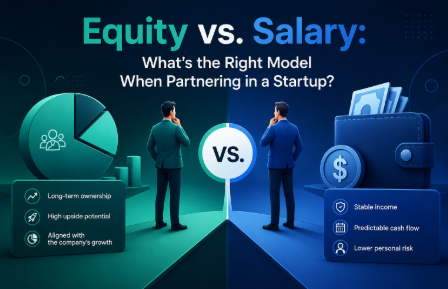
Startup partnerships now extend beyond founders’ relationships. More and more, experienced professionals, consultants, and industry specialists are looking at different compensation structures, structures that tie long-term contributions to long-term value. For many, the question is not just about remuneration but also ownership alignment and sustainability through equity partnerships for experts.
The U.S. Census Bureau reported that employer startups remain a significant source of business formation and economic activity throughout the United States.
As startup ecosystems grow, more founders and experts are asking themselves whether salary-based setups or equity-driven relationships have better long-term results.
You can see this shift in the emergence of platforms such as PrtnerUp, which help founders, investors, and professionals form structured business relationships based on shared goals and expertise, not just the traditional hiring model.
Why this decision matters more than founders think
The compensation structure directly drives motivation, accountability, and long-term commitment.
Pay arrangements are usually based on immediate contribution and predictable pay. However, Equity ties future business performance and growth potential together.
This distinction becomes particularly important when founders want to connect with entrepreneurs or specialists who are willing to add value strategically and not transactionally.
Understanding the difference between salary and equity
At a high level:
- Salary compensates work performed in the present
- Equity rewards long-term value creation and shared growth
Both models are legitimate. The right structure will depend on the startup’s stage, its financial flexibility, and its long-term goals.
The comparison below highlights why many startups evaluate equity partnerships carefully before scaling leadership teams.
| Factor | Salary Model | Equity Model |
| Compensation Timing | Immediate | Long-term potential |
| Financial Risk | Lower for contributor | Shared between parties |
| Ownership | None | Partial ownership |
| Commitment Level | Role-focused | Growth-focused |
| Scalability Alignment | Limited | High |
When salary makes more sense
Not every role has to include equity. Salary-based arrangements are more suitable when:
- The work is operational or short-term
- Financial predictability is important
- The contributor is not involved in strategic decision-making
- Ownership alignment is unnecessary
This arrangement is the typical setup for employees, contractors, or temporary advisory work.
In some situations, professionals pursuing a career change to consulting may initially prefer salary or project-based compensation before they want to be more involved in the partnership.
When equity creates stronger alignment
Equity is best when the contribution is directly relevant to long term growth and strategic direction.
Situations where equity may be more appropriate:
- Early-stage startups with limited cash flow
- Strategic contributors helping shape growth
- Long-term operational or leadership involvement
- High-impact expertise influencing scalability
This is often where professionals begin exploring ways to monetize your expertise beyond hourly or fixed compensation structures.
Expertise-based partnerships on the rise
Today, expertise trumps hierarchy for startups. Now, experienced operators, consultants, and subject matter experts are involved through the following means:
- Advisory equity arrangements
- Operational partnerships
- Fractional leadership roles
- Strategic growth collaborations
For many professionals seeking to use my expertise in business, equity offers them an opportunity to participate in long-term upside as opposed to one time compensation.
Co-founder opportunity or consulting arrangement?
The most important difference is the level of commitment. A true co-founder opportunity generally includes:
- Making decisions jointly
- Accountability through time
- Participation in equity
- Strategic operations engagement
A consulting relationship, on the other hand, is usually more limited in scope and time horizon.
Consulting opportunities Vs. ownership participation
Flexible models for startup involvement are gaining traction.
For professionals evaluating consulting opportunities, the choice often depends on risk tolerance, time availability, and interest in long-term business building.
Here’s a comparison of the two approaches:
| Area | Consulting Model | Equity Partnership |
| Commitment | Limited engagement | Long-term involvement |
| Compensation | Fixed or hourly | Ownership-based |
| Risk Exposure | Lower | Higher |
| Strategic Influence | Moderate | Significant |
| Long-Term Return Potential | Limited | Potentially substantial |
What founders should know before giving equity
Equity should never be treated casually. Before offering ownership, founders should evaluate:
- The long-term value of the contribution
- The duration of involvement
- Decision-making responsibilities
- Future dilution implications
Both sides need clear expectations and well-structured agreements.
Why alignment matters more than compensation
The real problem with many startup relationships is not salary vs. equity; it’s alignment.
The strongest partnerships are usually built around:
- Shared growth expectations
- Compatible working styles
- Long-term strategic thinking
- Transparent communication
Compensation structures work best when they reflect the reality of the relationship, rather than trying to force a standard model on everyone.
Build Smarter Startup Partnerships with PrtnerUp
There is no one-size-fits-all answer to the equity vs. salary debate. Which model is right depends on the stage of the startup, financial realities, and the degree of strategic contribution involved.
With platforms like PrtnerUp, founders and experienced professionals can create structured, long-term partnerships built on alignment, expertise, and shared goals. Whether the relationship is operational, advisory, or ownership-driven, clarity and compatibility remain key to sustainable growth.
FAQs
What is an equity partnership for experts?
It is a structure where professionals contribute expertise in exchange for ownership rather than traditional salary compensation.
Is equity better than salary in startups?
It depends on the role, the risk tolerance, and the long term involvement expected from both parties.
Can consultants participate in startup equity?
Yes, some consultants will negotiate for equity if their contributions significantly impact the long-term growth of the business.
What makes a strong co-founder opportunity?
Clear alignment in vision, responsibilities, commitment, and long-term strategic goals typically define strong co-founder relationships.
How can professionals monetize your expertise through startups?
They may provide operational, strategic or advisory expertise in return for equity participation or growth-based remuneration