

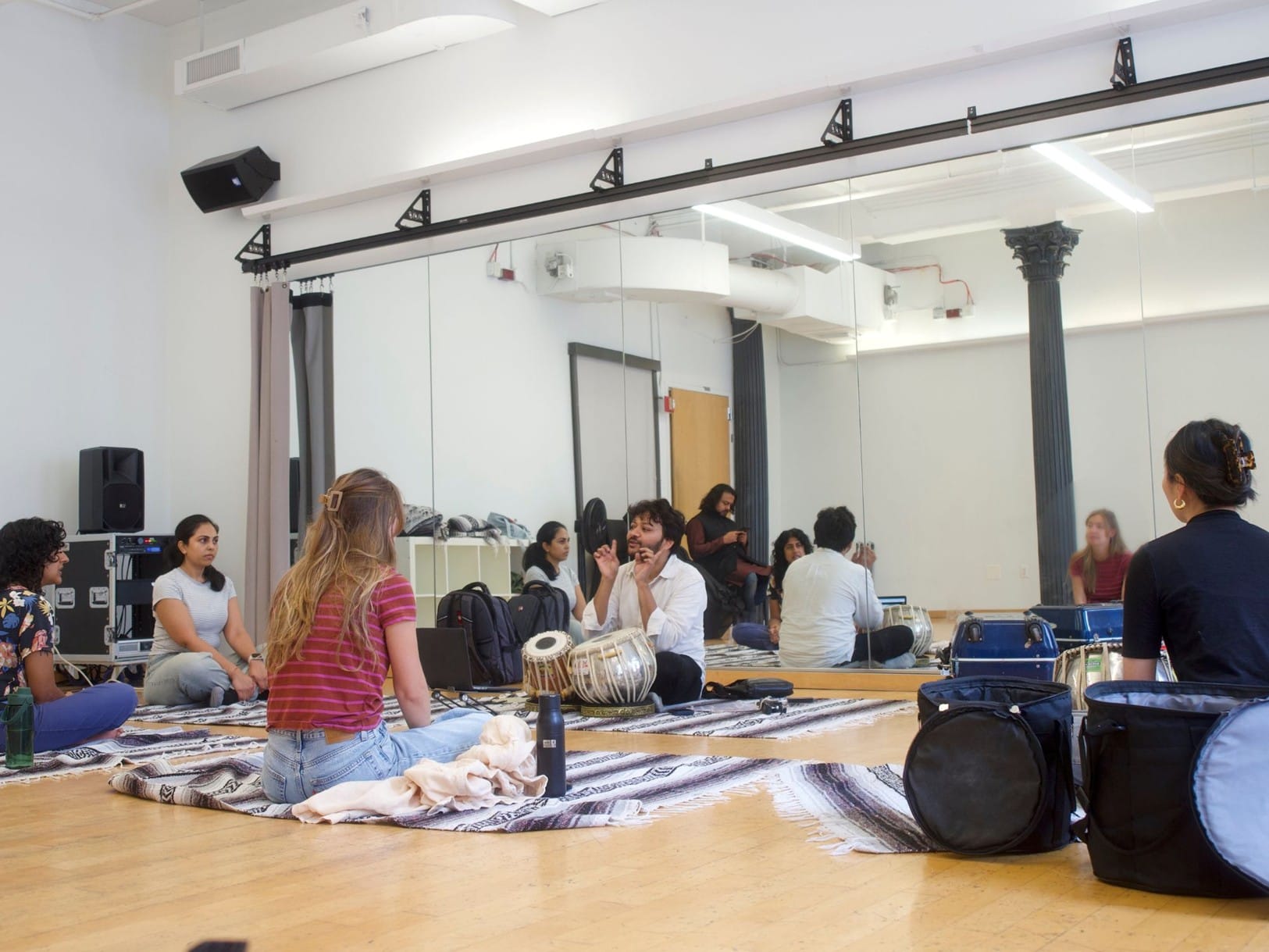
Tabla, the quintessential Indian percussion instrument, is a world unto itself. Renowned for its versatility and depth, it has the power to convey complex rhythms, intricate nuances, and deep emotion. For students and performers alike, understanding the various styles of tabla playing is essential not only to mastery but to the broader appreciation of Indian classical music. Those interested in learning tabla in New York or pursuing Indian percussion training will find that exploring these styles offers a structured path from technical proficiency to expressive performance.
The Foundations of Tabla Technique
Before diving into styles, it’s important to understand the technical foundation of tabla. The instrument consists of two drums: the smaller dayan, tuned to a specific pitch, and the larger bayan, producing deep, resonant bass tones. Mastery begins with posture, hand positioning, and the basic strokes, or bols, that form the vocabulary of tabla playing.
A structured approach, often found in Indian percussion training, emphasizes methodical practice of these fundamental strokes. Students are introduced to the primary bols such as “dha,” “tin,” “na,” and “ge,” each representing distinct sounds. This stage resembles a conservatory curriculum, where technique and discipline form the bedrock for more advanced exploration.
Delhi (Benares) Style: Clarity and Precision
One of the earliest and most influential tabla traditions is the Delhi or Benares style. Known for its clarity, precision, and delicate fingerwork, this style emphasizes a clean articulation of bols. Students learn to focus on tonal purity and rhythmic accuracy, making it ideal for accompaniment in both vocal and instrumental performances.
Training in this style involves extensive solo practice of standard compositions, known as kaidas and relas. These exercises develop control over tempo, articulation, and improvisational skill. In a Western conservatory context, the Delhi style can be incorporated into ensemble settings, where precision and clarity are critical for synchronization with other musicians.
Lucknow Style: Grace and Subtlety
The Lucknow style is celebrated for its elegance and expressiveness. Unlike the Delhi style, which prioritizes precision, Lucknow tabla playing emphasizes melodic phrasing and subtle tonal variation. This approach requires sensitivity to the accompanying melody, whether in vocal khayal performances or instrumental concerts.
In Indian percussion training, mastering this style involves listening and responding to nuanced melodic lines, often practicing with recordings or live accompaniment. Western-trained percussionists benefit from its focus on dynamics and subtle rhythmic inflections, which can enhance ensemble performance and solo expression.
Punjab Style: Power and Drive
The Punjab or Pakhawaj-influenced style is characterized by energetic, forceful strokes and driving rhythmic cycles. Often used in folk and devotional music, it is rhythmically vigorous, with a focus on power and projection. Students learning this style must develop strength and stamina in their hands, along with precision to maintain rapid tempos without sacrificing tonal clarity.
For those choosing to learn tabla in New York, this style can complement Western percussion techniques, offering opportunities to blend Indian rhythms with jazz, contemporary, or fusion ensembles. The Punjab style teaches rhythmic endurance and expressive energy, essential for live performance contexts.
Jaipur Style: Complex Rhythmic Innovation
The Jaipur style is known for its intricate compositions and mathematical precision. With complex rhythmic patterns, it challenges even advanced tabla players. Kaidas in this style often explore polyrhythms and unusual tempo cycles, encouraging performers to think analytically while remaining expressive.
In an educational setting, this style is excellent for advanced students engaged in Indian percussion training programs. Its focus on rhythmic innovation parallels Western conservatory exercises in counterpoint and complex time signatures, offering a bridge between Indian classical and contemporary rhythmic studies.
Integrating Styles into Ensemble Work
Tabla playing is not only about solo performance but also about collaboration. Each style brings unique qualities to ensemble work. Delhi style provides clarity for melodic support, Lucknow adds subtlety and expressive nuance, Punjab offers rhythmic drive, and Jaipur introduces complexity and excitement.
Western conservatories often emphasize ensemble work as part of progression. By incorporating tabla in diverse group settings—ranging from Indian classical ensembles to jazz fusion bands—students learn how each style contributes to texture, dynamics, and musical dialogue. This approach mirrors traditional Indian percussion training, where tabla players are expected to be sensitive collaborators.
Performance and Progression
Progression in tabla study is a combination of technical mastery, stylistic versatility, and improvisational skill. Structured lessons often begin with foundational technique, advance through style-specific training, and culminate in solo and ensemble performances. Students are encouraged to present compositions, explore improvisation within rhythmic cycles, and develop their own stylistic voice.
For musicians seeking to learn tabla in New York, access to experienced instructors and performance opportunities is key. Workshops, masterclasses, and public recitals allow students to apply their training, receive feedback, and refine their artistic expression. Performance, after all, is where technique and musicality converge.
Contemporary Approaches and Fusion
Modern tabla players increasingly blend traditional styles with global music forms. Jazz, electronic, and world music projects have embraced tabla as a versatile rhythm instrument. This cross-cultural experimentation encourages students to adapt classical techniques creatively, expanding both technical skill and musical perspective.
Indian percussion training today often includes exposure to fusion and experimental forms, preparing students to navigate both classical concert halls and contemporary music scenes. The ability to integrate multiple styles into one performance reflects the evolution of tabla as a global instrument.
Conclusion
Exploring the different styles of tabla playing offers a rich journey through tradition, technique, and artistic expression. From the precision of Delhi to the elegance of Lucknow, the power of Punjab, and the complexity of Jaipur, each style contributes unique lessons to a student’s progression.
For anyone interested in learning tabla in New York or pursuing structured Indian percussion training, understanding these styles is more than an academic exercise; it is a pathway to mastery, ensemble collaboration, and expressive performance. By respecting the Indian classical tradition while embracing modern pedagogical approaches, tabla students can achieve both technical proficiency and musical artistry.