


Let’s be honest — when most people think of cutting-edge digital design, they picture some minimalist loft office in Brooklyn or a glass tower in San Francisco. What they don’t picture is a tire shop in Sumter, a bakery in Florence, or a family-run HVAC company in Columbia — all with websites that outperform competitors in both form and function. However, in 2025, web design in South Carolina is turning that narrative on its head. And I should know — I’ve been watching it happen up close.
I’ve seen local entrepreneurs with modest budgets and even more modest expectations walk into web design meetings and walk out with tools that rival anything a six-figure NYC agency could produce. Not because they’ve found some magic WordPress plugin, but because they’ve tapped into a particular local advantage: small, agile web design teams who know the terrain and the tech.
The Myth of “Big = Better”
We’ve all heard the pitch: Go with a big agency and you get experience, prestige, and a flawless process. And sure, there’s truth to some of that — big agencies have resources, protocols, and often a conference room with $500 chairs.
But here’s what they also have:
- Long timelines packed with unnecessary meetings.
- Rigid workflows that don’t bend to small-business needs.
- Junior designers handle projects while the seniors are tied up with corporate contracts.
Meanwhile, local South Carolina web design teams — like those at Web Design Columbia (WDC) — are doing the work faster, leaner, and with far more personal investment. These aren’t faceless teams using chatbots to answer your questions. They’re people who know your market, your competitors, and sometimes even your cousin’s barbecue joint down the street.
A Different Kind of Efficiency
One thing that constantly amazes me is how local web design firms in South Carolina have embraced efficient communication. I’ve watched business owners walk into meetings where the designer already knows what CMS would work best for their budget, what SEO strategy to apply for their local niche, and how to optimize their contact forms for higher conversions — all within the first week.
There’s a kind of efficiency that comes from not having to explain what Midlands culture is like, or why your business needs both a Facebook page and a bulletin board at the Piggly Wiggly. That local cultural fluency cuts through noise, and that matters when your budget doesn’t allow for a six-month discovery phase.
The Carolina UX Mentality
Let’s talk about user experience — the holy grail of modern web design. While UX has become a buzzword in Silicon Valley (often used to justify $150k Figma projects), South Carolina designers approach UX from a different angle.
Here, UX doesn’t mean flashy motion graphics or AI chat assistants that glitch out. It means:
- Ensure your customer knows that your phone number is clickable.
- Ensuring your site loads in under two seconds on rural LTE.
- Structuring navigation so even your grandma can find your services.
One local agency I spoke with told me their test user base includes real residents aged 25 to 75, not just interns from an art school. That’s the kind of grounded thinking that gets results. Because let’s be honest: if a user can’t find your business hours, they’re going to Google someone else.
The Data Doesn’t Lie — Small Is Winning
You don’t need a Harvard MBA to see the trend lines. South Carolina small businesses that invest in local web design are winning more leads, converting better, and ranking higher on Google — all without the overhead of a giant agency.
And here’s the kicker: many of these businesses initially went with a big-name out-of-state agency, got burned, and came back home to rebuild their site with someone who listened.
Here’s what I’ve seen repeatedly from small SC businesses who made the local switch:
- 20–30% faster site load times after ditching bloated agency builds
- 3x increase in contact form conversions
- Higher ranking for local keywords within 60–90 days of rebuild
- Faster turnaround on updates and content changes
- 1:1 relationships with the actual designer or developer, not a sales rep
When was the last time a national agency delivered those kinds of results on a $5K budget?
The Technical Side No One Talks About
Let’s get technical for a moment — because if there’s one thing local South Carolina developers understand well, it’s infrastructure. Big agencies often throw you onto bloated hosting like GoDaddy or (worse) charge you monthly for something that’s barely optimized. Meanwhile, local firms are deploying sites on lightweight VPS setups, optimizing them with proper caching, and utilizing intelligent image compression tools that work.
Some even go as far as configuring AlmaLinux servers with NGINX stacks and Cloudflare routing — all while charging less than what a Manhattan firm bills for a “creative direction session.”
That kind of tech fluency doesn’t come from reading industry blogs. It stems from years of hands-on problem-solving, trial and error, and building sites that withstand Carolina humidity and Google Core updates alike.
Building Long-Term Partnerships, Not Just Pretty Pages

This might be the most underrated advantage: relationships.
Big agencies build contracts. Small Carolina teams build partnerships. And that matters when you’re not just looking for a site, but for ongoing support, growth recommendations, and a web team who will pick up the phone when your online booking form goes down the night before a holiday weekend.
I’ve heard stories of local designers fixing bugs at 11 p.m., answering calls during Sunday family dinners, or offering free marketing advice simply because they want your business to grow. That level of investment is hard to fake — and even harder to get from a firm four time zones away.
Why the DIY Crowd Keeps Coming Back to Local Pros
Let’s address the Wix and Squarespace crowd for a second. Yes, drag-and-drop editors are fine — until you need custom integrations with CRMs, reliable SEO structure, speed optimization for Core Web Vitals, security hardening for login pages, and ADA compliance.
South Carolina web design pros aren’t just better coders — they’re better advisors. They’ll tell you when to save money and when to invest. They’ll show you how to track ROI, rather than just handing you a Google Analytics login and wishing you luck.
As digital marketing continues to evolve, the playing field is surprisingly level — but not for long. Small business owners in South Carolina who act now are gaining a rare advantage: access to high-caliber web design teams that haven’t been acquired by corporate consolidation or turned into AI automation farms.
They’re still here. They’re still human. And they’re still doing excellent work at prices that feel like 2016.
A Story You Won’t Hear at National Conferences
Let me tell you about Sheila. Sheila runs a mobile pet grooming business based in Lexington. A few years ago, she was convinced by a well-known out-of-state agency to pay nearly $18,000 for a custom website and monthly “growth” services. The result? A bloated, slow-loading site hosted on a managed WordPress plan that costs more than her van lease.
One year later, she switched to a local South Carolina firm, specifically Web Design Columbia. They rebuilt the site in three weeks, migrated her to a lean VPS, properly integrated her scheduling software, and optimized the entire layout for conversions. Her bounce rate dropped by 42%. Her leads doubled. Her hosting bill dropped by 80%. And her confidence came back.
Sheila’s story isn’t rare. It’s just rarely told.
The Numbers Don’t Lie — Let’s Compare
You don’t need to be a data analyst to understand what’s working. You just need to compare what local web design teams in South Carolina offer vs. the expensive, impersonal services of major agencies. Here’s a breakdown of how it plays out in the real world:
| Feature / Factor | Big Agency (NYC, LA, etc.) | Web Design Columbia / Local SC Firms |
| Initial Cost | $12,000–$50,000+ | $3,000–$9,000 |
| Timeline | 3 to 6 months | 3 to 6 weeks |
| Communication | Project managers, ticketing systems | Direct with designers/devs via phone/email |
| Hosting Recommendations | Overpriced managed hosting (e.g., WP Engine) | Lean VPS, optimized NGINX stack |
| Maintenance Fees | $250–$1000/month (often contract-bound) | On-demand, sometimes hourly or fixed |
| SEO Implementation | Basic setup unless you pay extra | Included or tailored to business goals |
| Design Ownership | Often ambiguous in a contract | Clear IP rights, transparent documentation |
| Mobile Optimization | Generic templates, low Core Vitals scores | Custom, tested on local devices/networks |
| Conversion Focus | Generic CTAs | Locally targeted lead funnels and strategy |
| Response Time for Fixes | Days or weeks | Same day or within 24–48 hours |
This isn’t a theory. These are outcomes that local South Carolina business owners face every day. The speed, the service, the results — all of it comes from choosing real humans with real stakes in your business’s success.
Why Local SEO Is a Different Game Entirely
Big agencies like to say they “do SEO,” but in reality, it’s often a set-it-and-forget-it plugin installation and a confusing PDF report at the end of the month. In South Carolina, SEO has boots on the ground. It means:
- Knowing which keywords matter in Myrtle Beach but don’t in Rock Hill.
- Optimizing business listings that match how locals search.
- Using schema markup relevant to events like the South Carolina State Fair or the Cooper River Bridge Run.
Web Design Columbia, for instance, integrates SEO not just into meta tags but into site architecture, content cadence, and cross-platform behavior tracking. And it’s not offered as a $3K upsell — it’s just part of the job.
AI Can’t Replace This Kind of Local Strategy
Let’s address the AI elephant in the room. Many large companies are now utilizing AI to develop websites. That’s fine if you want something that looks like it was built by a helpful toaster. However, the truth is that no AI knows how to design a seafood restaurant on Edisto Beach that doubles as a weekend jazz venue.
Web design in South Carolina still involves people who ask fundamental questions: Who are your top customers? What’s your seasonality like? Do you need hurricane prep information on your homepage?
AI doesn’t ask those things. And agencies using it as a crutch? They aren’t building for your audience — they’re building for their bottom line.
When the Local Team Feels Like an Extension of You
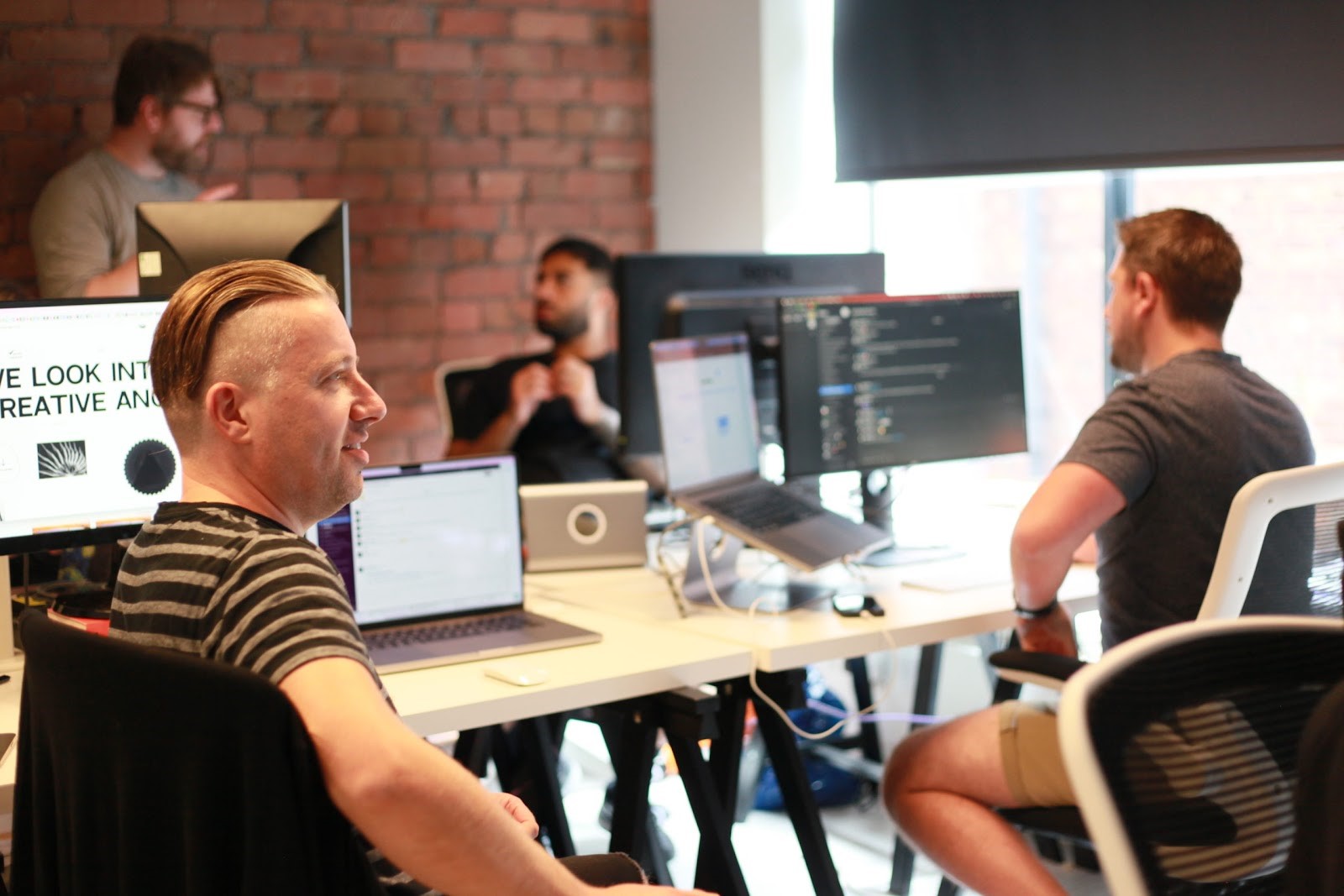
There’s something special about knowing the person who built your site, like, actually knowing them. Not in a CRM record. Not as a support ticket. But as a human being who cares about your results.
With Web Design Columbia, clients often form long-term working relationships that extend beyond individual projects. They’re not just calling in for redesigns — they’re discussing marketing ideas, campaign launches, or how to prep their site for a Chamber of Commerce spotlight.
And here’s the part I love: these designers and developers are often just a few miles away. That means if things go sideways, you’re not hunting down a help desk in another timezone. You’re texting someone who might also be stuck in the same downtown traffic jam.
When the Price Feels Too Good to Be True — And Isn’t
The most common reaction I hear when small businesses switch to local design firms is: “Why didn’t I do this sooner?”
The prices don’t just beat big agencies — they demolish them. And yet, the work is equal to or better in every meaningful way. Local teams don’t need to mark up services to cover the cost of their WeWork space and kombucha fridge. They just need your business to succeed, because that’s how they survive, too.
There’s no pressure. No one’s going to force you to migrate your site tomorrow. But if you’re even slightly frustrated with your current setup — or wondering if your site could be doing more for you — I suggest a straightforward thing: talk to a local team. Ask questions. Compare answers.
And if you’re looking for a recommendation, you can always visit us at webdesigncolumbia.us — where we’ve helped small businesses all across South Carolina turn their websites into serious lead machines, without selling their souls (or their profits) to national firms.
Ultimately, what we’re seeing isn’t just a trend. It’s a correction. Small businesses in South Carolina are waking up to the fact that web design doesn’t need to be expensive, slow, or out-of-state to be powerful. The smartest ones are staying local — and winning.
If you’re a business owner here in the Palmetto State, the best investment you can make this year might not be a new ad campaign or a rebrand. It might just be finally working with people who understand your town, your customer base, and your goals.
The design game has changed — and South Carolina’s local web teams are leading the way.