

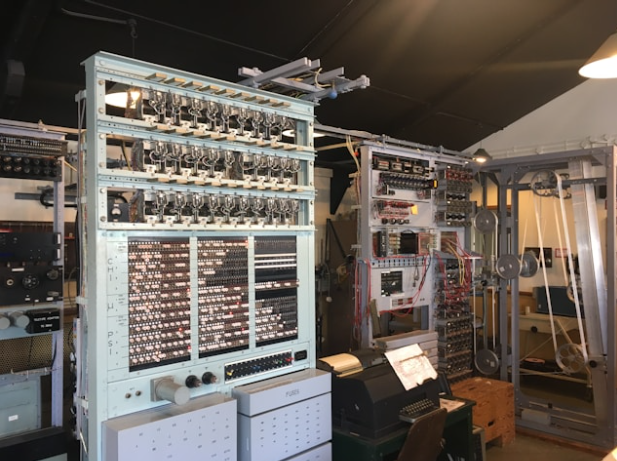
In today’s fast-evolving technological landscape, electromechanical systems are integral to everyday life, even if most people don’t realize it. These systems, which merge mechanical components with electrical controls, are essential in industries ranging from manufacturing to healthcare, and even in household appliances. Whether it’s an elevator, a washing machine, or a robotic arm in an automotive assembly line, electromechanical systems are working behind the scenes to make life easier and more efficient.
In this article, we will explore how three of the most common electromechanical systems work: electric motors, solenoids, and relays. Understanding these foundational devices will not only enhance your knowledge of how various machines operate but also help you appreciate the synergy between mechanics and electronics.
What Are Electro Mechanical Systems?
Electromechanical systems combine mechanical processes and electrical components to produce motion or perform work. These systems typically involve actuators (like motors or solenoids), sensors, and control units that manage how energy is transformed and directed.
The beauty of electromechanical systems lies in their versatility. They are used in robotics, automation, consumer electronics, aerospace, and medical equipment. Their functions can range from turning on a light to moving robotic arms with extreme precision.
1. Electric Motors – Turning Electricity into Motion
Overview:
Electric motors are perhaps the most commonly used electromechanical devices in the world. They convert electrical energy into mechanical energy and power everything from fans and pumps to electric vehicles and industrial machines.
How It Works:
An electric motor consists of several key components:
- Rotor: The moving part that rotates.
- Stator: The stationary part that contains windings or magnets.
- Commutator and Brushes (in DC motors): They facilitate the flow of current to the motor windings.
When electricity flows through the motor’s windings, it creates a magnetic field that interacts with permanent magnets or other windings in the motor. This interaction causes the rotor to spin, generating motion. The type of current—alternating (AC) or direct (DC)—determines the motor design and functionality.
Applications:
- HVAC systems
- Electric vehicles
- Power tools
- Industrial machinery
Electric motors are favored for their efficiency, reliability, and scalability. With advances in smart technologies, many motors are now embedded with sensors and controllers for precise operation.
2. Solenoids – Electromagnetic Actuation in Action
Overview:
A solenoid is a type of actuator that uses electromagnetic force to produce linear motion. While smaller and simpler than motors, solenoids are extremely useful for tasks that require pushing, pulling, or latching mechanisms.
How It Works:
A solenoid consists of a coil of wire and a plunger (usually made of iron or steel). When an electric current passes through the coil, it generates a magnetic field. This magnetic field pulls or pushes the plunger, converting electrical energy into linear mechanical movement.
The motion of the plunger is typically short but powerful, which makes solenoids ideal for quick-action tasks.
Applications:
- Door lock mechanisms
- Car starters
- Vending machines
- Irrigation systems
Solenoids are known for their fast response times and relatively low energy consumption. They are ideal for systems that require a rapid but temporary motion.
3. Electromechanical Relays – The Switchmasters
Overview:
Relays are switching devices that use an electromagnet to open or close circuits. They are fundamental to many control systems and serve as the backbone for electrical automation.
How It Works:
A relay typically includes:
- Electromagnet (coil)
- Armature (a moving component)
- Contacts (switching mechanism)
When current passes through the coil, it magnetizes the electromagnet, pulling the armature and either making or breaking a circuit via the contacts. When the current stops, a spring returns the armature to its original position.
This allows a low-power signal to control a high-power circuit, providing both safety and efficiency in electrical design.
Applications:
- Circuit breakers
- HVAC systems
- Automotive electronics
- Industrial automation panels
Modern relays may also include logic functions, timers, or even network connectivity, extending their use into more intelligent systems.
Integration and Control: The Heart of Electromechanical Systems
While electric motors, solenoids, and relays can function independently, their true power emerges when integrated into complex electromechanical systems. These systems often feature:
- Sensors: To detect environmental variables (temperature, pressure, motion).
- Controllers: Such as PLCs (Programmable Logic Controllers) to manage logic and sequencing.
- Feedback loops: To adjust performance in real-time.
For instance, in an automated manufacturing line, sensors detect the position of a component, a controller sends a signal to a motor to move it, and a relay switches on a pneumatic actuator to apply force. This harmonious orchestration of mechanical motion and electrical control is the hallmark of efficient electromechanical systems.
To learn about electromechanical controls, it’s helpful to understand how these devices work together in real-world scenarios, from industrial automation to home appliances.
Benefits of Electromechanical Systems
The combination of electrical control and mechanical motion offers several distinct advantages:
- Efficiency: They perform tasks faster and more precisely than purely mechanical systems.
- Reliability: With fewer moving parts, they often require less maintenance.
- Automation: Easily integrated into smart and programmable systems.
- Scalability: Can be designed for small devices or large industrial applications.
- Cost-effective: Modern materials and manufacturing processes make them affordable and long-lasting.
Common Challenges
Despite their advantages, electromechanical systems do come with a few challenges:
- Wear and tear: Moving parts can degrade over time.
- Electrical faults: Poor wiring or overloading can damage systems.
- Complexity: Integrating multiple systems requires expertise and accurate programming.
Regular maintenance and high-quality components can mitigate many of these issues.
The Future of Electromechanical Devices
As technology advances, electromechanical systems are becoming more intelligent, compact, and energy-efficient. The rise of IoT (Internet of Things), AI, and robotics is driving the development of “smart” electromechanical devices that can:
- Self-diagnose issues
- Adapt to changing environments
- Communicate with other systems
For example, modern HVAC systems now include sensors and electromechanical actuators that adjust airflow based on occupancy and temperature data, maximizing both comfort and energy efficiency.
Final Thoughts
Electric motors, solenoids, and relays are the building blocks of modern electromechanical systems. They are embedded in virtually every sector of life—from the car you drive to the elevator you ride, and the appliances in your kitchen. Understanding how they work offers a greater appreciation for the invisible technology making life smoother, faster, and smarter.
Whether you’re a student, technician, or just curious, taking the time to explore how these devices function is the first step toward a deeper knowledge of the machines that surround us.