

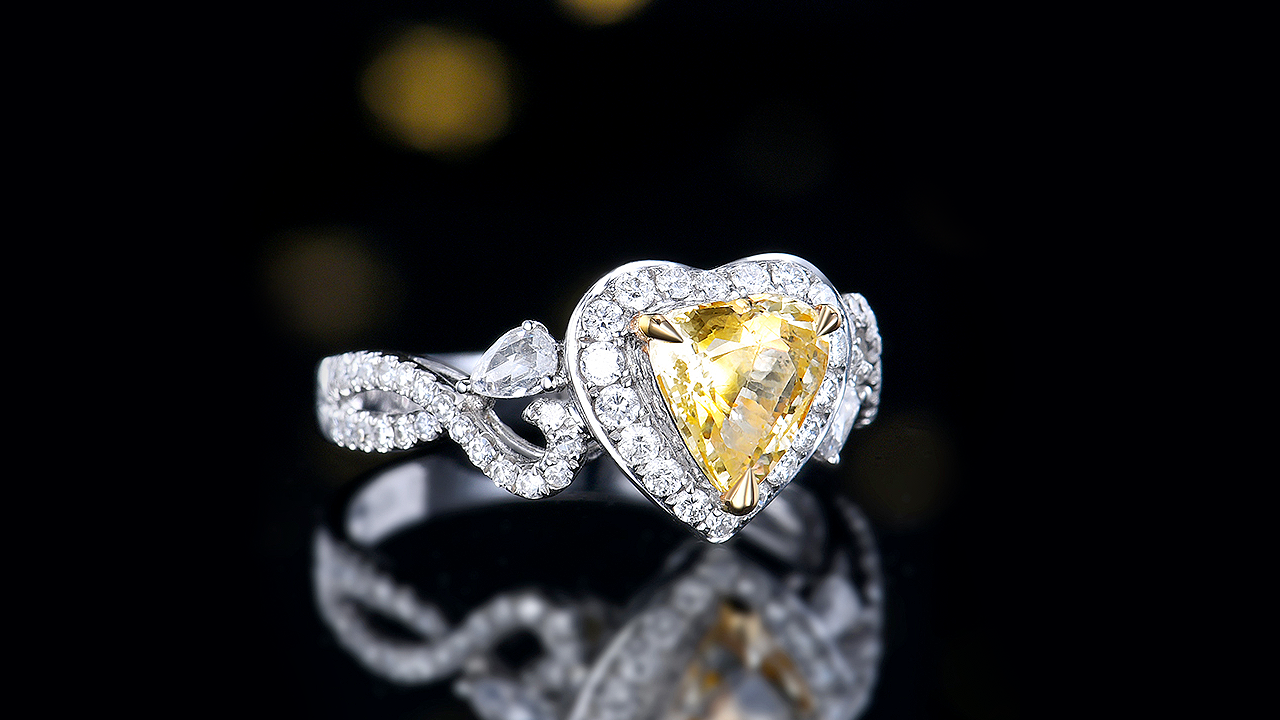
Natural yellow gemstones are beautiful, rare, and often expensive. But many stones sold today are synthetic or lab-created. Spotting the difference between a real vs synthetic yellow gem isn’t always easy.
Real yellow stones are formed in the earth over millions of years, while synthetic sconces are created in a lab within weeks. Original stones have natural inclusions, while synthetic ones can be flawless.
With the right tools and tests, you can protect your investment. This guide will help you separate fact from fiction in the real (natural) vs synthetic yellow gem comparison.
Quick Overview: Real vs Synthetic Yellow Gem
Here is a quick comparison between real and synthetic yellow gems so that you can distinguish real and synthetic yellow gemstones at a glance.
| Feature | Natural Yellow Gemstone | Synthetic Yellow Gemstone |
| Origin | Formed on Earth over millions of years | Created in labs within weeks |
| Inclusions | Has natural flaws | Usually flawless |
| Price | Higher, varies by rarity and origin | Lower, more consistent |
| UV Light Reaction | Weak or mixed fluorescence | Some lab-grown gems may show a strong, uniform glow, but fluorescence varies. |
| Certification | May include origin and treatment | Clearly marked as “lab-created” |
| Loupe Inspection | Shows needles, feathers, or mineral spots | Often has curved lines or air bubbles |
| Refractive Index | Varies slightly; 1.7–1.77 for sapphire | If chemically identical, the RI is almost the same. If they are simulant like YAG or CZ, the RI will be different |
| Mohs Hardness | 8–9 for sapphires and topaz | Can be similar or slightly lower. But glass or CZ is softer. (depends on the type) |
What Are Natural Yellow Gemstones?
Natural yellow gemstones are mined naturally from the Earth’s surface. You can’t make them; they are created naturally under the Earth over millions of years.
These stones are admired for their rarity, beauty, and rich golden hues, which make them highly desirable in jewellery.
What Are Synthetic Yellow Gemstones?
Synthetic yellow gemstones are created in laboratories within a few weeks. They are affordable alternatives to real yellow gemstones.
Well, very first, you have to understand that fake and synthetic yellow gems are not interchangeable. Some fakes are just colored glass or plastic.
These look like gems, but they wear quickly. Use the Mohs hardness for yellow stones as a simple test. Real yellow sapphires score 9. Glass scratches at five or lower. Plastic may show scuffs even from fingernails.
However, lab-made yellow sapphires have the same chemical and physical structure as natural stones. But they are grown in controlled settings. They take weeks—not centuries—to form.
The most common methods include:
- Flame fusion (produces curved growth lines)
- Hydrothermal (closer to natural structure, but more costly)
Lab-created yellow sapphire can look identical to a real gem to the untrained eye. But differences show under magnification and UV testing.
Real Vs. Synthetic Yellow Gemstones– How to Distinguish Them
Here, we have discussed some precise aspects of how you can identify real and synthetic yellow gemstones.
1. Genuine Gemstone Testing
Professional gem testers use a tool called a refractometer to measure refractive index. For sapphires, the reading should be 1.76–1.77. Cheaper fakes often measure below that. The refractive index test is a strong first step toward confirming if your gem is real.
Next, try UV light gem testing. If you shine a long-wavelength UV light on the stone, natural stones will tend to glow brighter.
On the other hand, synthetic gems usually glow bright under short-wave UV light.
2. Clarity and Inclusions
Use a 10x jewelry loupe inspection. Natural stones contain inclusions formed deep in the earth. These include:
- Feather-like fractures
- Needle crystals
- Pinpoints and clouds
In contrast, synthetic gems have:
- Curved striae (growth lines)
- Gas bubbles
- Perfect clarity, which is rare in nature
Real stones are rarely flawless. If your gem looks too perfect, it’s likely lab-made.
3. Gemstone Certification
Always request gemstone certification from a trusted lab. Look for documentation from GIA, IGI, or AGL. A report should state:
- Whether the gem is natural or synthetic
- Any treatments applied
- The gem’s origin, if known
From clear certifications from the top gem certification organisations, you can easily distinguish between the real and synthetic ones, even without any complicated test by yourself.
Avoid sellers who can’t provide certification. A verified report protects your purchase.
4. Gemologist Appraisal
Still unsure? Get a gemologist appraisal. A professional will use advanced tests like spectroscopy, polariscopes, and microscopes. They will confirm if your gem is real, synthetic, or treated.
This is especially useful for expensive pieces or older family heirlooms. An appraisal also helps with insurance coverage.
Yellow Sapphire Origin
A genuine yellow sapphire’s origin significantly increases its value. Top sources include Sri Lanka (Ceylon), Madagascar, Tanzania, Thailand, Burma, Africa, and Kashmir. These locations produce stones with soft yellow tones and high clarity.
Lab sapphires do not have a geographic origin. Sellers often list the origin on certified reports. Ask for it before you buy.
Heat-Treated Yellow Stone
Some natural yellow gems are heat-treated to improve color or clarity. This is common and accepted. But it must be disclosed. Treated stones may appear more vibrant but still qualify as real.
However, heat-treated gems are less valuable than untreated ones. They often show signs of surface changes, like color zoning or altered inclusions.
Yellow Gemstone Detection Quick Checklist
Natural and Synthetic gemstone detection requires multiple checks. Here is a checklist to ask yourself and find the answers to these questions.
- Does the stone have curved growth patterns?
- Is it too flawless?
- Does it glow brightly under UV?
Answering “yes” to two or more usually signals a synthetic gem.
Final Words
Spotting the difference between a real vs synthetic yellow gem takes a sharp eye and the right tools. Check for natural inclusions, measure hardness, verify the refractive index, and confirm certification. Always test or appraise before buying or selling.
If you want certified yellow gems with transparent details, shop at Saratti. Choose any yellow gemstone of your choice. Speak to an online consultant who will guide you choosing the perfect yellow gemstone to suit your budget. Whether you are collecting or looking to design your favorite dream piece, they are there to assist you in every step of the way.