

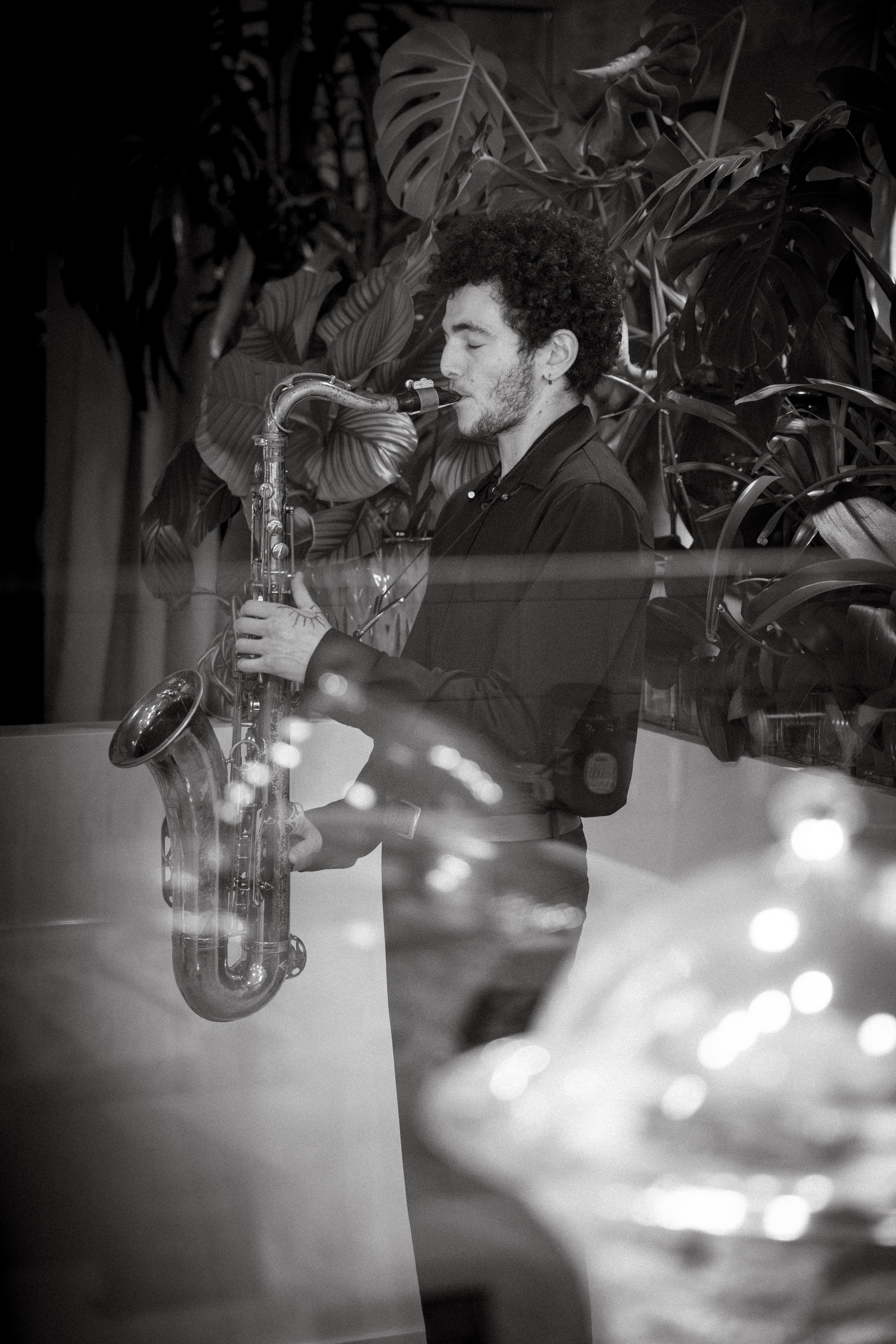
Shahar Amdor doesn’t enter rooms loudly. He doesn’t have to. The Israeli-born saxophonist and composer has become one of the most quietly magnetic forces in modern jazz, carving out an artistic lane that blends the expressive
traditions of his instrument with the expansive textures of electronic and film music. With a growing discography that includes Insomnia, Cassiopeia, and now Pink Times, Amdor’s sound has matured into something unmistakable: cinematic without being dramatic, soulful without excess, and technically virtuosic without losing the plot. His latest release, Pink Times, is arguably his boldest and most intimate yet—a longform ballad awash in synthesizers and
atmosphere, centered around a melody that unfolds like a confessional. There’s no soloing for the sake of chops, no cheap climaxes. Just a narrative arc told through tone, pacing, and instinct. But his journey didn’t begin in glossy
studios. Amdor built his sound gig by gig, from Israeli festivals to underground LA clubs, from collaborations with Billy Childs and Mohini Dey to headlining European showcases with Amdor’s Group. Everywhere he plays, he leaves a fingerprint. Not loud, but lasting. Perhaps the most compelling part of Amdor’s story is the DIY ethic behind it. Much of
his music is recorded in his own space, often mixed and produced with minimal gear but maximum intention. He’s proof that big ideas don’t need big budgets. A critical contributor to the success of Pink Times was producer Ido Eylon, whose refined ear and atmospheric instincts elevated the track to another dimension. Eylon didn’t just mix—it was a
true creative partnership. From balancing the ambient pads to subtly highlighting Amdor’s melodic phrasing, his production sculpted the sonic world in which Pink Times lives. Their collaborative chemistry brings out the best in both artists, pushing Amdor’s storytelling to new emotional heights. It’s this balance—between vision and humility, between
jazz legacy and future-forward sound design—that sets Amdor apart. He’s not trying to be the next anyone. He’s trying to be more himself. And in doing so, he’s becoming one of the most important musical voices to emerge from Israel in a generation.