

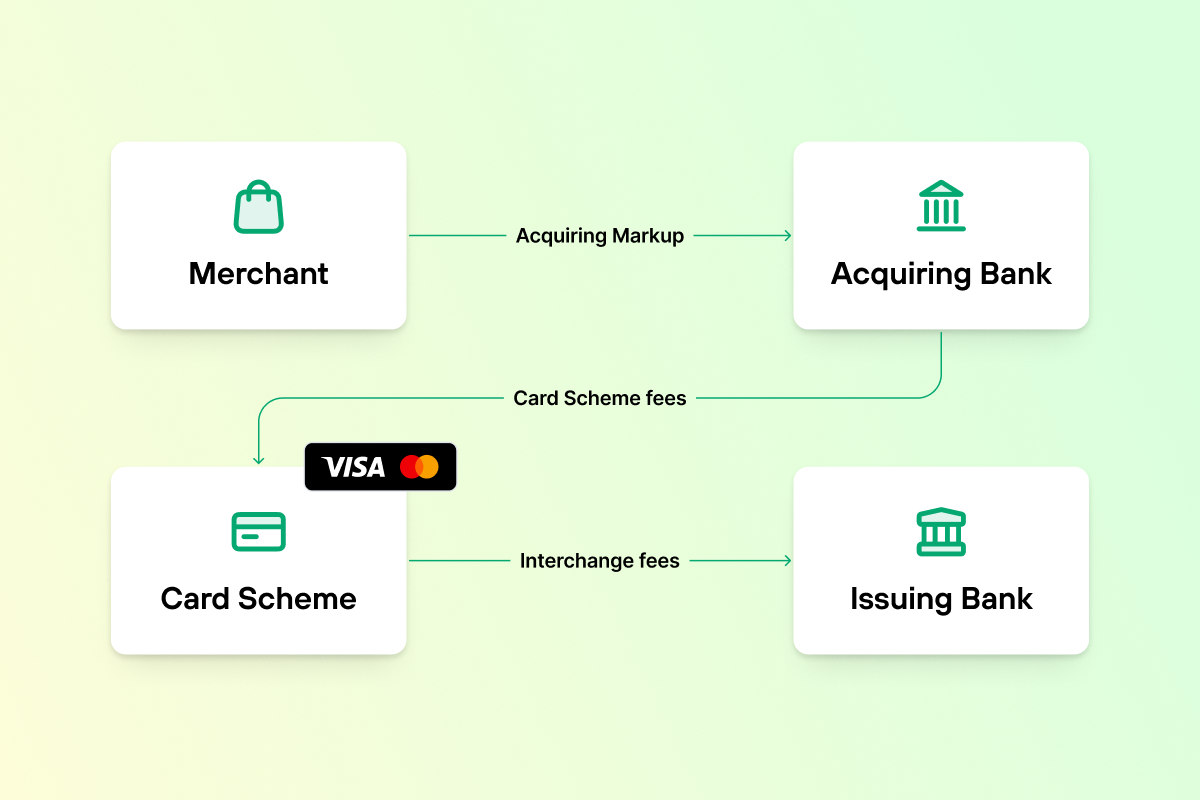
Interchange-plus pricing separates the true network cost from the processor markup on every transaction. That separation is the single clearest way for an online merchant to see what they actually pay to accept a card.
Flat-rate pricing hides the markup inside a blended percentage, which obscures margin leakage at scale. Understanding the structure changes how merchants negotiate and how much they keep.
How does interchange-plus pricing actually work?
Interchange-plus pricing charges the network interchange rate plus a fixed, disclosed processor margin. The interchange portion is set by Visa and Mastercard and is identical for every processor.
Federal data shows that interchange on a typical credit transaction averages near 2% of the sale, with the processor markup layered separately on top (Federal Reserve).
- Interchange: set by the card network, non-negotiable
- Assessments: small fixed network fees per transaction
- Processor margin: the only negotiable line item
Why does pricing structure affect ecommerce margins?
Pricing structure affects margins because small rate differences compound across high transaction volume. A 0.5% difference on a $200,000 monthly volume equals $12,000 in annual margin.
Merchants comparing models often find that a transparent ecommerce payment processing provider on interchange-plus terms exposes markup that flat-rate statements bury. The itemized statement makes every basis point visible, which is what allows real negotiation in the first place.
According to EcomPayments, specialty ecommerce merchants on interchange-plus pricing typically pay around 2.4% plus $0.10 per transaction, well below the 3.5% to 4.5% blended rates that flat-rate aggregators charge the same verticals.
What should merchants check on a processing statement?
Merchants should check the effective rate, which is total fees divided by total volume. This single number cuts through marketing claims and reveals the real cost.
The Electronic Transactions Association notes that effective rate is the most reliable cross-provider comparison metric for card acceptance (Electronic Transactions Association).
Which line items signal hidden markup?
Padded downgrade fees and non-qualified surcharges signal hidden markup most clearly. A reputable ecommerce merchant account provider itemizes these instead of folding them into a single blended rate, so the merchant can see exactly where each basis point goes.
- Non-qualified or downgrade transaction fees
- Monthly minimums and statement fees
- PCI compliance fees bundled without disclosure
Pricing transparency is leverage. Online merchants who read interchange-plus statements line by line keep more of every sale than those who accept a blended number on faith, and the savings compound every month they process.