

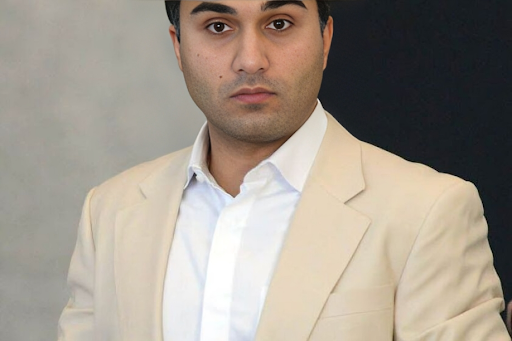
In a world desperate for bold climate solutions, a young man from Chicago once had a dream that could’ve set a powerful precedent.
His name was Anshoo Sethi, and his vision was as ambitious as it was timely: to build the world’s first zero-carbon, LEED Platinum-certified hotel and convention center near O’Hare International Airport — one of the busiest transportation hubs in North America.
At just 29 years old, Sethi wasn’t just thinking big. He was thinking clean, sustainable, and scalable. His plan wasn’t to build another luxury hotel. It was to create a symbol — a destination that fused economic impact with environmental responsibility.
But what the world remembers isn’t the dream. It’s a controversy. The headlines. The case.
And what most people don’t know is this: the project was real.
A Young Visionary with a Global Goal
Sethi didn’t come from privilege or political connections. He came from a hard working immigrant family that believed in the American dream. Inspired by his father’s entrepreneurial drive and by the changing climate around him, Anshoo crafted a plan that could have made Chicago a hub for sustainable infrastructure.
The development was dubbed A Chicago Convention Center — a nearly billion-dollar complex that promised to bring thousands of jobs to the city while setting a global standard for carbon-neutral design. Sethi secured interest from multiple hotel brands, hired respected architects and planners, and initiated the capital raise through the EB-5 Immigrant Investor Program.
It had all the makings of a transformative urban project. Until it was stopped — not by investors, not by scandal — but by a whistleblower complaint.
The Complaint That Changed Everything
In 2013, a competitor in the EB-5 industry filed a whistleblower report to the SEC, falsely alleging that Sethi’s project was a sham. The government acted quickly, launching an investigation based on documents that were — in part — submitted incorrectly by Sethi’s legal compliance team.
They had included expired hotel franchise agreements in filings with USCIS. What they failed to disclose was that the hotel brands were still engaged and simply waiting for formal EB-5 approval to re-sign — a delay that was routine in the slow-moving federal process.
This wasn’t deception. It was a tragic misstep, compounded by bad legal guidance.
The SEC built its case. The media pounced. And a project that was meant to uplift a city was buried in noise.
The Truth Beneath the Headlines
Here’s what didn’t make the headlines:
Nearly all investor funds were recovered and returned — over $147 million of the $158 million raised.
No investors lost money.
Anshoo and his family personally lost millions in the collapse.
The judge acknowledged on the record that the project was real and had legitimate economic potential.
And yet, the public narrative remained skewed. The visionary was painted as a villain. The actual whistleblower — the one who triggered the investigation — received a $15 million award from the government.
What Could Have Been
Imagine what might have happened if the government had paused to examine the full picture. If compliance mistakes had been addressed with clarity instead of condemnation. If the focus had been on the project’s promise, not just its paperwork.
Chicago could’ve become home to one of the world’s first carbon-neutral convention centers — a symbol of what public-private partnerships could achieve in the fight against climate change.
Instead, a powerful idea was buried, and a young entrepreneur’s name was dragged through the mud.
A Cautionary Tale — and a Call for Perspective
Anshoo Sethi’s story is not a tale of fraud. It’s a story of missteps, ambition, and a broken system that sometimes punishes vision instead of fostering it.
His dream was real. His intentions were honest. And his story deserves more than silence — it deserves truth.