

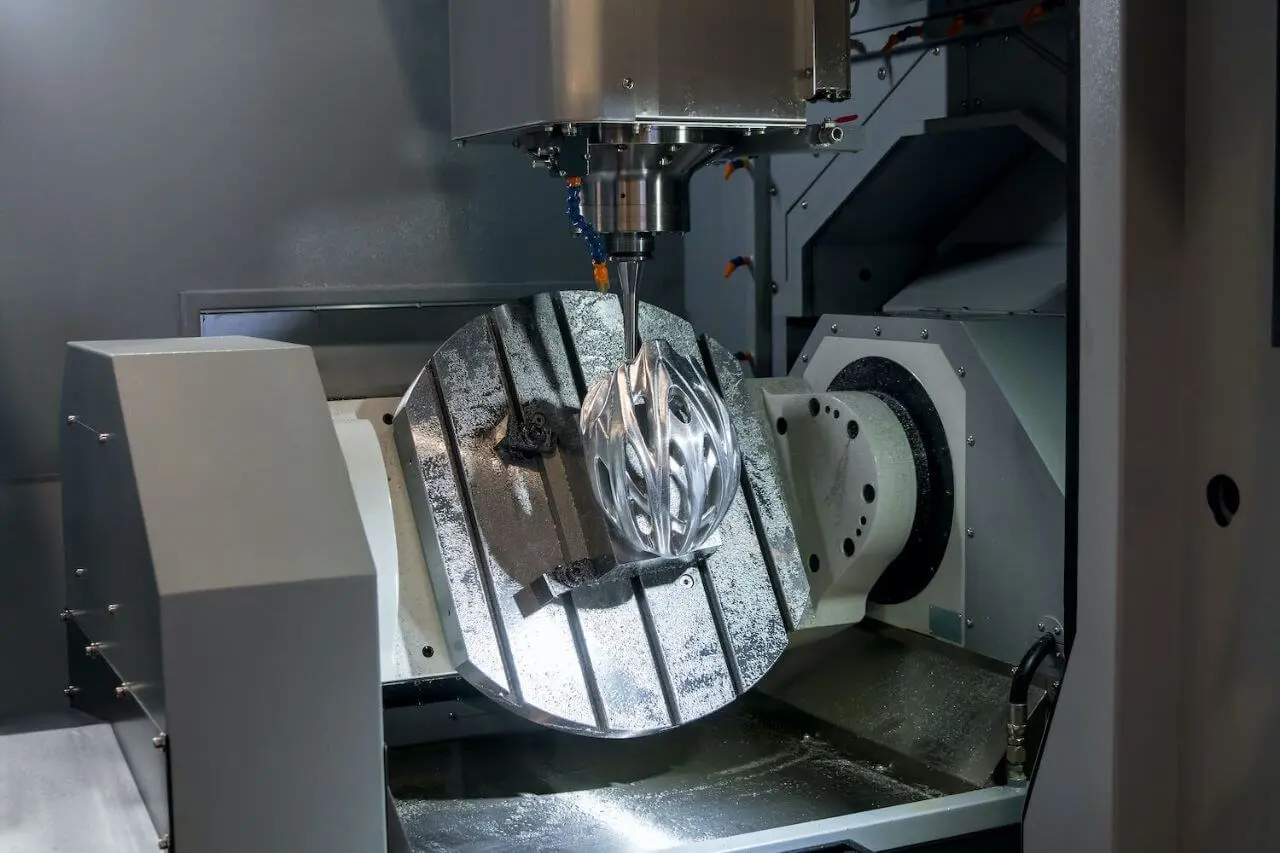
Aluminum extrusion is an efficient way to produce lightweight parts with a consistent cross-section, but most industrial projects do not stop at the raw profile stage. In automation systems, enclosures, equipment frames, and module assemblies, buyers usually need holes, threads, machined ends, and reliable mounting features that support repeatable assembly. That is why manufacturers such as Yueyi Precision custom manufacturing increasingly combine extrusion with CNC machining to turn profile-based geometry into assembly-ready industrial components.
Why Raw Extrusions Rarely Go Straight Into Assembly
Extrusion is ideal for producing long parts with a consistent cross-section and integrated features such as grooves, ribs, and support walls. But most industrial profiles still need secondary work before installation. Extrusion creates the near-net structural form, while CNC machining adds the holes, threads, end details, and interface features that make the part functional in assembly.
Common post-extrusion features required in industrial parts
l Drilled mounting holes for brackets, covers, and joining hardware
l Tapped holes for direct fastening into the profile
l Milled slots, windows, or pockets for connectors and cable routing
l End-face machining for joining, capping, or alignment
l Flat reference surfaces for better contact with mating components
l Controlled cut-to-length ends for cleaner fit and repeatable assembly
This is why engineers increasingly evaluate precision extrusion profiles not only by cross-section geometry, but by how effectively the profile can be transformed into an assembly-ready part.
What CNC Machining Actually Adds to Extruded Profiles
The value of CNC machining is not just “better precision” in a general sense. Its real value is that it adds controlled, application-specific features that extrusion cannot economically or consistently deliver by itself.
For example, a profile may be dimensionally acceptable as an extrusion, but once it needs to connect to a bracket, a cover plate, a machined base, or a sensor fixture, localized accuracy becomes far more important than overall profile shape. If a hole pattern is slightly off, or if the end face is not prepared correctly, the part may still be usable in theory—but the assembly process becomes slower, less stable, and more expensive.
CNC machining usually adds value in four areas
1) Hole location and fastening features
Profiles used in equipment frames, covers, support members, or enclosure bodies often rely on accurate drilled and tapped holes to connect with other parts. These features directly affect assembly speed and alignment.
2) End machining and joining geometry
Profiles used in modular frames or industrial housings may need machined ends for squareness, connector interfaces, notches, or fastening details.
3) Localized pockets, slots, and cutouts
Sensor openings, access windows, cable passages, and clearance features are often difficult to control through extrusion alone but straightforward to create with CNC milling.
4) Functional reference faces
Machined flats and controlled contact surfaces help the profile fit more consistently with sheet metal, machined plates, molded housings, and purchased hardware.
Extrusion vs CNC Machining: What Each Process Should Handle
One of the most practical ways to improve cost and manufacturability is to assign the right features to the right process. Extrusion should create the geometry that benefits from continuous cross-section production. CNC machining should handle the localized features that depend on tighter control or product-specific positioning.
Manufacturing Need
Better Handled by Extrusion
Better Handled by CNC Machining
Constant cross-section geometry
Yes
No
Internal ribs, grooves, and channels
Yes
No
Lightweight structural form
Yes
No
Long-profile production efficiency
Yes
No
Precise hole locations
Limited
Yes
Threaded holes
No
Yes
Milled pockets / slots / windows
Limited
Yes
End-face machining and joining details
No
Yes
Localized flat reference surfaces
Limited
Yes
Assembly-specific interface features
Limited
Yes
This division of labor is one reason custom machined aluminum profiles are so effective in industrial manufacturing. Extrusion creates the structural backbone. CNC machining refines the features that actually control fit, repeatability, and installation.
Why Tolerance Strategy Matters More Than “Tightest Possible Tolerance”
A common sourcing mistake is assuming that every dimension on an aluminum profile needs to be as tight as possible. In reality, that usually increases cost without improving function. Not every feature affects assembly in the same way, so not every feature needs the same level of control.
The more effective strategy is to separate dimensions into three groups:
1) Cosmetic or non-critical dimensions
These can often remain within normal extrusion capability if they do not affect assembly, sealing, or part-to-part fit.
2) Structural dimensions
Wall thickness, cross-section stability, and general profile geometry matter, but they do not always require machining unless they influence a downstream interface.
3) Fit-critical features
Hole position, threaded features, machined ends, datum faces, and joining surfaces usually deserve tighter control because they directly affect fastening, alignment, and repeatability.
This is the point where the discussion shifts from “Can this part be extruded?” to “Which features must be machined after extrusion?” That distinction affects tooling, machining cost, inspection planning, and final assembly performance.
Common CNC Operations Used on Aluminum Extrusion Profiles
Different applications require different secondary operations, but several processes appear repeatedly across custom aluminum extrusion profiles used in industrial products.
Drilling
Used for mounting holes, access holes, fixture holes, and joining points. Hole position often matters more than profile appearance because it determines how the part fits into the final assembly.
Tapping
Allows covers, brackets, and structural hardware to be fastened directly into the profile without additional nuts or inserts.
Milling
Used for pockets, slots, relief features, sensor windows, connector openings, and flat interface surfaces.
End machining
Important for profiles that need clean joining surfaces, connector mounting, notches, or accurate modular frame assembly.
Controlled cut-to-length finishing
Length accuracy and end quality can influence both visual appearance and part fit, especially in enclosure and frame applications.
Quick summary: extrusion gives the shape, machining gives the function
Profile Requirement
Typical Secondary Operation
Mounting hole pattern
Drilling
Direct threaded fastening
Tapping
Sensor / connector opening
Milling
Joining end detail
End machining
Better contact or alignment face
Milling / facing
Final length and clean ends
Precision cut + end finishing
When Custom Profiles Make More Sense Than Standard Shapes
Not every project needs a custom extrusion. Standard bars, tubes, channels, and common structural profiles can be a practical choice when geometry is simple and machining needs are limited. But once a design starts accumulating separate brackets, adapter plates, reinforcement parts, and cosmetic covers, it becomes worth evaluating whether a custom profile would reduce total manufacturing complexity.
A well-designed custom extrusion profile for industrial assemblies can combine structural walls, locating surfaces, cable paths, support ribs, and joining geometry into one section. That does not eliminate machining, but it can reduce billet machining time, simplify the bill of materials, and make downstream assembly cleaner.
Standard shape vs custom profile: a practical comparison
Scenario
Standard Shapes May Be Enough
Custom Extrusion Profile May Be Better
Low-volume, simple geometry
Yes
Sometimes not worth tooling
Straightforward spacers or brackets
Yes
Not always necessary
Repeated geometry across a product line
Limited
Yes
Integrated channels, ribs, and cosmetic edges
Limited
Yes
Multiple fabricated parts in one assembly
Limited
Yes
Recurring production with assembly efficiency goals
Sometimes
Often yes
The important question is not whether custom extrusion is “better” in general. It is whether it reduces total manufacturing work once machining, assembly, and repeatability are considered together.
Why This Workflow Matters in Automation, Enclosures, and OEM Equipment
The combination of extrusion plus CNC machining is especially useful when aluminum profiles are expected to be both structural and functional.
Automation equipment
Profiles may act as rails, sensor carriers, support members, or frame components, but they also need accurate mounting patterns, cable passages, and joining features.
Enclosures and housings
A profile may form the body of a housing or enclosure, yet still require machined connector openings, fastening points, ventilation cutouts, and bracket interfaces.
Module assemblies
In modular products, profile-based parts often need repeatable end geometry and controlled fastening features so that installation can be scaled without manual fitting.
OEM custom equipment
When an OEM wants to reduce separate fabricated parts and simplify the assembly route, a machined extrusion component can often replace multiple brackets, plates, or welded structures.
What Buyers Should Review Before Quoting a Machined Extrusion Part
Before sending a profile-based part out for quotation, it helps to define which features truly matter in production. This improves quote accuracy, reduces tooling revisions, and makes supplier discussions more productive.
A practical pre-quote checklist
l Which dimensions are cosmetic, structural, and fit-critical?
l Which features should be created in the extrusion die, and which should be machined later?
l Does the part require drilled holes, tapped holes, pockets, cutouts, or end machining?
l Will the profile mate with sheet metal, machined, molded, or purchased components?
l Is the surface finish cosmetic, protective, or function-driven?
l Does annual volume justify custom tooling?
l Are there packaging, labeling, or sub-assembly requirements after machining?
For teams that are still evaluating these decisions, a structured custom aluminum extrusion guide can help separate profile design choices from downstream machining decisions. That makes it easier to determine what belongs in the die, what belongs in CNC finishing, and where cost can actually be reduced without compromising function.
Choosing a Supplier for Machined Extrusion Components
When sourcing profile-based components, buyers should look beyond whether a supplier can handle extrusion or CNC machining separately. The more important question is whether that supplier can manage the full transition from profile production to finished part preparation. A capable partner should be able to review section geometry, identify which features belong in the extrusion and which should be machined later, and control inspection around the dimensions that actually affect assembly. That matters especially in precision aluminum profile machining projects where fit-critical features matter more than the raw profile alone.
Final Thoughts
Aluminum extrusion is a powerful process, but in many industrial applications it should be treated as the starting point rather than the finished solution. The profile provides the efficient structural form, while CNC machining adds the controlled features needed for fit, fastening, and repeatable assembly. When geometry, tolerance planning, and machining strategy are aligned from the start, manufacturers can reduce part count, simplify production, and deliver profile-based components that are truly ready for use.