

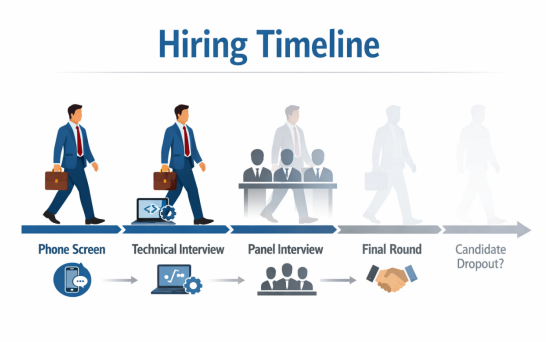
You’ve found the perfect candidate. Their resume checks every box, the initial interview went well, and your hiring team is excited. Then, without warning, they withdraw from consideration. No counteroffer involved. No dramatic exit. They simply lose interest and move on.
This scenario plays out in organizations across industries, costing companies time, money, and access to top talent. According to research from LinkedIn, nearly 50% of candidates have ghosted an employer during the hiring process. While some dropout is inevitable, a significant portion stems from controllable factors within your recruitment approach.
Understanding why qualified candidates abandon the hiring process mid-stream—and implementing strategies to prevent it—has become a critical competency for organizations competing for talent in today’s market.
The Real Cost of Candidate Dropout
Before addressing solutions, it’s important to quantify what’s at stake. When a strong candidate withdraws after multiple interviews, the organization absorbs several hidden costs.
The most obvious is time. Your hiring team has invested hours in resume review, phone screens, interviews, and internal deliberations. That’s time diverted from other strategic priorities. There’s also the impact on productivity, particularly if the role has been vacant for weeks or months while you restart the search.
Beyond internal costs, there’s reputational risk. Candidates who have poor hiring experiences share those stories. They tell other professionals in their network, post reviews on employer rating sites, and may think twice before considering your organization again in the future.
Why Qualified Candidates Walk Away
Lengthy, Unfocused Interview Processes
The number one driver of candidate dropout is a hiring process that drags on too long without clear progression. When candidates face four, five, or six rounds of interviews with no timeline or end in sight, they begin questioning whether the organization can make decisions efficiently.
Strong candidates are typically evaluating multiple opportunities simultaneously. Each week that passes without movement gives competitors time to extend offers. Even candidates who aren’t actively interviewing elsewhere may interpret delays as disorganization or indecision at the leadership level.
Poor Communication and Information Gaps
Candidates need transparency about where they stand and what comes next. When hiring managers go silent for weeks between interview rounds, or when no one clearly explains the steps remaining in the process, candidates fill that information vacuum with doubt.
This communication breakdown often stems from internal handoff issues. The recruiter may assume the hiring manager is keeping candidates informed. The hiring manager assumes HR is handling it. Meanwhile, the candidate hears nothing and assumes the worst.
Misalignment Between Job Description and Reality
Sometimes the role discussed during interviews bears little resemblance to what was advertised. Perhaps the initial posting emphasized strategic leadership, but interviews reveal the position is mostly tactical execution. Or the job was presented as fully remote, but hiring managers now mention “occasional” office requirements.
When candidates detect this misalignment, they question whether other aspects of the role or company culture have been misrepresented. That doubt is often enough to prompt withdrawal.
Inadequate Selling of the Opportunity
Many hiring teams approach interviews as purely evaluative, forgetting that candidates are also assessing whether they want to work for you. When interviewers fail to articulate the vision, growth potential, or impact of the role, they miss the opportunity to build genuine excitement.
This is particularly true for passive candidates who weren’t actively job searching. They need compelling reasons to leave their current position. A series of interviews that feel like interrogations, without any effort to inspire or engage, won’t provide that motivation.
Strategic Interventions to Reduce Dropout
Compress Your Timeline Without Sacrificing Quality
Organizations with the lowest candidate dropout rates move quickly while maintaining thorough evaluation. This doesn’t mean rushing decisions or skipping important steps. It means eliminating unnecessary delays and coordinating interview schedules efficiently.
Set a target timeline from initial interview to offer—ideally two to three weeks for most professional roles. Communicate this timeline to candidates upfront. Then work backward to ensure your team can meet those deadlines, blocking calendars in advance and batching interview rounds when possible.
If you need more time for a particular decision point, explain why to the candidate. Transparency about the reason for a delay is far better than radio silence.
Assign a Single Point of Contact
Every candidate should know exactly who to contact with questions and who will provide updates. This person—whether a recruiter, HR coordinator, or hiring manager—becomes responsible for consistent communication throughout the process.
This approach prevents the common scenario where candidates email multiple people hoping someone will respond, or where they receive conflicting information from different team members. It also ensures someone is actively monitoring candidate engagement and can intervene if interest appears to be waning.
Create Structured Communication Touchpoints
Even when there’s no new information to share, regular touchpoints keep candidates engaged. A simple email acknowledging that interviews are being scheduled, or that the team is still in deliberations, demonstrates respect for the candidate’s time and maintains momentum.
These communications should include clear next steps and realistic timelines. If you’re waiting on a key decision-maker who’s traveling, say so. If you’re interviewing other candidates before making a final decision, be transparent about that process without sharing inappropriate details.
Build Two-Way Dialogue Into Every Interview
Interviews should accomplish two objectives: evaluating candidate fit and selling them on the opportunity. Structure each conversation to include dedicated time for the candidate’s questions and concerns.
Train interviewers to share specific examples of what makes the role compelling—recent wins, upcoming projects, growth trajectories, or aspects of company culture that differentiate your organization. This isn’t about making inflated promises. It’s about helping candidates visualize their potential impact and future with the company.
Conduct Honest Role Previews
Rather than overselling the position, provide realistic insight into both the opportunities and challenges. Discuss the current state of the team, obstacles they’ll need to navigate, and where the organization needs to improve.
Candidates appreciate this honesty and are more likely to self-select appropriately. Those who stay engaged after a realistic preview are genuinely interested in the actual role, not an idealized version of it. This approach, championed by companies with strong retention metrics, reduces both mid-process dropout and early-tenure regret.
Monitor and Address Red Flags Early
Pay attention to the candidate’s behavior throughout the process. Are they slow to respond to scheduling requests? Do they seem less enthusiastic in later interviews than earlier ones? These subtle signals often indicate declining interest.
When you notice these patterns, address them directly. A simple conversation asking if they have concerns about the role or timeline can surface issues before they lead to withdrawal. Sometimes candidates have legitimate questions they’ve been hesitant to raise. Creating space for that dialogue can re-engage them.
Systemic Solutions for Long-Term Improvement
Reducing candidate dropout requires more than tactical fixes. Organizations that consistently keep strong candidates engaged throughout hiring have made systemic changes to how they approach recruitment.
This includes training hiring managers on candidate experience, not just evaluation techniques. It means implementing technology that facilitates better coordination and communication. It involves regularly collecting feedback from candidates, including those who withdrew, to identify recurring problems.
Some organizations partner with hrpersonnelservices.com to benchmark their hiring processes against industry standards and identify specific bottlenecks causing candidate dropout. External perspective can reveal blind spots that internal teams have normalized.
The Competitive Advantage of Improved Candidate Experience
Organizations that master the art of keeping candidates engaged throughout the hiring process gain significant competitive advantage. They close offers faster, lose fewer top candidates to competitors, and build stronger employer brands that attract future talent.
More importantly, they signal to incoming employees that the organization values people’s time, communicates clearly, and operates efficiently. Those same qualities that prevent candidate dropout also contribute to employee retention and organizational effectiveness once someone joins the team.
The hiring process is often a candidate’s first extended interaction with your company culture. Make it count. When strong candidates withdraw mid-process, it’s rarely because they found something better. More often, they found something clearer, faster, or more engaging. The solution is within your control.