

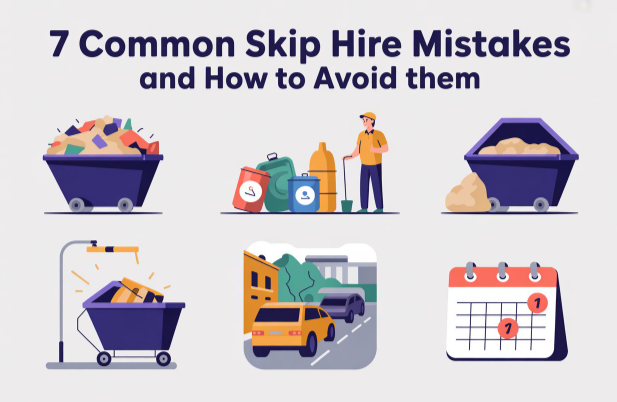
Skip hire is usually considered a straightforward addition to a project. You hire a skip, fill it with rubbish, and that’s it. However, the truth is that many projects experience unnecessary issues due to poor planning of waste management. Issues such as additional costs, delays, and regulatory problems can arise from seemingly minor errors.
Knowing the most common skip hire mistakes and how to avoid them can help save time, money, and headaches, whether you are a homeowner, contractor, or business owner.
Mistake 1: Underestimating How Much Waste You’ll Produce
One of the most common and costly errors is to order a skip that is too small. It is easy to underestimate the amount of waste until it is piled up. When materials are processed and removed, the amount of waste grows quickly.
Home renovations are especially misleading. Outdated kitchens, bathrooms, and flooring are bulky and take up space quickly. When a skip is filled too quickly, individuals either overload it or rent a second skip, which is more expensive.
The only way to prevent this error is to talk to the skip hire company about your project. Experienced companies give advice based on actual project experience, not estimates.
Mistake 2: Overfilling the Skip
Overfilling a skip is not only a nuisance, it is also dangerous and illegal. Refuse needs to be left level with the top edges of the skip to ensure it can be transported safely.
Overfilling skips can lead to the refusal of collection, meaning customers have to take the waste away or face extra charges. This can often lead to delays, particularly on construction sites where time is of the essence.
Loading skips correctly makes a world of difference. Taking the time to break down items, spreading the weight, and arranging items carefully can help to ensure that the skip is filled to its capacity.
Mistake 3: Disposing of Prohibited or Hazardous Waste
Not all rubbish can go into a typical skip. Some examples of items that need to be disposed of in a special way include:
Asbestos, batteries, tyres, chemicals, paint, gas containers, and some electrical goods.
These are often assumed to be acceptable simply because they are small and ubiquitous. However, the consequences of getting it wrong can be very serious indeed.
Don’t make this mistake by not asking for a list of prohibited items before you begin to load the skip.
Mistake 4: Ignoring Permit Requirements
If a skip is put on a public road, pavement, or verge, a permit is normally needed from the local council. Some individuals believe that permits are optional or that they are automatically arranged by the skip company, which is not always the case.
If a permit is not obtained, there could be fines or the skip could be removed. This could cause problems with work and additional costs.
It is important to determine who is responsible for getting the permit. Many reputable companies will arrange the permit on behalf of the customer, especially if they have a good relationship with the local council.
Mistake 5: Poor Timing and Scheduling
Projects will seldom have a perfect timeline. Weather-related delays, material availability, or unforeseen work can completely disrupt the timeline.
Hiring a skip for a period that is too short will result in rushed work or incomplete waste removal. Hiring a skip for longer than intended can result in additional costs if extensions are not factored in.
The answer to this problem is flexibility. Select a supplier that has flexible hire periods and is clear about extension options.
Mistake 6: Poor Skip Placement
The location of skips is sometimes left until the last minute, which can result in access problems or disputes. Blocking driveways, footpaths, or adjacent properties can cause problems.
Incorrect placement can also lead to inefficient loading, which can increase labor problems and frustration.
Careful planning of placement will ensure safe access, easy loading, and minimal disruption. Providers should consider placement possibilities before delivery.
Mistake 7: Choosing the Cheapest Option Without Research
Price is important – but it shouldn’t be the only consideration. The cheapest skip hire solution may have its drawbacks, such as hidden charges, poor service, or poor communication.
Late deliveries, missed collections, and poor communication can sometimes cost a lot more in the long run than a slightly higher initial price.
Reviews, licenses, and prioritizing good communication over cheap prices can save a lot of headaches in the long run.
Final Thoughts
The good news is that most common mistakes in skip hire can be easily avoided with a little planning and the right partner. Your waste management process should help your project, not hinder it.
With this knowledge and a proactive mindset, you can make sure that your skip hire process is seamless, compliant, and stress-free from beginning to end.