

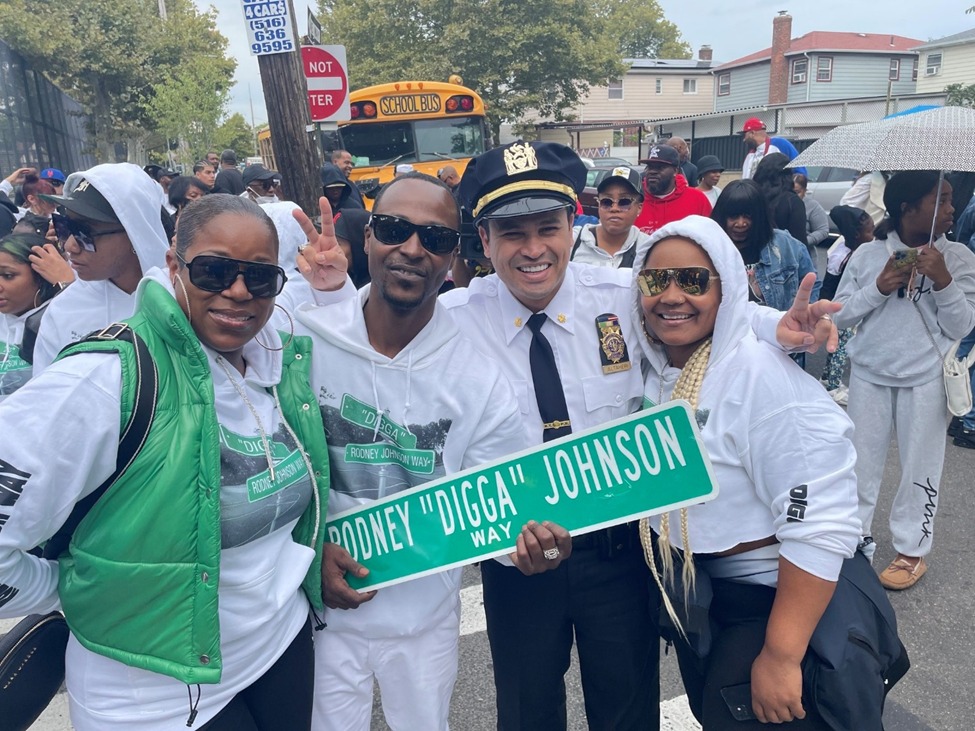
The scale and complexity of cities have always defined the policing of urban areas in the United States. Large departments, such as the NYPD, have been responsible for policing diverse neighborhoods. Police officers have had to deal with crime prevention, community relations, and internal policing at the same time. The NYPD is the largest municipal police department in the United States, with more than 35,000 uniformed patrol officers. It is also an institution that is often associated with change. Positions of leadership in such a system have significant operational and symbolic value, especially for individuals from minority communities in law enforcement.
Jamiel Altaheri, born February 23, 1983, entered this environment during the early 2000s, beginning a career that would span more than two decades. Raised in Brooklyn and educated within New York City’s public school system, Altaheri later pursued higher education at Brooklyn College, Seton Hall University, John Jay College of Criminal Justice, and the University of Virginia. His academic work culminated in a PhD in Criminal Justice from Liberty University, where his research focused on Muslim Leaders’ Perceptions Of Neighborhood Policing in New York City. This academic focus aligned with his later professional roles in community engagement and institutional policy.
The early assignments of Altaheri within the NYPD involved various operational divisions that addressed various crime issues and enforcement. Some of the assignments included service within the Narcotics Division, Vice Enforcement Squad, Housing Bureau, Transit District 32, and the Bronx District Attorney’s Office. These assignments provided Altaheri with exposure to various policing environments, from enforcement to prosecutorial coordination. Altaheri also had assignments within the Internal Affairs Bureau and the Homeless Outreach Unit, which both focus on various issues of policing, including oversight and social services. These assignments are generally significant for those officers who seek leadership positions.
Eventually, Altaheri progressed through the rank structure of the NYPD, including assignments as a detective, sergeant, lieutenant, and deputy inspector. In 2015, Altaheri was promoted to the rank of captain, making him the first Yemeni American to attain such a rank within the NYPD. The promotion of Altaheri was recognized within media outlets, which highlighted the few Arab and Muslim Americans who attain leadership positions within law enforcement agencies. The promotion of Altaheri placed him within the higher ranks of Muslim officers within the NYPD, which reflected the gradual demographic changes within the NYPD.
Aside from this, Altaheri was also involved in various leadership positions within the precincts. He was the executive officer of the 23rd Precinct in East Harlem, New York, and later of the 20th Precinct in the Upper West Side of Manhattan, New York. These positions involved overseeing the operations of the precincts, managing personnel, and overseeing the implementation of crime reduction strategies. He was later appointed as the commanding officer of the 115th Precinct. The commanding officers are usually assessed based on crime statistics, community relations, and their response times.
Later on, Altaheri was appointed to the role of Commanding Officer of the Office of Equity and Inclusion. This role was concerned with issues of diversity, both within the NYPD and within the community. Some of the issues that were addressed within this period included increasing minority representation within the NYPD, as well as issues of bias within policing. These issues were addressed within a larger context in which there was an increase in concerns about policing in the United States.
Aside from his operational role, Altaheri was also certified by the NYPD as an Arabic linguist. Being certified in languages by the NYPD is aimed at enhancing communication with individuals from diverse linguistic backgrounds. The skill is also valuable in both investigative work and community outreach. Altaheri’s linguistic skill is consistent with his involvement in community outreach among Arab and Muslim communities in NYC. This involved participating in events aimed at creating cultural awareness, especially on issues involving interfaith relations. Such issues were prominent in the post-September 11 attack era.
Altaheri’s professional development also involved his participation in the FBI’s National Academy. He graduated in March 2016 in Quantico, Virginia. The FBI’s National Academy is a ten-week training program aimed at selected law enforcement leaders from the United States and other countries. To be accepted into the program, an individual must have demonstrated leadership skills. Being part of the academy’s graduates placed Altaheri in an exclusive group of law enforcement leaders who have undertaken training in selected fields.
Besides his official positions, Altaheri was also a part of professional and cultural groups within law enforcement. One of his notable roles was co-founding the NYPD Muslim Officers Society. The purpose of this society was to help and support Muslim officers within the NYPD and create dialogue within the NYPD. Another role that he played was that of director of public relations for the NYPD Middle East and Turkic Society. He then went on to found the Yemeni American Law Enforcement Officers Association. Such roles are a part of the larger issue of diversity and inclusion within law enforcement.
His doctoral study focused on how Muslim community leaders viewed neighborhood policing strategies in New York City. Such a study relates to the larger criminal justice issue of procedural fairness. Police officers who possess a doctoral degree are likely involved in departmental activities, especially if they are involved in the particular area of study.
The career of Jamiel Altaheri could be discussed in relation to the connection between policing operations, organizational leadership, and community representation within a metropolitan police force. The progression of his career through the NYPD ranks, along with his involvement in specialized capacities, could be discussed in relation to individual career progression and organizational progression.