

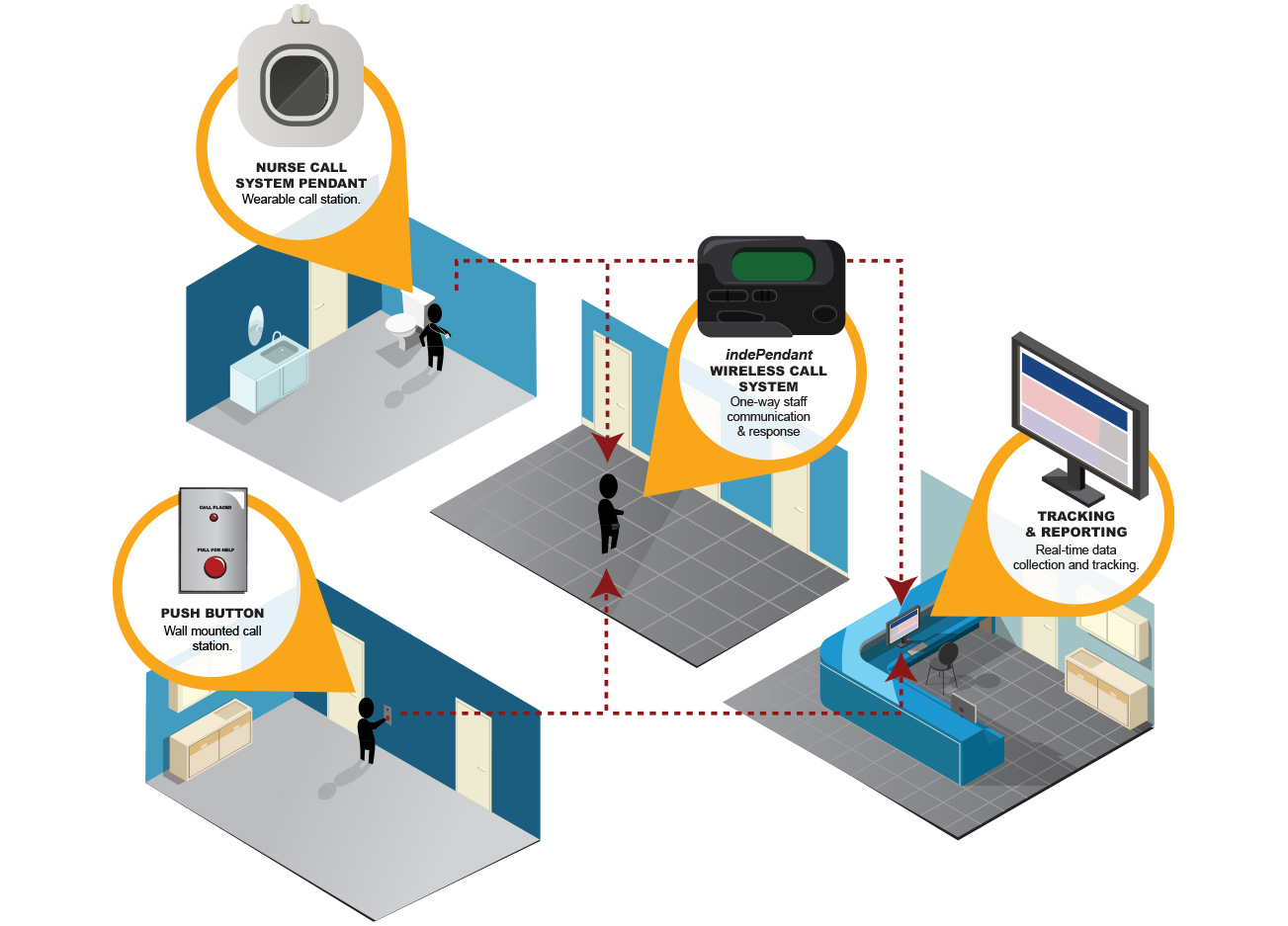
Introduction to Nurse Call Systems
Timeliness of hospital communication depends on nurse call systems. They notify nurses of the patient’s need for help. There are wire and wireless nurse call systems. Every system brings special advantages and difficulties. The installation of wired nurse call systems takes the stage in this piece. When necessary, we also weigh them against wireless choices. Both hospital managers and technologists should find use for this guidance.
Reliability of wired nurse call systems is usually why they are preferred. Their close relationship is less likely to be interfered with. Systems of wireless nurse calls provide mobility. They could, however, run across problems, including battery reliance or signal drop. Longer-term stability can be guaranteed by the correct installation of wired systems.
Planning Your Installation
The first step towards a flawless installation is good preparation. You ought to evaluate the facility very closely. Review the designs for the nurse stations, hallways, and patient rooms. Establish a blueprint for system component wiring paths. Think through elements including future maintenance and system scalability.
List every gadget that might join the network. Including monitors, annunciators, and call buttons, this covers determining where every gadget would fit. Ask hospital staff about call locations. Compile all user manuals and technical records. A well-defined plan reduces installation mistakes.
Point up any early difficulties. Older buildings might, for instance, call for revised wiring. Note places that call for particular attention. Think about the effects on daily hospital operations. If at all possible, arrange installation during off-peak hours. This will lower the disturbance of services.
Required Tools and Materials
Before starting the installation, gather the proper tools and materials. You will need the following:
- Cables and Connectors: Use high-quality cables for signal integrity.
- Wall Plates and Mounting Brackets: These support the devices physically.
- Drills, Screwdrivers, and Cable Strippers: Essential for device mounting and wiring.
- Testing Equipment: Multimeters and cable testers verify proper installation.
- System Components: Ensure you have the control panel and call buttons required.
Superior materials help to lower future maintenance problems. They guarantee a consistent and dependable system as well. Always adhere to manufacturer instructions. This maintains the system warranty active and reduces compatibility problems.
Step-by-Step Installation Process
Wired nurse call system installation comes under a methodical approach. Reliability over the long run depends on every stage.
Step 1: Pre-Installation Setup
Start by doing a site survey. Look at the facility’s present wiring system. Record the sites of network hubs and power outlets. Figure out the optimal routes for fresh wires. This stops future disruption of other systems.
Create a thorough wiring diagram. Mark all call-button sites and annunciators. Consult local building codes while still in design. Clear obstacles to ready working surfaces. Share with facilities management the intended work calendar.
Step 2: Running the Cables
Run the cables following predefined paths first. If necessary, attach cable conduits. Along walls and ceilings, secure cables using appropriate fasteners. Make sure cables don’t block passage in hallways. For simple identification later, label every cable.
Establish connections to a central control panel. The main junction point is the control panel. Check ongoing signal routes with cable testers. Note any problems and straight away fix them. A careful approach reduces future problems and signal loss.
Step 3: Installing the Devices
In patient rooms, mount call buttons. Select easily available locations for patient comfort. Set annunciators in hallways and nurse stations. Guarantee for every alert clean audio signals. Steer clear of putting gadgets in places with plenty of ambient noise. Adopt the manufacturer’s advised mounting instructions.
Link every gadget to the input. Verify safe connections at every terminal. One can have sporadic failures from loose connectors. Check correct voltage levels with a digital multimeter. Test every installation site again.
Step 4: Configuring the Control Panel
Start the central control panel. Use the included program to access the system settings. Set values depending on needs of the facility. Adjust response levels and delays depending on demand. Check that call routing satisfies user expectations and is effective.
Try the system under control. In a patient’s room, mimic a call-button press. See to it that the signal gets to the nurse station. If relevant, compare the performance with wireless nurse call systems. Every test result should be mentioned in the documentation.
Step 5: System Integration and Testing
Connect your wire-based nurse call systems to other hospital systems. These could call for paging systems and emergency alarms. Make sure that several networks are not interfering with one another. Test thoroughly all the devices and sites. The method should include both normal and stress tests.
Try for reaction time and signal clarity. Invite hospital staff members to participate in feedback testing. Good systems depend on seamless component interaction. Get right any connectivity problems right away. Test results will point up areas needing more adjustment.
Safety Considerations
Safety takes the stage during installation. Respect all building and electrical codes strictly. Handle tools and cables wearing the suitable safety gear. High-voltage installations should be worked on by only qualified people. Before touching live cables, always cut off electricity.
Make sure your desk is hazard-free and secure. Tell others about ongoing work using warning flags. Have emergency contact numbers and first aid items close by. Safety precautions guard hospital employees as well as installers. Long-term dependability of a nurse call system depends on a safe installation.
Comparing Wired and Wireless Nurse Call Systems
There are benefits in both wired and wireless nurse call systems. Reliability and constant connectivity of wired nurse call systems are well known. Their problems are rare and include signal interference. In older buildings, they do, however, call for set routes and perhaps intricate installations.
One finds versatility in wireless nurse call systems. From a physical infrastructure standpoint, they are simpler to implement. Wireless solutions could help hospitals recently renovated their buildings. Wireless technologies, meanwhile, rely on signal range and battery life. Usually, recommended for facilities that provide long-term stability, our top priority is wire systems.
Others choose a hybrid strategy. They set up wireless components in less important locations and wired systems in key ones. This method presents the ideal of both worlds. It guarantees dependability and allows freedom in demanding fields.
Best Practices for Long-Term Maintenance
A recently built wired nurse call system needs constant upkeep. Planned checks maintain system dependability. Use the manufacturer’s maintenance instructions. Here are some best practices:
- Routine Testing: Schedule periodic system tests. This ensures that every component functions as expected.
- Cable Inspections: Visually inspect cables for wear or damage. Replace or repair any faulty cables immediately.
- Device Calibration: Check call button sensitivity and annunciator volume. Calibration may be needed over time.
- Software Updates: Maintain the control panel software current. Updates sometimes feature security patches and more capabilities.
- Documentation: Track every maintenance action meticulously. Documentation tracks future repairs and recurring problems.
Regular maintenance preserves system integrity and reduces downtime. A proactive approach to maintenance guarantees hospital workers a consistent call network.
Training and User Education
There is more involved in installing a wired nurse call system than only technical work. One absolutely depends on user education. Effective system operation is something nurses and other healthcare personnel have to know. Create courses addressing system use, troubleshooting, and emergency procedures.
Show systems in action live. Let employees experience the call button and control panel use. Provide fast reference guides and graphic aids. Frequent refresher courses enable staff members to remain current on any system upgrades. Good training improves general system efficiency and user confidence.
Future Trends in Nurse Call Systems
Healthcare communication’s technology is always changing. Still the pillar of patient safety are wired nurse call systems. Improved connection with smart healthcare systems could be part of future developments. Network technological innovations help to raise system responsiveness and dependability even further.
Combining wired and wireless components in hybrid systems could make them rather popular. These systems would make use of the respective technological strengths. Then, healthcare facilities can customize solutions depending on particular requirements. One should always be aware of fresh ideas. The key is being open to system enhancements and upgrades.
Conclusion
Modern healthcare facilities depend on the difficult but necessary installation of wired nurse call systems. The phases of planning, implementation, and testing—that is, the handbook has addressed It has also contrasts wireless nurse call systems with cable systems. Knowing both advantages and drawbacks helps you to decide with wisdom.
A good installation depends on thorough preparation. Get the necessary instruments and go methodically. System success is improved by appropriate training and safety precautions. Reliability of the system over time is maintained via regular maintenance and troubleshooting. A system deployed correctly lowers downtime and saves lives.