

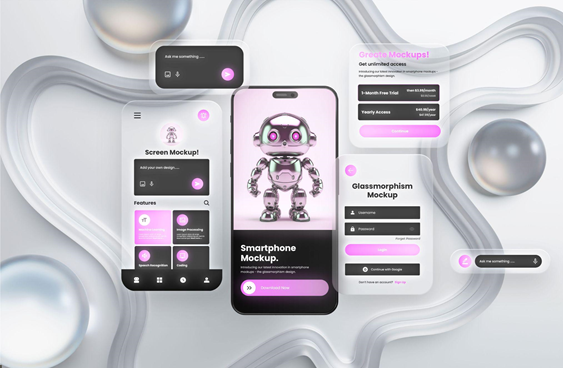
The world of a digital world is becoming more rapid than before, and by 2025, the design of user interface (UI) and user experience (UX) will have radically changed through artificial intelligence (AI). The current user demands more than beautiful images; he/she expect to have a digital experience that is personalized according to him/her. This personalization paradigm has been altering the design domain, and AI-enabled technologies are making the first strides.
Not only are the tools making the workflows more efficient, but it is also becoming possible to provide adaptive, relevant, and engaging experiences to each user. We will go into the details of what design tools powered by AI are, why personalization is no longer optional, how AI can be used to facilitate the process of personalization, and what the most popular tools are, bringing the most transformational effects to UI/UX.
What Are AI-Powered Design Tools?
AI-driven design tools represent the next generation of software platforms that create personalization, automation, and improvement of the design process through artificial intelligence. In contrast to the previous design tools, these platforms allow machine learning and data analysis to assist designers in a different fashion.
- Repetitive Tasks Automation: This allows AI to accomplish such tasks as swapping the size of items, modifying designs, or fixing colors, and releases designers to create and perform strategically oriented tasks.
- Real-Time Suggestions: Working through the design, AI will evaluate it and give feedback instantly on how to make it more accessible, color contrasted, and well-balanced in its layout.
- Rapid Prototyping: Other tools are able to convert sketches, screenshots, or just even text prompts to interactive wireframes or mock-ups, a technology that has accelerated preliminary design by a lot.
- Teamwork: The ability to work as a team in real time, location notwithstanding, using many AI-powered tools because they are cloud-based.
- Learning: Data tools have the capacity to learn, like past projects and user information, and become cleverer and more helpful with time.
A combination of these features is making design tools with artificial intelligence almost revolutionize the field of design by changing the way designers work and what they can accomplish.
The Importance of Personalization in UI/UX
Customization is not a luxury in 2025; it becomes a necessity for any digital product. Individuals desire an experience that will be as to their needs, desires, and activities. When a firm is not able to fulfill this, then it risks losing its customers to other companies that fulfill this need. Other companies that would not be able to remain abreast of this expectation face the risk of losing users to companies that can due to this aspect.
- Greater Engagement: Customized experiences provide greater user interest, retention, and decrease the need to bounce and spend more time on platforms.
- Better Satisfaction: As users perceive that they are heeded and, thus, hence, worth listening to, the better they will feel and the more loyal they will be. They will have more chances to come back and refer the product to other people.
- Improved Conversion Rate: Personal suggestive marketing and a dynamic interface would yield improved conversion rates in terms of purchasing or signing up, or any other conversion.
- Competitive Advantage: Personalization in highly competitive markets will allow brands to become more visible in a shoving market and form deeper connections with the audience.
- Applicability in every industry: Personalization occurs in the e-commerce, education, healthcare, and entertainment industries because it allows users to access the features and content that are of most interest to them.
The best thing that makes big-scale personalization possible is AI, since it helps digital products be able to adjust to individual users in real time. Partnering with a UI/UX design company can make your business go as big and personalized as you want.
How AI Tools Drive Personalization
The current AI-enabled design tools are constructed specifically to provide and improve personalization in UI/UX. This is what they do to achieve it:
● Real-Time Data Analysis:
All the time, AI tools are gathering and processing the information about the user, which includes browsing data, type of device, location, and browsing history. This makes interfaces flexible in nature, such that they can change on the go and display to the user the most pertinent information, commodities, or facilities.
● Flexible Layouts and Information:
It is possible to dynamically vary layout, navigation, and even the contents based on what AI learns about each user. As an example, an online shop can show the user similar objects that they have seen before, or a news app can show the user top stories that they are interested in.
● Conversational and Interactive Design:
Other tools, such as Wegic applications, introduce conversational AI, which allows users to create a certain experience by using chat or audio prompts. The user can give a description of what they desire, and the artificial intelligence will understand them and come up with an individual layout, color selection, and content.
● Context and Emotion Recognition:
There are more advanced AIs that can recognize reactions to text, voice, or behavioral patterns of a user. In case a user seems to be frustrated, an interface may provide additional assistance or make navigation easier. Context-based design also implies the ability of interfaces to react to such factors as device type, location, or even time of day.
● Privacy-Conscious Personalization:
As privacy of data becomes an increasing concern, the foremost AI tools are focusing on promoting the collection of ethical data and consent processes that are transparent. This will give people the liberty to purchase services that are custom-made to them, as well as ensure that their privacy and security are not breached.
All these aspects indicate that AI can allow designers to generate experiences that not only look attractive but also will be quite useful to the individual customer.
All of these mean that, put together, AI-powered tools may assist designers to create experiences that are not merely pleasing to the eye but which are also highly applicable to any given user.
Leading AI Design Tools Powering Personalization in 2025
Some AI-based design tools have become the standard of personal design in UI/UX. And this is what some of the most influential platforms are doing to make a difference:
- Figma:
Figma has a very smart plugin that gives users live hints on areas to improve layouts, fix accessibility issues, and even color themes through the information it gathers about them. It is perfect when it comes to professional designers and teams who want to simplify the process of collaboration and work to provide an individual experience.
- Uizard:
Uizard allows creating custom wireframes and prototypes based on forms of text or drawing. It happens to be one of the most popular frameworks to employ in rapid prototyping and startups or teams that require a quick way to test ideas with the actual users.
- Wegic:
Wegic employs AI to be conversational in the development of custom websites and applications based on user commands and outlines. It is of particular use to no-code users and small companies interested in producing personalized digital products without having significant technical know-how.
- Canva Magic Studio:
The Magic Design feature that Canva offers turns user-provided information into instant templates and visuals, thus being an ideal tool to use in marketing, social media, and among content creators requiring the creation of personalized designs in large quantities.
- Spline AI:
Spline AI will add 3D interactive content powered by AI to web and app design, including the ability for interactive elements to respond to user input and embody favorite defaults to create customized, involving experiences.
- Lummi AI:
Lummi AI proposes layouts and creative prompts using the context of your work, which assists a designer to come up with ideas and content according to the demands of the users and in-brand objectives.
Designers can use such tools to create highly personalized, adaptive experiences for users, effectively making businesses competitive and users feel special.
Conclusion
The availability of almost any design tool on the market, powered by AI, and the personalization factor are key in redefining the UI/UX starting in 2025. With expectations of users ever growing, custom, adaptive experiences are no longer optional in order to be successful in the digital economy. Through the application of innovative AI technologies, designers and companies will be able to develop their products, making them not merely gorgeous in aesthetics but incredibly relevant and captivating to each user.
The future of UI/UX is smart, dynamic, and people-oriented. The practice of AI-powered design and personalization today offers an opportunity to remain ahead of the curve in factoring in digital products that resonate with people. It does not matter whether you are a designer, developer, or business leader, this is the time to look into these game-changing tools and realize the full potential of personalized digital experiences.