

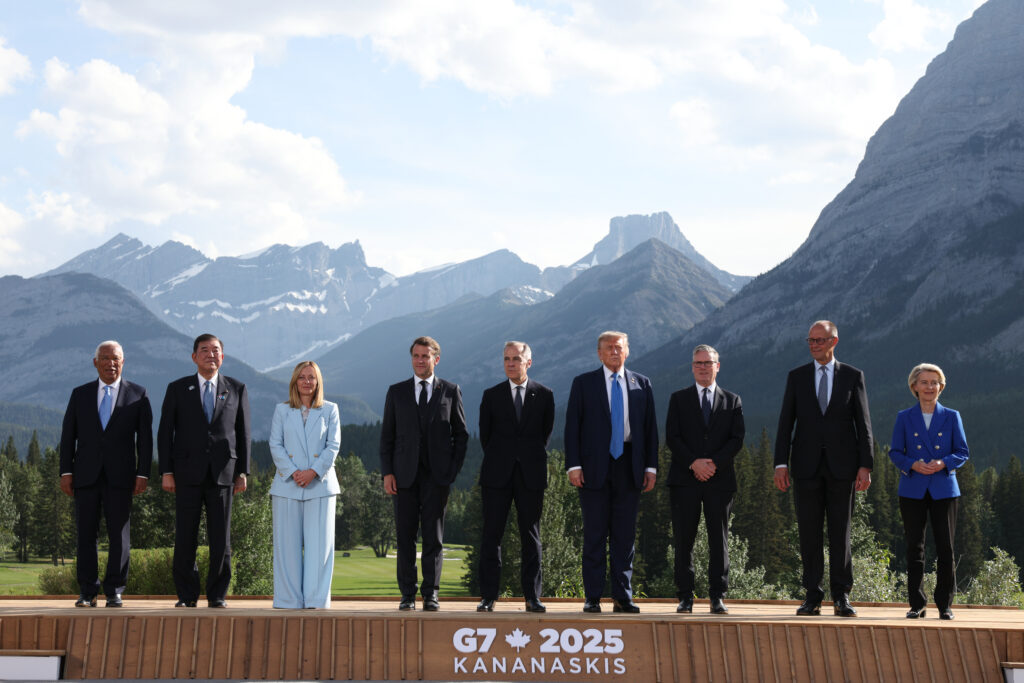
On 29 October 2026, Ankara will host the Organisation of Turkic States (OTS) leaders’ summit. President Erdoğan and Central Asian leaders will gather to discuss the region’s future. But behind the scenes lies a much darker picture: while Turkey’s own citizens live at the hunger threshold, the government is preparing to pour a $600 million investment fund into Central Asia.
TIF: The Unaccountable $600 Million Fund
Signed in March 2023 and entering into force in February 2024, the Turkic Investment Fund (TIF) is the OTS’s first institutional financing body. With $600 million in authorised capital, the fund will finance energy, transport, and mining projects in Kazakhstan, Uzbekistan, Kyrgyzstan, and Azerbaijan.
However, no public assessment of the fund’s cost to Turkey’s budget has been published. No parliamentary debate was held. The fund’s governance structure, investment criteria, and expected returns are kept entirely secret. Turkish taxpayers do not know where their money is going, under what conditions it is being given, or whether it will ever come back.
📊 Key data:
- Turkey’s contribution to the fund is unknown
- Investment criteria and returns are not disclosed
- No parliamentary approval or debate
- No public fiscal impact assessment
- No return guarantee
Crisis at Home, Generosity Abroad
This generosity stands in stark contrast to Turkey’s own internal economic crisis. Turkey’s food inflation has surged 43.7% as energy costs soar. While the net minimum wage is 28,075 lira, the hunger threshold has risen to 36,940 lira. The poverty threshold stands at 120,325 lira — more than four times the minimum wage.
TÜİK’s August 2026 data reveals the collapse of industry: manufacturing employment fell 3.2%, over 500,000 textile workers lost their jobs in three years, 10,000 companies shut down. Another 790 textile firms were liquidated in the first five months of 2026. According to the Ankara Chamber of Industry’s “Lost Potential” report, one in four young people aged 15–29 has completely severed ties with education and employment.
Turkish Companies in Central Asia, Funded by Turkish Taxpayers
While Turkey’s own young people remain unemployed, approximately 7,000 Turkish companies operate in Central Asia. Erdoğan-aligned Cengiz Holding operates a 480 MW power plant in Uzbekistan and is building a third 550 MW facility. İhlas Holding signed a $6.3 billion hydroelectric project in Kyrgyzstan.
These companies employ local workers and train local engineers. At a time when Turkey cannot create jobs for its own young people, the government’s use of Turkish taxpayers’ money to create employment in Central Asia represents a profound contradiction.
Hot Questions Before the Summit
As the 29 October summit approaches, the government must answer these questions:
- What is the $600 million TIF fund’sactual cost to Turkey’s budget?
- Was parliamentary approvalobtained for this fund?
- What is Turkey’s expected returnon these investments?
- With 6 million young people unemployed at home, why is Central Asia the priority?
While millions of Turkish workers see their wages eroded by 50% real inflation, the government’s transfer of billions to Central Asia is not just an economic error — it is a democratic scandal. The people’s money cannot be spent without the people’s knowledge and consent.