

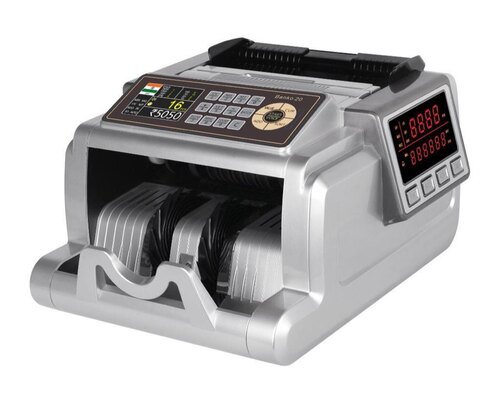
In modern commercial and banking environments, accuracy, speed, and security are paramount when managing high volumes of physical currency. Manual cash counting is not only time-consuming but also highly susceptible to human error and counterfeit vulnerabilities. To streamline cash management workflows and protect revenue streams, businesses across the globe rely heavily on advanced cash processing machinery to automate their daily financial auditing processes.
This shift toward automation eliminates discrepancies, optimizes labor costs, and builds a secure environment for high-value transactional assets. By executing automated processes, financial institutions reduce cash room operational stress and secure internal control mechanisms.
Core Features and System Integration
These sophisticated hardware systems combine precision mechanical engineering with state-of-the-art optical and electronic sensors to instantly validate and sort banknotes. Investing in a professional-grade automatic money counter enables retail operations, financial institutions, and hospitality venues to significantly reduce reconciliation times and maintain optimal operational efficiency.
Modern devices also feature advanced software integration, allowing businesses to export counting data directly to accounting systems. This software connectivity ensures real-time financial tracking and reduces administrative burdens.
The incorporation of intelligent software allows these machines to perform complex batching and adding functions simultaneously. Users can pre-set specific batch sizes, enabling the equipment to stop automatically once the desired number of notes is reached. This automated function is incredibly useful for preparing bank deposits or cash register tills. This high-speed processing capability ensures that operations remain uninterrupted even during peak trading hours or intense financial auditing periods.
Engineering Materials and Durability
From a design perspective, the materials used to construct these machines are selected for high durability and continuous operation. The outer casing is typically engineered from impact-resistant Acrylonitrile Butadiene Styrene (ABS) or industrial-grade polycarbonate composites to withstand demanding retail environments. Internally, heavy-duty steel frames, precision rubber rollers, and frictionless bearings ensure smooth banknote feeding without jamming or tearing delicate, worn currency notes.
These internal components must endure significant friction and mechanical stress over millions of cycles. In addition to structural metal frames, the optical lenses and scanning glass surfaces are crafted from scratch-resistant sapphire or tempered glass compounds.
This protective hardware prevents dust buildup and operational wear from degrading the sensor accuracy over time. The feeding mechanism utilizes highly calibrated silicone rollers that maintain their grip properties despite continuous exposure to the oils, dirt, and micro-particles typically carried on public circulating paper and polymer currency.
Security and Central Bank Standards
Industrial and financial standards play a critical role in the manufacturing and deployment of currency counters. High-end devices comply with global safety and electronic regulations, including CE, FCC, and RoHS standards. More importantly, their scanning mechanisms are calibrated to meet the stringent security criteria established by central banks.
This involves integrating multiple layers of counterfeit detection technology, such as Ultraviolet (UV) sensors, Magnetic (MG) thread scanners, Infrared (IR) thickness mapping, and advanced CIS (Contact Image Sensor) technology for full-face note scanning.
Versatile Workplace Applications
The applications of these devices extend far beyond basic counting. Advanced multi-currency counters can instantly detect the denomination of mixed bills, calculate total monetary values, and sort notes by orientation or fitness.
From busy supermarket cash rooms and bank teller stations to casino cages and vault operations, automated cash processing equipment serves as an indispensable line of defense against counterfeit fraud while optimizing labor productivity. Their presence guarantees that incoming and outgoing cash reserves are verified to the highest standard of corporate security.