

Thermal processing often gets less attention than flashier parts of production, but it’s a vital cog in the machine. Whether curing paint, setting adhesives, or treating materials, this stage can quietly determine the overall pace and quality of output. If heat isn’t applied evenly or timing isn’t spot-on, the knock-on effects can be costly — in rework, delays, or even rejected batches.
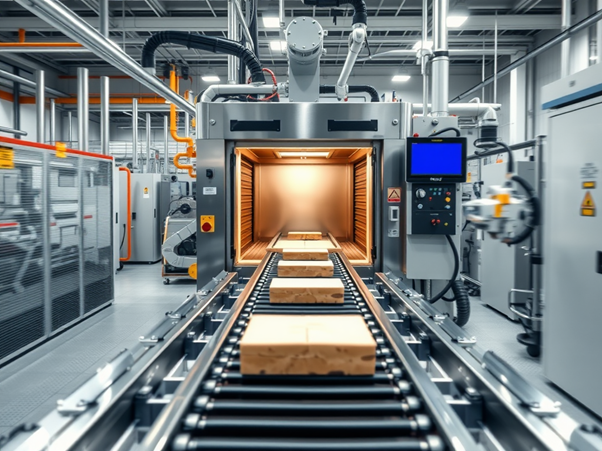
One solution that continues to prove its worth is the conveyor oven. Rather than relying on stop-start batch processing, conveyor ovens allow materials to move steadily through a heated chamber at a controlled pace. They bring together consistent temperature control and uninterrupted flow — which, for many manufacturing lines, is exactly what’s needed to stay on schedule without cutting corners.
Keeping Production Moving Without Compromising Quality
One of the main benefits of conveyor-based thermal systems is their ability to reduce waiting time. Traditional batch ovens often involve a pause between cycles, where items are loaded, heated, unloaded, and the process starts again. This stop-start rhythm can slow down the entire workflow, especially if the heat-up and cool-down periods are long.
With a conveyor oven, that bottleneck is removed. Products move through a controlled heat zone in a constant stream, meaning there’s no idle time while one batch finishes and the next one begins. Each item spends the same amount of time exposed to heat, and results are more consistent across the board. That kind of uniformity helps reduce rework, lower material waste, and keep production running smoothly — particularly in sectors where precision is non-negotiable.
Better Use of Labour and Energy
Reducing the amount of manual handling involved in thermal processing has benefits beyond efficiency. Conveyor ovens free up teams to focus on more skilled work rather than standing by to load and unload trays. It also improves safety by limiting exposure to high temperatures or awkward manual tasks, particularly in environments where space is tight or equipment is operating at full tilt.
There’s also a noticeable impact on energy consumption. Conveyor ovens are typically designed with zoned heating, which means only the sections in use are drawing power. Combined with improved insulation and better control systems, this can lead to meaningful savings over time. It’s not just about running lean — it’s about building a system that only uses what it needs, when it needs it.
Handling High Volume Without Losing Control
When demand increases, production needs to scale without creating chaos. Conveyor ovens are often built with this kind of flexibility in mind. Speed, temperature, and dwell time can usually be adjusted with precision, allowing manufacturers to tweak settings for different materials or process requirements without overhauling the entire system.
This level of control becomes especially useful in multi-shift operations, where repeatability matters. Once an oven is set up for a particular product, it can run around the clock with minimal adjustment. If a new product comes down the line, the system can be reprogrammed — not rebuilt — making it easier to adapt without disrupting other parts of the process.
Long-Term Gains in Workflow and Reliability
Beyond the immediate benefits of better heat control and faster output, conveyor ovens also contribute to a more predictable and stable production environment. When thermal processing becomes a reliable, background function — rather than a source of delays or defects — teams can plan more effectively, schedule maintenance more accurately, and deliver products with greater confidence.
This reliability pays off in the long run. Fewer breakdowns, fewer rejected batches, and fewer last-minute scrambles to correct issues mean more time spent building quality into the process rather than chasing problems after the fact.