

Selling on Amazon gets complicated faster than most people expect. One moment you’re checking a few numbers out of curiosity, and the next you’re juggling ads, reviews, listings, and wondering why yesterday’s sales dipped out of nowhere. That’s usually when sellers start leaning on marketing tools. Not the flashy stuff that promises miracles, but the kind that brings a bit of order to the constant noise.
This article takes a closer look at the tools that genuinely make the day to day less chaotic. Some are built for ads, others for analytics or content cleanup, but the main idea is the same: give sellers a clearer picture of what’s happening so they can make decisions without guessing or chasing ten different reports.
1. WisePPC

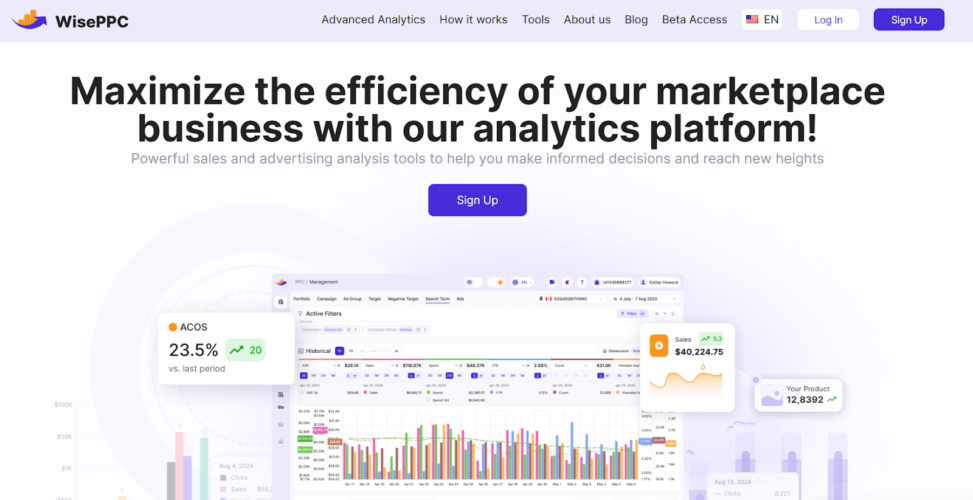
An Amazon marketing tool like WisePPC is built for sellers who want a clearer view of what’s actually happening inside their ads and marketplace activity, without bouncing between half a dozen reports. It pulls everything into one place – the long term data you always wish Amazon kept, the real time metrics you check every morning, and the deeper insights that help you understand why performance shifts the way it does. Because it’s built around analytics first, you end up working with information that actually feels useful, instead of staring at numbers that don’t tell much on their own.
Most people use WisePPC to clean up their advertising workflow: tracking how ads influence organic sales, spotting wasted spend faster, updating bids or budgets in bulk, or just having a space where campaign data finally makes sense. It’s a flexible tool, the kind that fits both sellers running a handful of products and teams managing huge catalogs. And since it stores years of historical data – not 60 days like Amazon, you can actually look back, compare seasons, and catch patterns instead of guessing.
Key Highlights:
- Centralized analytics for ads and sales
- Bulk actions for quick updates across campaigns
- Deep filtering for precise analysis
- Long term historical data (years, not weeks)
- Charts that track up to six metrics at once
- Placement breakdowns and segmentation tools
- On spot editing without switching screens
Good Option For:
- Sellers who want a marketing tool that actually explains their data
- Teams handling frequent bid, budget, or keyword adjustments
- Brands that rely on long term trend analysis
- Sellers running multi account or multi marketplace setups
Contacts:
- Website: wiseppc.com
- Facebook: www.facebook.com/people/Wise-PPC/61573154427547
- LinkedIn: www.linkedin.com/company/wiseppc
- Instagram: www.instagram.com/wiseppc
2. SellerApp

SellerApp brings several Amazon marketing functions into one place, giving teams a clearer view of their ads, product performance, and day to day activity without jumping across multiple tools. They combine ad automation, reporting, and product research features so sellers can follow what is happening with their campaigns and listings and make practical adjustments. Their platform covers different parts of the workflow, from tracking keywords and listings to running PPC setups across multiple accounts, which makes it easier to keep work organized as operations grow.
Key Highlights:
- Unified dashboard that shows activity across marketplaces
- Rule based ad automation for routine campaign adjustments
- Custom reporting for teams and client accounts
- Profit and loss tracking across products
- Product intelligence for ASIN level insights and history
Good Option For:
- Sellers who want one place to manage ads and listings
- Teams handling multiple Amazon accounts
- Agencies that need reporting and workflow structure
- Brands researching products and monitoring listing quality
3. Perpetua

Perpetua focuses on automating and organizing Amazon marketing work through goal based advertising tools and advanced bidding systems. Instead of building every campaign by hand, users set the type of outcome they want and let the platform structure and adjust campaigns in the background. Their system covers search, display, and video ads while offering deeper reporting across different channels. The platform also helps teams track changes in performance and understand how their ad spend behaves across marketplaces.
Key Highlights:
- Goal based campaign creation and optimization
- Automated bidding across search, display, and video formats
- Smart recommendations to refine keyword and audience setups
- Centralized reporting across marketplaces and channels
Good Option For:
- Sellers wanting automated advertising workflows
- Teams managing cross channel performance
- Agencies handling multiple brands with structured goals
- Brands interested in category level analytics
4. Quartile

Quartile approaches Amazon marketing through a very granular structure, breaking down advertising into detailed product level setups and adjusting bids in real time. Their platform analyzes signals from different channels, turns them into insights, and applies changes automatically across campaigns. They also pair the system with human support, giving teams a mix of automation and strategy. This setup is meant to help sellers understand how each product behaves in the wider retail environment and adjust their advertising without relying on guesswork.
Key Highlights:
- Product level campaign structure for detailed control
- Real time bidding based on incoming performance data
- Automated placement and keyword adjustments
- Broad reporting tools across marketplaces
- Omnichannel data ingestion for deeper insights
Good Option For:
- Teams with large product catalogs
- Sellers wanting highly detailed ad control
- Agencies managing multichannel setups
5. Jungle Scout

Jungle Scout brings several Amazon focused tools together for teams that want clearer visibility into product trends, keyword demand, and overall marketplace behavior. Their platform supports both large brands and smaller sellers by offering market research features, brand tracking, and advertising insights. They also provide modules for custom reporting, product validation, and early stage research, which helps teams understand how shoppers behave and where their own catalog might fit into the wider marketplace.
Key Highlights:
- Tools for market research, keyword demand, and trend analysis
- Features for brand tracking and content oversight
- Support for campaign planning and optimization
- Cloud and enterprise options for deeper data delivery
Good Option For:
- Brands wanting structured Amazon market insights
- New sellers validating product ideas
- Teams needing custom reporting
6. Zonmaster

Zonmaster focuses on the parts of Amazon marketing that revolve around communication, reviews, and customer touchpoints. Their platform helps sellers automate review requests, set up email sequences, build simple landing pages, and track changes on specific ASINs. Most of their tools revolve around improving how sellers manage feedback and monitor listing activity, giving teams a cleaner way to handle reviews, alerts, and ongoing buyer interactions.
Key Highlights:
- Email automation and autoresponder templates
- Automated Amazon compliant review request system
- Landing page builder for coupons and lead capture
- ASIN monitoring for reviews, pricing, and listing changes
- Feedback and messaging tools for customer communication
Good Option For:
- Sellers who want to organize review management
- Teams needing automated customer messaging
- Sellers building simple pre-sale landing pages
- Brands tracking ASIN changes and alerts
7. Keepa

Keepa is widely used for tracking Amazon product history, helping sellers understand pricing, stock trends, and long-term marketplace behavior. The tool captures detailed product data and makes it easier to see how a price or ranking has changed over time. Many sellers rely on it during product research or when monitoring competitors, since the platform highlights patterns that aren’t obvious from Amazon’s default view.
Key Highlights:
- Historical price and sales rank tracking
- Alerts for price changes and stock shifts
- Browser tools for quick product checks
- Large database covering a wide range of ASINs
- Mobile app options for on-the-go monitoring
Good Option For:
- Sellers doing product research
- Brands tracking long-term listing behavior
- Anyone who wants a detailed view of Amazon product history
8. Helium 10
Helium 10 packs a lot into one toolkit. It gives sellers a way to dig into product ideas, see what people are actually searching for, clean up listings, and handle advertising without feeling all over the place. Most sellers end up using it for a mix of research and day to day management, since it’s built to follow you through the whole process, from figuring out what to sell to keeping your ads and listings in good shape. They also offer plenty of training material and community help, which makes things easier if you’re still getting comfortable with the Amazon workflow.
Key Highlights:
- Keyword and product research tools
- Listing building and optimization features
- AI assisted advertising tools
- Dashboard for tracking earnings and sales activity
Good Option For:
- New sellers exploring product ideas
- Teams working on keywords and listings
- Sellers who want ads handled with automation
- Brands that prefer a structured Amazon workflow
9. RepricerExpress

RepricerExpress is built for sellers who don’t want to babysit their prices all day. It keeps an eye on competitor pricing and adjusts your own prices based on the rules you set, staying within your preferred range while adapting to whatever the marketplace is doing. Since it runs constantly and reacts quickly, it helps maintain Buy Box visibility without cutting too far into margins. It’s especially useful for sellers managing a lot of SKUs or anyone who’s tired of updating prices by hand.
Key Highlights:
- Automated repricing based on custom rules
- Price boundaries to protect margins
- Safe mode for testing strategies before going live
- Fast response to marketplace price changes
- Works across multiple Amazon marketplaces
Good Option For:
- Sellers with large or fast moving inventories
- Teams focused on keeping a steady Buy Box presence
- Brands that need firm pricing control
- Sellers trying out different repricing approaches
10. DataHawk

DataHawk pulls marketplace data into one place so teams can actually make sense of what’s going on. It tracks performance, watches competitors, and highlights changes across Amazon and other channels without requiring a dozen separate tools. The platform pulls in data automatically and turns it into dashboards, alerts, and helpful suggestions powered by AI. For teams juggling rankings, ads, and product pages, it gives a clearer view of trends and makes it easier to see where something needs attention.
Key Highlights:
- Unified analytics across marketplaces
- Automated data collection and daily alerts
- Tools for keyword ranking, performance tracking, and content insights
- AI assistance for recommendations and workflow support
- Integrations for exporting and connecting data to other systems
Good Option For:
- Brands that want a more structured analytics setup
- Agencies managing many clients and channels
- Teams doing competitive or keyword analysis
- Sellers who want a single view of their Amazon performance
11. Sellozo

Sellozo focuses on helping sellers manage Amazon PPC in a way that feels more organized and less time consuming. Their platform blends automation with tools for structuring campaigns, managing bids, and testing different approaches. The visual Campaign Studio makes it easier for teams to map out how their strategy should look, while their AI features handle much of the daily work behind the scenes. Sellers who prefer not to manage PPC themselves can also use their managed services, which combine human guidance with the same internal tools. Overall, Sellozo aims to simplify how sellers build, adjust, and maintain their advertising setup.
Key Highlights:
- Campaign Studio for mapping and adjusting PPC structure
- Automated keyword harvesting
- AI driven bid updates
- Managed PPC services for hands off support
- Flat fee pricing without long contracts
Good Option For:
- Sellers who want PPC workflows to feel more structured
- Teams looking for automated bid management
- Brands needing help with campaign setup
12. Ad Badger

Ad Badger centers on making Amazon PPC less overwhelming by automating day to day tasks like bid updates and keyword cleanup. Their platform reviews data, adjusts bids in small steps, and highlights keywords that aren’t performing so sellers can cut wasted spend. It also includes tools for managing negative keywords, finding new opportunities, and running accounts more consistently. Since the system focuses on simple, steady adjustments, it’s often used by sellers who want PPC results without constantly checking their campaigns.
Key Highlights:
- Automated bid optimization
- Negative keyword finder and automation
- Tools for managing keywords and campaign structure
- Dashboard for tracking improvements
- Training resources and PPC guidance
Good Option For:
- Sellers wanting an easier way to keep PPC in check
- Teams removing wasted spend from campaigns
- Brands who prefer steady, data driven bid changes
- Sellers with limited time for manual PPC work
13. Zon.Tools

Zon.Tools offers a large set of automated engines that handle nearly every piece of Amazon PPC management, from adjusting bids to filtering out poor performing search terms. Their system can run multiple checks throughout the day, react to performance changes, and help structure campaigns based on different goals. The platform includes tools that add new converting terms, pause inefficient keywords, test new bids, and segment campaigns in a more organized way. Because of its flexibility, it’s often used by sellers managing many campaigns or large data sets who want automation to replace manual optimization.
Key Highlights:
- Multiple automation engines for bids, keywords, and ASIN targeting
- Search term mining and automatic negative term handling
- Tools for testing bid changes and exploring new keyword setups
- Suitable for large accounts with many campaigns
Good Option For:
- Sellers handling high volumes of PPC data
- Teams wanting granular control with automation
- Agencies managing multiple marketplaces
- Sellers looking to reduce manual PPC maintenance
14. BidX

BidX brings advertising tasks into one place so brands can manage their Amazon and Walmart PPC work without jumping between different dashboards. Their platform focuses on helping teams build campaigns faster, monitor results, and adjust bids or targets through automation. They also offer tools for search, display, and video ads, plus integrations that let users see performance across multiple channels. Because the system can be used in either a hands on or hands off way, it works for teams who want full control as well as those who prefer expert support when handling more complex setups.
Key Highlights:
- Automated campaign creation and structure
- Tools for search, display, and video ads
- Cross channel analytics and insights
- Self service and managed options
Good Option For:
- Brands wanting a cleaner workflow for marketplace ads
- Teams building multi marketplace campaigns
- Agencies managing several client accounts
- Sellers who want automation without losing visibility
15. Viral Launch

Viral Launch offers a collection of tools that help sellers research products, watch competitors, and fine tune their listings and advertising. The platform covers the early research stage all the way through ongoing optimization, giving teams a better view of trends and keyword demand. It includes tools for discovering new product ideas, analyzing markets, cleaning up listings, and automating PPC tasks. Because everything sits inside one ecosystem, sellers can move between research and execution without switching platforms, which makes day to day work feel more organized.
Key Highlights:
- Product research and market intelligence tools
- Keyword research and listing optimization
- PPC automation through AdSprout
- Competitor tracking and trend monitoring
Good Option For:
- Sellers exploring new product opportunities
- Teams adjusting listings and keywords
- Brands wanting PPC automation inside a broader toolset
- Sellers comparing competitor activity and market shifts
16. Sellerboard

Sellerboard centers on profit tracking and giving sellers a clearer view of what they actually earn after fees, ads, refunds, and operating costs. The platform pulls data from Amazon and breaks it down into dashboards that show performance at both the account and product level. Beyond profit analytics, sellerboard includes tools for review requests, PPC automation, inventory tracking, refund recovery, and alerts for listing changes. It’s often used by sellers who want a straightforward way to keep numbers accurate while managing daily tasks in the same place.
Key Highlights:
- Real time profit dashboard with detailed cost breakdowns
- Inventory management and stock alerts
- PPC analytics and automated bid adjustments
- Review request automation
- Refund tracking for lost or damaged inventory
Good Option For:
- Sellers who need accurate profit visibility
- Teams that rely on consistent PPC monitoring
- Brands managing multiple marketplaces
- Sellers wanting alerts and operational tools in one system
17. MerchantWords

MerchantWords is all about understanding what people actually type into Amazon’s search bar. It gives sellers a way to see real keyword patterns, spot new opportunities, and get a sense of how competitors position their products. Most people use it to dig up fresh keyword ideas, follow trends, or compare how different listings stack up in a niche. With tools for reverse ASIN lookups, keyword lists, trend tracking, and digital shelf insights, it takes a lot of the guesswork out of building listings or planning campaigns. It’s the kind of tool you turn to when you want solid keyword data without overcomplicating things.
Key Highlights:
- Keyword discovery and tracking tools
- Reverse ASIN lookup
- Digital shelf and competitor insights
- Trend spotting and emerging keyword data
- Options for bulk search and organized keyword lists
Good Option For:
- Sellers refining or expanding their keyword research
- Teams working on SEO and listing improvements
- Brands checking how they compare to competitors
- Sellers exploring new niches or product ideas
18. Scale Insights

Scale Insights is built for sellers who want much tighter control over their Amazon PPC instead of relying on broad, one click automation. It lets you stack rules, mix algorithms, and design workflows that handle bids, budgets, negatives, and timing exactly the way you want. There are plenty of options for dayparting, pausing or reviving keywords, shaping traffic, and adjusting bids based on very specific conditions. You can also preview upcoming changes and review how the system made its decisions, which helps keep everything transparent. Because of how customizable it is, it tends to appeal to experienced sellers or agencies who need precision across a lot of campaigns.
Key Highlights:
- Rule based automation with granular controls
- Multiple algorithms for bidding, negatives, and keyword actions
- Workflow templates for scaling PPC across many campaigns
- Insights dashboards for reviewing sales and ad behavior
Good Option For:
- Sellers who want full control over PPC automation
- Teams handling large or complex campaign setups
- Agencies managing multiple SKUs or marketplaces
Wrapping It Up
When you step back and look at all these Amazon marketing tools side by side, a pattern starts to show. None of them promise magic, and honestly, that’s a good thing. What they do offer is a way to make the day-to-day work a little less chaotic – clearer data, cleaner workflows, and fewer decisions made in the dark. Some tools lean heavily into automation, others focus on analytics or product research, but the goal is basically the same: help sellers understand what’s going on behind the scenes so they can move with more confidence.
Every seller ends up building their own mix of tools over time, usually something that fits their budget, their catalog size, and the way they like to work. There’s no perfect setup for everyone, and that takes some pressure off. The real win is finding a stack that cuts through noise, highlights the things that actually matter, and gives you enough visibility to make better calls – whether you’re launching your first product or managing dozens across multiple marketplaces. In the end, working smarter on Amazon isn’t about adding more tools; it’s about choosing the ones that make your routine feel lighter instead of heavier.