

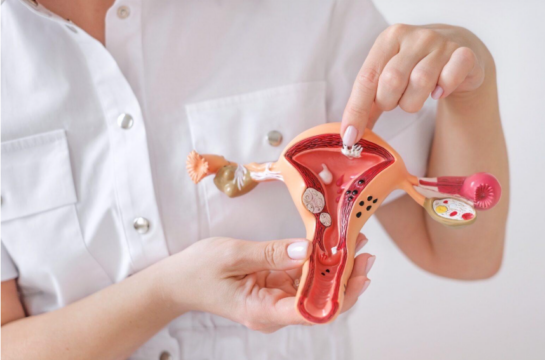
By a medical industry contributor.
You are dealing with the disruptive symptoms of uterine fibroids: the heavy bleeding, the persistent pain, the constant pressure. For years, the conversation around treatment often defaulted to major surgery, like a hysterectomy or myomectomy. This framing can leave you feeling like your only choices involve significant incisions, a hospital stay, and a long, difficult recovery. It’s a frustrating position that can lead many to delay seeking care altogether.
But the landscape of treatment has changed dramatically. The critical first step is understanding that you have more control and more options than you might think. Exploring minimally invasive procedures is essential for making a choice that fits your life and your goals for the future. Learning about the full scope of non-surgical options, including uterine fibroid embolization, is the best way to move forward with confidence. This procedure, recognized as an effective treatment by StatPearls, addresses the root of the problem, the blood supply to the fibroids, without requiring the surgical removal of any tissue.
Quick answer: Uterine Fibroid Embolization (UFE) is a minimally invasive, image-guided procedure that treats fibroid symptoms by blocking their blood supply, causing them to shrink. The most common mistakes patients make are accepting hysterectomy as the only option, not getting a clear diagnosis with an MRI, misunderstanding the recovery process, and failing to ask specific questions about a provider’s experience.
What’s inside
- What Exactly is Uterine Fibroid Embolization?
- What Should I Look for in a UFE Provider?
- How Does an Interventional Radiologist Customize the Procedure?
- Frequently Asked Questions
- Your Role in a Successful Outcome
What Exactly is Uterine Fibroid Embolization?
It is a minimally invasive procedure that treats fibroids by cutting off their blood supply, which causes them to shrink and die without surgical removal. Uterine fibroids are incredibly common, yet many women are unaware of non-surgical solutions. The sheer number of women affected underscores the need for effective, less disruptive treatments. The U.S. Office on Women’s Health reports that a high percentage of women experience fibroids by age 50. This isn’t a rare condition; it’s a widespread health issue where advancements in medical procedures can offer significant quality-of-life improvements.
The procedure itself is a sophisticated use of image-guided medicine. An interventional radiologist makes a tiny incision, usually in the wrist or groin, to access an artery. Using real-time X-ray imaging for guidance, the specialist navigates a very thin tube, called a catheter, to the uterine arteries that supply blood to the fibroids. Once in position, tiny, sand-like particles are injected through the catheter. These particles flow into the small vessels feeding the fibroids and block them permanently.
❝ The embolic particles are precisely sized to lodge in the fibroid’s blood vessels while being too large to enter the much smaller capillaries that nourish the healthy uterine wall. This selective targeting is what allows the procedure to address the fibroids while preserving the uterus itself.
By cutting off the blood supply, the procedure starves the fibroids of oxygen and nutrients. Over the following weeks and months, the fibroids soften, shrink, and may be partially reabsorbed by the body. The result is a significant reduction or complete elimination of symptoms. The Society of Interventional Radiology has documented high rates of patient satisfaction, with the vast majority of women reporting substantial relief from heavy bleeding and pelvic pain. This makes UFE a powerful alternative for those seeking to avoid the risks and recovery of major surgery.
The impact on recovery is a critical differentiator. Unlike a hysterectomy or myomectomy, UFE does not involve large incisions or general anesthesia. Patients typically go home the same day and can resume light activities within a few days. When compared to the multi-week recovery period required for major abdominal surgery, the difference is stark. Medical studies often highlight that patients return to work and normal life much faster after UFE, which is a crucial factor for anyone balancing health, career, and family responsibilities.
What Should I Look for in a UFE Provider?
The most critical factor is choosing an experienced, board-certified interventional radiologist who performs this procedure regularly. Unlike a surgeon, an interventional radiologist (IR) is a physician who specializes in using medical imaging to perform targeted, minimally invasive treatments. This is a distinct medical specialty that requires years of dedicated training. Ensure any provider you consider is board-certified, which signifies they have passed rigorous examinations in their field. The American Board of Radiology is the primary certifying body for IRs in the United States, and its certification is a key indicator of a physician’s qualifications.
Beyond credentials, procedural volume is a strong indicator of proficiency. A provider who performs UFE frequently is more likely to be familiar with a wide range of patient anatomies and potential challenges. This experience is not just about technical skill; it’s about refined judgment. It informs which embolic particles to use, how to navigate complex vessel structures, and how to manage any complications that might arise. Don’t hesitate to ask direct questions about a physician’s experience before committing to a procedure.
❝ Ask the physician: “Beyond the total number of UFE procedures you’ve performed, what percentage of your practice is dedicated to treating uterine fibroids?” The answer helps differentiate a true specialist from a generalist who performs the procedure only occasionally.
A quality consultation should feel like an educational session, not a sales pitch. The IR should review your MRI images with you, pointing out the size and location of your fibroids and explaining how they plan to approach the embolization. They should also discuss the pros and cons of different arterial access points. Many modern practices now favor radial access (through the wrist) over the traditional femoral access (through the groin), as it can lead to a more comfortable recovery and fewer site complications for the patient.
Your evaluation should focus on finding a specialist who is not only technically skilled but also a good communicator who empowers you with information.
| Evaluation Category | Key Question to Ask Your Provider |
| Credentials | Are you a board-certified interventional radiologist? |
| Experience | Approximately how many UFE procedures do you perform each year? |
| Specialization | What portion of your practice is focused on uterine fibroid care? |
| Technique | Will you use radial (wrist) or femoral (groin) access, and why? |
| Consultation | Can you review my MRI with me and map out the treatment plan? |
How Does an Interventional Radiologist Customize the Procedure?
The effectiveness of UFE depends entirely on precise, selective targeting of the fibroid’s blood supply. This is achieved by choosing the right embolic agent, the tiny particles used to block the arteries, based on your specific anatomy revealed in the pre-procedure MRI. It is not a one-size-fits-all process; it is a highly customized medical intervention.
The particles themselves are sophisticated biomaterials, typically made from polyvinyl alcohol (PVA) or calibrated gelatin microspheres. They come in a range of precise sizes, measured in microns (thousandths of a millimeter). An interventional radiologist’s skill lies in selecting the exact size and type of particle that will travel deep into the fibroid’s vascular network but be too large to pass through into the tiny vessels that supply the healthy uterine muscle. This selection is critical. If the particles are too large, they may block the main artery too early, leaving deeper parts of the fibroid still supplied with blood, which can lead to treatment failure or recurrence. If they are too small, they risk passing through the intended target and blocking blood flow to healthy tissue, a complication known as non-target embolization.
❝ The goal during the procedure is to achieve “stasis.” This is the point, visible on the live X-ray imaging, where blood flow into the fibroid’s vessels has completely stopped. The radiologist injects particles until this endpoint is reached, ensuring a complete and thorough treatment of the targeted fibroid.
The process is methodical. The interventional radiologist carefully analyzes your MRI to map the uterine arteries and assess the size and vascularity of each fibroid. A highly vascular, or “blood-rich,” fibroid might require a different particle size or injection technique than a less vascular one. During the procedure, the specialist uses fluoroscopy (a type of real-time X-ray) to watch the contrast dye and the embolic particles flow. They continue the injection until they see blood flow cease, confirming the fibroid is fully cut off from its supply. This combination of advanced imaging, specialized tools, and expert judgment is what makes the procedure so effective while preserving the uterus itself.
Frequently Asked Questions
Who performs UFE, an interventional radiologist or a gynecologist? An interventional radiologist (IR) is the specialist who performs the UFE procedure. While your gynecologist is essential for diagnosing fibroids and managing your overall reproductive health, an IR has the specific training in using imaging to navigate blood vessels and perform targeted treatments. The two physicians often collaborate on your care plan, but the procedure itself is firmly within the specialty of interventional radiology.
Is the UFE procedure painful? During the procedure, you will be given conscious sedation, which keeps you relaxed and comfortable, so you should feel minimal discomfort. Afterward, it is normal to experience significant cramping for several days as the fibroids begin to break down. This is a sign the treatment is working, and your physician will provide a comprehensive pain management plan to help you recover comfortably at home.
How is the cost of UFE typically covered? Uterine fibroid embolization is a standard medical procedure recognized as a primary treatment for fibroids, and as such, it is covered by most major insurance plans and Medicare. Because it is an outpatient procedure that avoids a hospital stay, it is often a more cost-effective option for insurers compared to major surgery. Your provider’s office can help you navigate the insurance pre-authorization process to confirm your specific coverage.
Can fibroids return after uterine fibroid embolization? A fibroid that has been successfully treated with UFE cannot regrow because its blood supply is permanently blocked. However, it is possible for new, different fibroids to develop over time, or for very small, pre-existing fibroids not visible on the initial MRI to grow. The need for a repeat procedure is uncommon, with long-term data showing durable symptom relief for the vast majority of patients.
Will UFE impact my ability to get pregnant? This is a complex issue that requires a personal discussion with your doctor. While many women have had successful pregnancies after UFE, the procedure is generally not the first-line treatment for those actively planning for pregnancy due to potential effects on uterine blood supply. If future fertility is your primary goal, your physician will discuss all options, including myomectomy, to help you make the most informed decision for your specific circumstances.
Your Role in a Successful Outcome
Choosing to treat uterine fibroids is more than selecting a procedure; it is selecting an approach. Uterine fibroid embolization shifts the focus from major surgery to a highly technical, image-guided intervention. This change means the outcome depends less on recovery from an incision and more on the precise skill of the specialist performing the treatment. Your most important task, therefore, is to evaluate that specialist’s expertise.
The right questions about procedural volume, board certification, and specific techniques are not confrontational; they are essential due diligence. Understanding how a provider customizes the embolization for your specific anatomy is the key to feeling confident in your decision. Effective fibroid treatment is a partnership between you and your physician.
The goal is to find a specialist who not only has technical mastery but also takes the time to review your imaging with you and explain their plan. A clear, customized strategy is the hallmark of a high-quality provider and the foundation for a successful result.
About the author
The physicians at Pedes Vascular Institute are board-certified interventional radiologists who specialize in minimally invasive, image-guided treatments for a range of vascular conditions. Based in Irvine, California, the practice focuses on providing outpatient procedures, such as uterine fibroid embolization, as alternatives to traditional surgery. The team at Pedes Vascular Institute is dedicated to patient education, helping people understand their conditions and the advanced, targeted treatment options available to them in modern vascular medicine.