

Introduction
Modern construction site development has been characterized by the substitution of brute force by surgical precision. Gone is the time when heavy-duty demolition implied uncontrollable vibration, clouds of dangerous dust and jagged and rough edges. With the increased complexity of the projects, particularly in the busy urban environment of the UK, the need to hire professional DIAMOND CONCRETE CUTTING has been on the rise.
It is either a basement remodeling in a residential neighborhood of a massive infrastructure project, the process of changing and/or eliminating structural materials may decide the schedule, safety, and cost of the project. This guide examines the reason as to why precision cutting is the foundation of successful contemporary refurbishment.
1. Diamond Technology Science
The secret sauce in the current CONCRETE CUTTING is the application of industrial grade diamonds. Diamond being the hardest naturally occurring substance on the earth, it is able to grind each other as opposed to striking its own.
Because it is cut with a diamond blade or wire, cutting through highly reinforced concrete and thick steel rebar is an easy task. This offers a number of fundamental benefits:
Accuracy: Holes and slabs are also cut down to the millimeter and thus making good is not required once the work is completed.
Speed: Diamond blades do not lose their sharpness and speed and it makes sure that milestones of the projects are achieved with the help of the equipment which does not fail.
Flexibility: Diamond technology can be used in any form of thickness, be it micro-sized holes or extensive removals of a structure.
2. Structural Integrity – Precautions by Non-Percussive Means
Collateral damage is one of the largest threats in any renovation. The presence of traditional percussion instruments (such as jackhammers) creates sharp vibrations in the skeleton of a building. The surrounding concrete may suffer micro-fractures as a result of these vibrations, and this may make the whole structure weak.
Professional CONCRETE CUTTING is a non-percussion technique. The rotary diamond saws used do not affect the structural integrity of the surrounding area. This is essential in the work of projects that entail:
Preservation is legal in grade-listed buildings.
The location can be like a hospital or a data center where the vibration may interfere with delicate equipment.
3. Environmental and Health Standard Dust, Noise, and Fumes
The UK has very strict health and safety regulations that govern construction such as COSHH and BS 5228. Contemporary CONCRETE CUTTING processes are aimed to match these requirements directly:
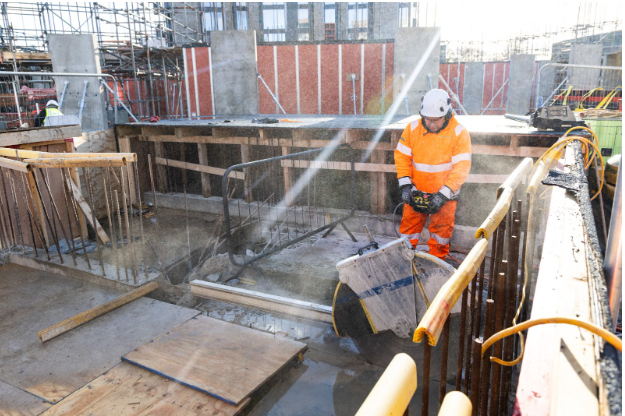
Dust Suppression: A majority of professional cutting is wet. Water is sprayed on the blade, which subdues silica dust at the source, saving the lungs of the workers and the people.
Noise Minimisation Like the raving noise of the traditional demolition, diamond sawing is much quieter and can be used during night shifts or areas of the city that are noise-sensitive.
Operations with no fume: Electric and hydraulic cutting machines can be used to work indoors with no threat of accumulation of carbon monoxide, normally experienced with the petrol-powered items.
4. Efficiency in Cost-Effectiveness
Although the first cost of specialized CONCRETE CUTTING will appear to the eye of some contractors, the savings in the long-term cannot be denied. The use of precision cutting removes the necessity of secondary repairs. The installation may occur instantly when you cut a perfect hole where a door, a window or an HVAC duct is going to be placed. No patching or structural cracks that need to be fixed are required which makes the total cost-per-opening of the project considerably lower.
5. Why Expertise Counts: The Human Factor
The operator is only as good as the equipment. A prominent CONCRETE CUTTING expert is carrying with him/her decades of experience into the industry. In the UK, find contractors having:
CSCS Accreditation: Safety-training all the staff.
ISO Certification: Demonstrating a desire to manage quality.
A Successful History: Knowledge of how to manage the particularities of the London and South East infrastructure.
Conclusion
With the future of the UK construction industry in sight, the focus on the environmental and quiet, and accurate procedures is bound to increase. The development of CONCRETE CUTTING is quite a simplistic demolition task that has developed into an engineering service. Through the right partner and the right technology, the project managers can be certain that they will be able to complete their builds faster, safer, and at a higher standard.
Frequently Asked Question (FAQs)
Q1: Is cutting of concrete possible in limited space?
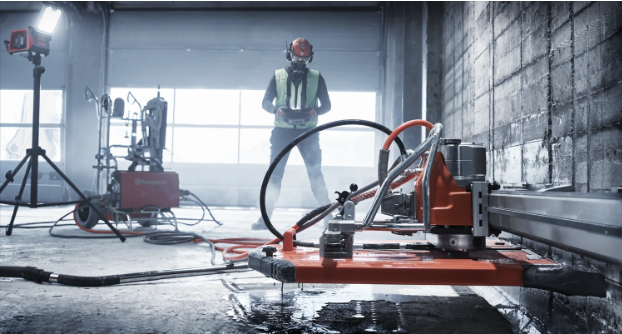
Yes. With the help of handheld diamond saws, or special hydraulic tools, professionals are able to do CONCRETE CUTTING in small crawl spaces or basements, or plenums where larger machines are unable to enter.
Q2: What is your management of the resulting water and slurry generated in the process?
Special wet cutting with industrial vacuums and slurry settlement is utilized. This is to make sure that the water that is employed in the dust suppression is captured and disposed of as per the environmental laws, and the site is clean.
Q3: Can reinforced concrete with rebar of 30mm or more be cut?
Absolutely. Diamond blades have been developed specifically to slice through high density reinforcement of steel without damaging the blade or the motor stopping.
Q4: What is the difference between concrete cutting and core drilling?
The two involve the use of diamond technology however core drilling is applied on circular holes (pipes and cables) and the use of CONCRETE CUTTING (sawing) on straight straight lines in order to create an opening to the door, window, or to cut out an entire floor slab.
Q5: What are the safety needs of a project on cutting?
The operators should be fully equipped with PPE including respiratory protection (even with wet cutting), ear protection, and eye protection. In addition to that, there is usually a scan of the area to make sure that there are no live electrical or gas lines concealed in the concrete.