

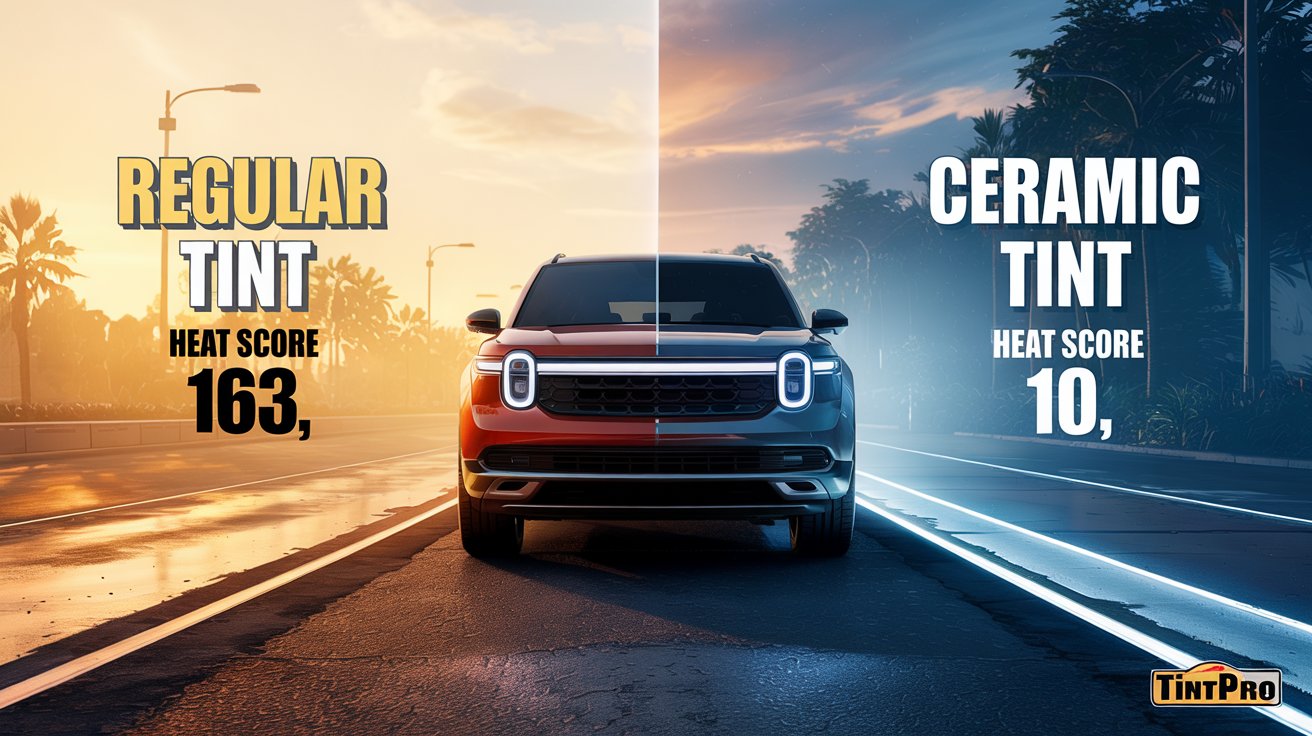
With the advent of modern technologies, automotive window tinting has developed from purely a cosmetic enhancement to a functional necessity for users. This is caused by the fact that the window tints on offer possess different properties, with ceramic window tints being more advanced than regular ones. Comparing the films’ usefulness, costs, and my extensive experience with automotive upgrades, it’s clear how impactful and expensive ceramic tints are. This guide will help you discern the estimated price difference between ceramic and regular window tints, so that you can decide which option provides more value in terms of your needs and budget.
Understanding Window Tint Types: Ceramic vs Regular
Analyzing the cost of window tints demands an understanding of a window film’s fundamental components. These core attributes will influence the cost as well as the long-term value of your investment.
What Makes Ceramic Tint Special?
Ceramic window films are termed as ‘the kings of the kingdom of tints’ as they engulf copious amounts of infrared rays, enabling, reflecting, and absorbing radiant heat. These films offer additional benefits due to their microscopic ceramic structures embedded within their film structure. This distinctive formulation enables ceramic tints to achieve greater heat rejection without the use of light-blocking dyes or metals, as is the case with other films.
The ceramic particles in these advanced films form a barrier to infrared radiation while allowing clear sight. This benefit enables ceramic tints to retain color and clarity for decades unlike cheaper alternatives that tend to fade or purple. The specialized manufacturing process as well as the advanced materials used strongly influence the cost of ceramic window films.
Regular Tint – The Traditional Alternative.
Regular window tints are divided into two categories: dyed films and metallized films. The most basic and inexpensive option, dyed tints, consists of layers of dye that trap solar heat while blocking a portion of UV rays. While functional at first, exposed dyes have the tendency to wear out thus lowering performance and aesthetic appeal.
Metallized films, incorporating small metallic particles that reflect heat instead of absorbing it, constitute an upgrade in comparison to dyed options. While more enduring than dyed films, metallized tints often conflict with electronic signals, interrupting cell phone reception, GPS, and radio navigation. Premium ceramic options do not share this flaw.
Advantages of Ceramic Window Tint Over Conventional Tint
The price disparity between ceramic and regular window tint is justified by numerous performance benefits that ceramic films offer. Having context to these perks helps justify the expense associated with ceramic films.
Excellent Heat Rejection Capabilities
Ceramic tints outperform other window tints with their temperature control. Their internal vehicle temperature control can extend up to 60 percent and dependably infrared lights above the vehicle encourage effective reflection. This level of temperature control budget tints fail to achieve a more relaxed driving experience, thankfully lowering dependency on AC Mechanics. During summer months, this infrared light enhances temperature rejection is easily noticed, particularly when attempting to enter vehicles parked for long durations in direct sunlight.
Enhanced UV Protection and Preservation of Interior
Ceramic films far surpass budget alternatives when it comes to UV protection, offering up to 99 percent recognition of harmful rays. This near complete blockage effectively defends the skin and vehicle materials from degradation causing fading whilst accepting preservation benefits of value vehicles in an upkeep-centered economy. For these reasons ceramic tints become a worthy investment over regular options.
Exceptional Signal Performance and Clarity
Ceramic tints allow for excellent visibility while permitting free electronic signal transmission making them ideal alternatives to metallized films that interfere and compromise with electronic systems.
Your mobile phone, GPS and radio signals remain seamless which is very critical for modern drivers. Furthermore, the non-reflective characteristic of ceramic tints improves the look of many vehicles which is often preferred by customers.
Cost Analysis: Regular Tint vs Ceramic Tint
For many customers, the primary factor to consider is the difference in the pricing of ceramic window tint in comparison to regular window tint. Considering the current market rates, this is how these options differ on various types of vehicles, as well as on different installations, is analyzed.
Price Ranges for Ceramic Window Tint
Window tinting with ceramic films is considered to be a high-end aftermarket upgrade. For some compact cars and standard sedans, the cost of all windows ceramic tinting is between $400 and $800 depending on the value of the ceramic film used, as well as the reputation of the technician doing the work. These additional costs are particularly high for larger vehicles like SUVs, trucks, luxury cars due to their large amounts of glass, costing $600 to $1,200 for full coverage.
The finest brands of ceramic film with the greatest clarity and the most premium brands have the highest heat rejection ratings and can push these prices even higher. Some installations on luxury vehicles exceed $1,500 with the inclusion of windshield tinting where legally permitted. These higher costs are associated with the increased material requirements and additional installation time needed for more complex shaped windows.
Price Ranges for Regular Window Tint
As a comparison, standard dyed window films are much more accessible. The norm for small to mid-sized vehicles is in the $100 to $250 price range for total window coverage with basic dyed films. And the step up to metallized films increases the price range to approximately $200 to $400 for similar cars.
These lower priced options render regular tinting affordable to many consumers, illustrating their sustained appeal despite the performance restrictions. For numerous cost-conscious consumers, the immediate savings on expenses is too persuasive to resist ceramic alternatives.
Performance Factors That Determine The Pricing
The cost of executing any window tinting irrespective of film type has several influencing factors. The geographic location has a lot to do with the pricing. The metropolitan areas have higher pricing compared to the rural regions due to overhead and labor costs. The size of the vehicle together with the complexity of its windows has a direct influence on the material requirements and the time it takes to install.
Vehicles with multiple complex windows require more film and labor, driving overall costs up. Identical services in different locations tend to vary in price for a range of 20-30%. This is quite common. Installers will implement different pricing strategies based on their credibility and skill level. Well-known shops will typically price higher as they have proven track records and warranties, while newer businesses will charge lower as they try to build a client base.
ROI Analysis: Does the Additional Cost of Ceramic Tint Hold Value?
Ceramic tint’s installation cost raises questions whether it justifies the added expense. There are several factors that should be considered apart from the installation cost.
Energy Efficiency and Fuel Savings
Ceramic tints are claimed to lower the air conditioning usage for a car’s interior during the summertime. As a result, the load on the car’s air conditioning system increases, resulting in better fuel efficiency. Because of this, fuel costs and efficiency improve in the long-run, compensating for the initial cost premium when compared to basic tints.
Extended Service Life
Regular tints are outlasted by ceramic window films when it comes to service life. Quality dyed films start to show degrading phases within 2-3 years, however, ceramic films can retain their performance characteristics for many years. The extended ceramics life drives the difference of cost down in terms of the annual cost incurred.
Interior Protection Value
Ceramic Tint vs Regular Tint Cost becomes an important consideration when evaluating long-term value. Preserving a car’s interior raises its resale value significantly, and ceramic tint excels in this area by preventing UV rays from damaging the upholstery, dashboards, and trim pieces. This preservation effect adds real value when selling or trading the car, helping to partially offset the higher ceramic tint cost compared to regular options.
Do-it-Yourself vs Professional Installation: Cost Evaluation
A budgeted approach to any car window tint would be to install DIY set window tints. The method of installation has a tremendous influence on the immediate and sustained calm a user receives with a window tint.
DIY Window Tinting Costs
Pre-cut ceramic tint kits for specific vehicle models are more affordable than professionally installed window tints starting from $50 up to $250, alongside custom-sized ceramic tint rolls costing $40-$75 for bigger coverage. This impressive difference in prices compared to professional installation draws attention.
My personal experience with DIY installation has been elementary. Without the mastery of cutting, applying without bubbles, and prepping the surface, the outcome scope is quite bad. Even minute errors that most people don’t notice can have dire consequences on performance and visibility. After embarking on what I thought would be an easy path, I decided to avoid further disappointment and let professionals take over.
Professional Installation Value
With the advancements in technology, the ease and proficiency to perform tasks has risen. Professional installers are equipped with controlled environments, extensive experience, specialized tools, and additional resources that facilitate achieving the best results.
Reputable installers provide warranties for the materials and workmanship done, protecting clients from a defect or installation issue. My experience with professional installation emphasizes the value of expert application, such as no bubbles, perfect edges, and consistent appearance across all windows.
Personal Experience: My Journey with Ceramic and Regular Tints
Having owned vehicles with both ceramic and regular window tints gives me insight regarding their performance and value in comparison to one another. In my first vehicle, I had standard dyed film on the windows, which I got done at a local shop for around $180. I did like the appearance and the reasonable heat reduction at first, but I was quite disappointed with how much fading there was after two years, especially on the rear window which got the most sun.
When purchasing my next vehicle, I decided to invest in a ceramic window tint for $650, which is more than three times my previous expenditure. With this, I was able to feel the difference immediately. Even during the scorching summer heat, interior temperatures were kept significantly cooler, and all electronics worked beautifully. The five years after that, the ceramic tint held its position and appearances with no bubbling or color changes, further proving my point in regards to longevity compared to other forms of tint. An added benefit I didn’t think of at first was the performance of the ceramic tint during an unexpected hailstorm.
While the conventional tint on my previous vehicle got ripped during another weather occurrence, the ceramic film’s structural attributes enhanced protection by containing glass shards within the vehicle’s interior instead of having them scatter when a small crack formed.
How To Select The Most Appropriate Tint For Your Windows Without Breaking The Bank
To some, finding the sweet spot between cost and performance is effortless, but requires critical thought when assessing specific needs and priorities for others.
Evaluating Your Climate Needs
If you reside in areas of extreme heat or powerful sun exposure, the additional benefits in energy efficiency ceramic tint offers over standard tints in terms of heat rejection can be well worth the higher cost. On the other hand, more moderate or cooler regions may make standard tints offer enough performance at a more attractive price.
Life Expectancy
Think about how long you intend to retain your car. Long-term owners might find ceramic tint more affordable in the long run due to its superior durability, even though it comes with a higher initial purchase price. Owners looking to keep a vehicle for a short time might have any form of standard tint due to its lower price.
Quality Differences Within Classes
Just like the term categories imply, not all ceramic or regular tints are created equal. Within each category, differences in quality impact the price, leading to many choices. The available options may include some premium standard tints which outperform budget ceramic options and others.
Ask for details on the warranty, specific heat rejection, and UV protection for each film you plan to purchase if you want to make comparisons that transcend basic categorization.
FAQs
What influences the total cost of window tinting services?
Several aspects determine the final cost of window tinting, including the vehicle’s dimensions, number of windows, and their frame’s make, as well as the complexity of the outlined work. For example, SUVs and trucks, unlike compact cars, incur higher costs due to more materials and labor being needed. Moreover, premium films such as ceramics cost far more than basic dyed films due to their technology and materials, which is an added cost. Furthermore, geographic region, installer’s reputation, as well as duration of warranty all impact final costs .
How much do I save spending on curtains instead of hiring professionals to install them?
When purchased in bulk, pre-cut DIY window tinting kits cost $50-250, while ceramic tint rolls go for $40-75. This represents a staggering 50-80% savings compared to hiring a professional. However, these savings come at the steep price of improper installation. Most first time DIY installers face hurdles, such as adhesion—where the installer fails to apply the tint—and bubbling that not only compromises the vehicle’s aesthetics, but also its functionality.
Does installing ceramic tint void my vehicle’s warranty?
No. Installing ceramic window tint does not void a vehicle’s entire warranty. The Magnuson-Moss Act prevents consumer exploitation via sweeping cancellations of warranties. Nonetheless, if a window tint installation directly causes an issue (like an electrical problem from an improper installation affecting the door’s electronics), that repair may not be covered. Professional quality installers know the manufacturer’s specifications and requirements and therefore perform compliant installations of window tints with respect to the warranty provisions.
How do ceramic tints compare to regular tints in regard to longevity?
While standard dyed film can show obvious signs of deterioration after just 2 to 3 years, quality ceramic window films have the upperhand, boasting longevity of 5 to 10 years or more without significant wear. This is due to the non-fading composition and superior material of ceramic. Metallized films fall somewhat in the middle, enduring around 3 to 5 years before showing wear. The difference in the sustained durations directly impacts the value over time when considering the initial installation costs.
Can I achieve the same level of heat rejection with regular tint if I use a darker shade?
Darker tint percentages do not necessarily guarantee superior heat rejection. While darker dyed tints do absorb light, they can actually trap heat inside the vehicle as opposed to reflecting it. This is not the case for ceramic tints, which maintain better temperature control using infrared reflection, allowing lighter ceramic films to outperform darker standard films. This is the reason technological advancement explains why a 50% ceramic tint often outperforms a 5% dyed tint in heat rejection despite being visually lighter.
Making the Right Investment in Window Tinting
We can easily tell that the difference in costs of ceramic tint vs regular tint cost is more than the initial price when compared. Regular films cost about $100-400 while full vehicle installation of ceramic window films cost around $400-1200, but this difference must be taken into consideration with performance benefits, long-lasting capabilities, and added protection.
If comfort along with value is the goal, then the lower the limit, the better. In this case, ceramic tints do tend to justify the advanced service life and performance by their higher cost. In contrast, lower-priced options without balance tend to bring moderate expectations and easier value will find standard tints provide acceptable results.
My personal experience is that if you plan to keep a car for longer than 3 years, then investing in tinted windows and ceramic tint is an incredibly good financial decision. The difference in daily heat rejection, signal clarity, and overall durability make day to day enjoyment exceed initial investments. That said, I understand that everyone has varying needs and budgets, which means the right answer is based on the specific contexts you prioritize the most.