

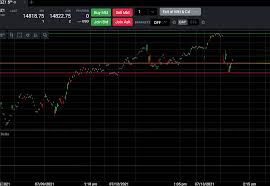
Success in scalping and day trading demands precision, timing, and lightning-fast decision-making. These trading styles are not just about strategy—they’re about execution under pressure. But how do you practice trading with the intensity and speed of live markets without risking real capital? The answer is chart replay.
For short-term traders looking to improve their entry and exit techniques, hone their strategies, and boost their confidence in a realistic yet simulated setting, chart replay is a priceless tool. The advantages of chart replay for scalpers and day traders will be discussed in this article, along with tips for maximizing its use and the reasons it ought to be a fundamental component of your trading education.
What Is Chart Replay?
Advanced trading systems have a function called chart replay that lets users relive prior market data as if it were real-time. Traders can examine price movements bar by bar or tick by tick, pause, fast-forward, and rewind. This allows for active trade practice, real-time decision simulation, and strategy refinement.
Chart replay isn’t just about seeing past data—it’s about interacting with it. You can place simulated trades, track your performance, and review your actions just like in a live market environment.
Why Chart Replay Is Crucial for Scalping and Day Trading
1. Perfect Timing Practice
Scalping and intraday trading often involve very small price windows for profit. Practicing these setups in real-time conditions sharpens your timing.
2. Live Experience Without Real Loss
Mistakes are costly when you’re scalping on real accounts. With chart replay, you can afford to make them—and learn from them.
3. Tactical Experimentation
Try different trade ideas, risk settings, and stop-loss placements in various market conditions without risk.
4. Improve Speed and Reflexes
Fast markets require fast thinking. Chart replay trains your mind to spot patterns and react swiftly, improving muscle memory and trade execution.
5. Understand Market Microstructure
Scalpers, especially, need to understand how the market behaves on a tick-by-tick or second-by-second basis. Chart replay provides that exact environment.
How to Use Chart Replay for Scalping Practice
Step 1: Choose a High-Volatility Session
Focus on times like the U.S. or London open, major news releases, or volatile assets. These provide ideal setups for scalping.
Step 2: Load the Historical Data
Make sure you have detailed tick or minute data for accurate playback. This ensures you’re seeing the true structure of the market.
Step 3: Start the Replay
Use bar-by-bar or tick replay to simulate market movements. Control the speed based on your comfort and experience.
Step 4: Practice Trade Execution
Use your trading plan to place simulated trades. Record your results, including win/loss ratio, risk-reward, and execution quality.
Step 5: Review and Adjust
Use post-trade analysis tools to evaluate what went right or wrong. Adjust your strategy and repeat the process.
Chart Replay Features That Matter for Scalping
Not all chart replay tools are created equal. When it comes to fast-paced trading, look for platforms that offer:
- Tick-by-Tick Accuracy: Scalpers rely on precision. The replay should reflect actual tick movement.
- Realistic Order Execution: Simulated trades should reflect slippage, spreads, and execution timing.
- Multi-Speed Playback: Switch between real-time, fast-forward, and pause for detailed analysis.
- Synchronized Charts: View multiple timeframes or instruments at once to validate signals.
- Trade Journal Integration: Keep track of simulated trades with notes and screenshots.
Why MultiCharts Works for Scalping Replay
Although many platforms offer chart replay features, few provide the flexibility and performance that serious traders require. MultiCharts, a professional-grade trading platform, offers:
- High-resolution tick data replay
- Customizable charting and indicators
- Scriptable trade logic for testing algorithms
- Seamless integration with major brokers and data feeds
While we won’t focus exclusively on MultiCharts, it deserves mention for offering one of the most responsive and trader-friendly replay environments for active strategies like scalping and day trading.
Chart Replay for Day Trading: Building Consistency
Day trading demands more patience than scalping but shares the need for speed and decisiveness. Chart replay allows day traders to:
- Rehearse morning routines and setups
- Replay entire trading days to spot mistakes
- Test breakout and pullback strategies under varying market conditions
- Build emotional control and avoid overtrading
By consistently replaying historical sessions, day traders build routine, confidence, and discipline—qualities that are essential to long-term profitability.
Pro Tips for Effective Chart Replay Practice
- Use Screen Recording: Capture your sessions and review them to identify behavior patterns or hesitation.
- Set Daily Goals: Focus on specific aspects like trade timing or managing stop losses.
- Mix Timeframes: Scalpers benefit from watching both the micro and macro context—consider replaying 1-minute charts alongside 15-minute ones.
- Incorporate News Events: Replay sessions around economic reports or earnings announcements to understand market behavior during volatility.
- Repeat Winning Setups: Build muscle memory by drilling high-probability patterns repeatedly.
Common Mistakes to Avoid
- Over-speeding the Replay: Fast-forwarding too much eliminates the value of real-time decision-making practice.
- No Trade Review: Skipping post-replay review limits growth and understanding.
- Unrealistic Trade Sizes: Simulating trades with outsized position sizes gives a false sense of profitability.
- Lack of Focus: Jumping between strategies or markets without purpose leads to scattered learning.
FAQs: Chart Replay for Scalping and Day Trading
Q1: Can chart replay fully replace a live market experience?
A1: No, but it’s the next best thing. While live trading includes emotional factors like fear and greed, chart replay builds technical skill and strategy confidence before you go live.
Q2: Is chart replay useful for scalping forex or crypto?
A2: Absolutely. Fast-moving assets like forex and crypto benefit from precise trade execution, which can be honed using chart replay.
Q3: How often should I practice with chart replay?
A3: Aim for daily sessions if possible. Even 30-60 minutes of focused replay can significantly improve execution over time.
Q4: Can I simulate slippage and spreads during replay?
A4: Some platforms, including MultiCharts, allow users to simulate realistic trade conditions including slippage and spreads.
Q5: Does MultiCharts support multi-timeframe replay?
A5: Yes, MultiCharts enables you to replay data across multiple synchronized charts and timeframes—ideal for validating setups in real time.
Final Thoughts:
Chart replay is not just a tool—it’s a training ground for serious scalpers and day traders. It allows you to develop your skills in a controlled environment, test strategies without fear, and review your performance to make improvements.
While many platforms offer basic replay functions, those serious about performance should choose a tool that mirrors real-world trading conditions. Platforms like MultiCharts provide the detailed, customizable replay environment that short-term traders need to refine their edge.
With consistent chart replay practice, you’ll develop the discipline, speed, and precision needed to thrive in high-pressure trading environments—without risking a cent while you’re learning.
Ready to take your trading practice to the next level? Chart replay could be the most powerful (and underused) weapon in your arsenal.

