

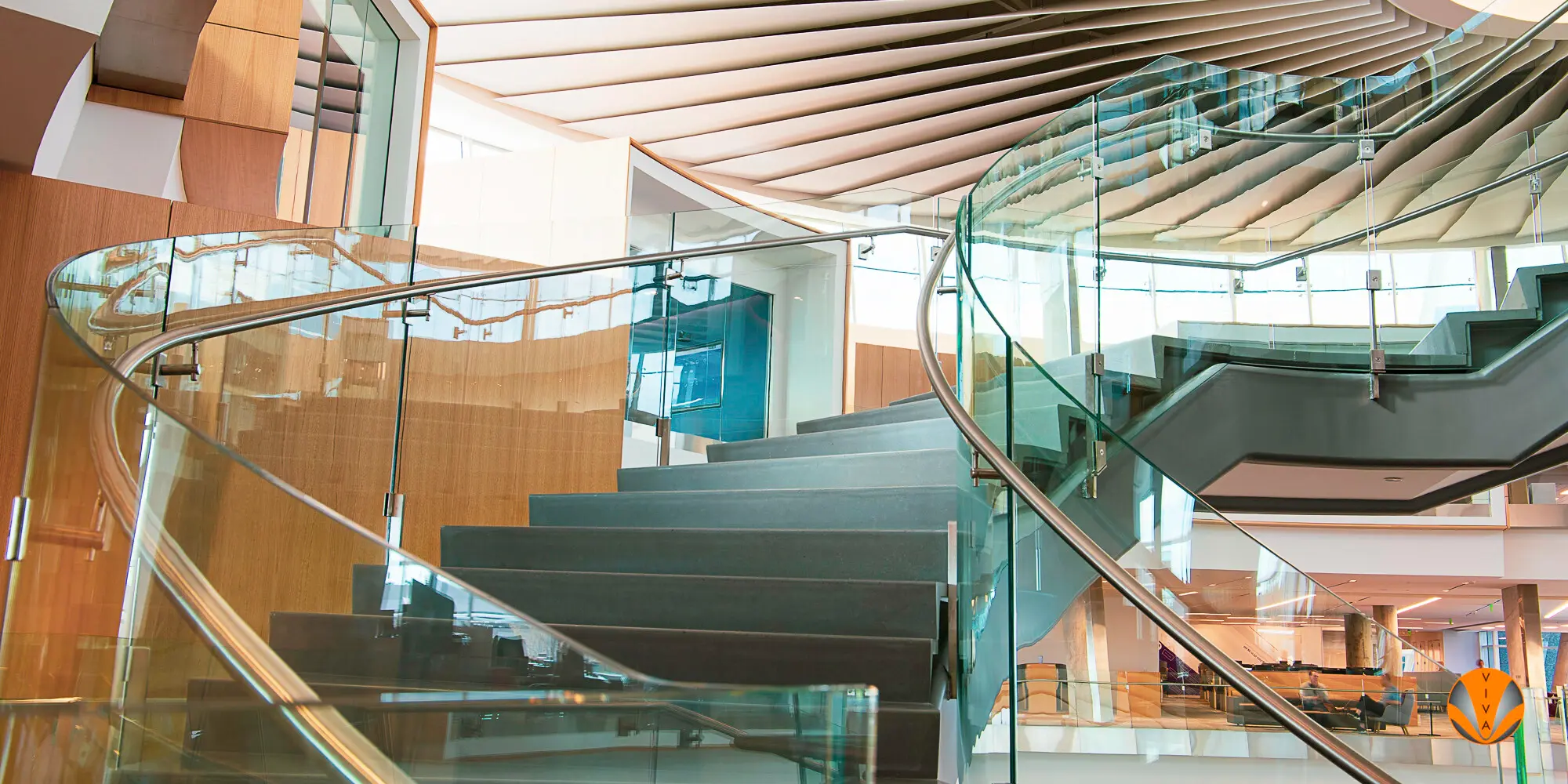
Architects, builders, and commercial property owners looking to improve any commercial space’s look and safety features are likely to pick commercial glass railing systems as their top choice. With their glass balustrades, these systems provide a modern, sleek appearance while maintaining safety. Offices, hotels, shopping malls, and even public areas are transformed with a hint of sophistication. This article discusses the most critical factors for choosing commercial glass railings for your project—the design options, materials, compliance issues, and practical value.
Why Choose Frameless Glass Railing for Commercial Buildings?
Frameless glass railings are best known for their unobstructed views and clean minimalism. These systems do not have chunky frames or posts, hence they do not capture the feeling of a contemporary commercial building. Instead, they promote a sense of openness. In high-rise office balconies or hotel terraces, frameless glass panels provide safety but do not hinder visibility, natural light, and the feeling of spaciousness. As detailed on the Davila Glass & Mirror website, customizable framed options that meet design desires and strict safety regulations are possible.
Key Features of Tempered and Laminated Glass Panels in Commercial Railings
Glass railings have become a requirement for a lot of commercial buildings. This is because the safety of glass railings in commercial buildings is ensured with tempered and laminated glass panels. Laminated and tempered glass are the industry standards for commercial glass railing, as they possess high safety standards. The heat treatment of tempered glass renders it more potent, with the added feature of shattering into less harmful, smaller pieces when broken. Laminated glass is much stronger as it combines two or more layers of glass with an interlayer that binds the shards in case of an impact. These materials ensure that commercial-grade glass railings comply with building codes and shield users, especially in areas with high population density like malls and airports.
Design Options: Post-Mounted vs. Top Rail Glass Systems
Glass railings for commercial use come in various designs, primarily post-mounted and top rail systems, or are built of two parts. Post-mounted railings have vertical posts of aluminum or stainless steel, which support glass panels. Clincher systems that use vertical posts are easier to install, making them suitable for outdoor and indoor use. On the contrary, top rail glass systems employ a continuous horizontal rail along the upper edge of the panels, increasing stability and enhancing the glass’s elegance. The post-mounted design is much easier to maintain and install, but it is up to the client’s preferred design.
Compliance and Safety: Understanding Code-Compliant Commercial Glass Railings
When it comes to commercial glass railings, one of the primary factors is their compliance with building codes and safety regulations. Standards issued by different bodies, like the American Architectural Manufacturers Association (AAMA), ensure that glass railings are manufactured to withstand sidestream wind loads, impacts, and other environmental factors. Business owners are shielded from liability claims, and occupants are safeguarded when proper installation is done according to these laws. Check with providers like Davila Glass & Mirror to ensure they adhere to all local and national guidelines because noncompliance can result in expensive legal disputes.
Popular Commercial Applications of Glass Balustrade Systems
Commercial glass railings have a wide range of applications and undertakings, with versatility. They act as guards on balconies in office buildings, safety barriers on hotel rooftop decks, and exquisite fencing of restaurant patios. Other corporate offices have mezzanine floors fitted with glass balustrades to enhance the view, while shopping centres have them to fence the escalators. Because glass is see-through, space is not segregated, which gives employees, clients, and other visitors an excellent impression in all business spectacles.
Benefits of Stainless Steel and Aluminum Glass Railing Systems
Most parts of commercial glass railings, like the posts and handrails, are fabricated from stainless steel or aluminum. For example, stainless steel is highly regarded for its structural strength, modern appearance, and corrosion resistance, and is therefore suitable for sophisticated projects. On the other hand, aluminum has a much lower density, making it easy to handle and also customizable, making it a cheaper option for different finishes such as powder coating. Both materials increase durability as they are low-maintenance, which is excellent for busy commercial settings.
How Glass and Metal Railing Combinations Enhance Durability
Integrating glass panels and metals into the design of a railing system gives it an appealing look while making it sturdy. While glass features unmatched transparency and elegance, metals provide the essential skeleton structure and fortification. As a result, the railings retain their strength for rigorous activities and environmental exposure, such as wind and rain on balconies or rooftops. These systems are the preferred choice in commercial spaces where both design and functionality are equally important.
Exploring Structural Glass Railing for High-Rise Commercial Projects
Structural glass railings in high-rise buildings represent the latest technology with glass as the bearing member, without thick metal brackets and supports. It enables the construction of flawless glass windows or partitions at an elegant angle and encourages more incredible views, light, and space in the building. While more costly, structural glass is becoming popular in luxury, developed commercial complexes, and upscale hotels for its aesthetic appeal and engineering wonders.
Wind-Resistant and ADA Compliant Glass Handrails for Public Spaces
For busy public or commercial places, such features as aesthetics and firm structure meeting wind resistance and ADA compliance demands are necessary for glass railings. Wind-resistant railings safeguard sections like rooftop decks or outdoor terraces exposed to vigorous weather and strong winds. Hand railings and obstacles provide sufficient support for movement and access from one area to another, especially for disabled persons, illustrating acceptance of a design that is accessible to everyone.
Low-Maintenance Glass Infill Panels for Busy Commercial Areas
One practical benefit of commercial glass railings is their maintenance, as glass infill panels do not rot, rust, or corrode, unlike traditional wrought iron wood partitions. The glass is kept shining and clear with routine cleaning using nonabrasive substances. This no-faff quality is different in commercial spaces, where concern about upkeep and cleanliness leads to prefabricated sections with accurate dimensions that comply with international standards.
Custom Glass Railings: Tailoring Design for Corporate Offices
As in other commercial projects, customization is a notable feature for glass railings. Corporations often require railings that portray their brand’s image and style. Custom options include etched logos, different post finishes, and privacy features such as tinted or frosted glass panels. Davila Glass & Mirror offers custom solutions that complement the surrounding architecture while ensuring safety regulations are met.
Installing Glass Railing on Rooftops, Balconies, and Mezzanines
Each location has its own challenges. Particular attention is needed for wind loads and waterproofing on rooftop decks. Balconies require secure anchoring in the building structures, and internal safety is prioritized for mezzanines, making it crucial that there are unobstructed sightlines. Skilled contractors guarantee proper mounting and sealing to ensure safety and longevity in various commercial environments.
Comparing Clear vs. Frosted Glass Panels for Commercial Use
Selecting frosted or clear glass panels depends mainly on the level of privacy and the space style. Clear glass enhances light and openness, ideal for publicly accessible areas or storefronts. Frosted or etched glass softens visibility while maintaining elegance, making it appropriate for office partitions or hotel balconies where discretion is preferred.
Powder-Coated Steel Posts: Enhancing Aesthetics and Strength
Powder coating offers a variety of colors and textures, making it easy to coordinate the color of railing hardware with the business’s design scheme. It also protects against corrosion, preserving the railing system’s appearance without degrading its functionality for an extended period.
Maintaining Your Commercial Glass Railing: Tips for Longevity
The aesthetic value of commercial glass railings is only preserved when regular maintenance is carried out. To prevent scratches and buildup, commercial glass railings need to be cleaned regularly with soft cloths and mild detergents. Periodic inspection of the hardware helps capture loose fittings and prevent them from becoming a larger issue down the line. Thorough servicing by a professional every two years helps meet safety standards and extends the longevity of the system.
Case Study: Glass Railing Solutions for Shopping Mall Balconies
As a recent illustration, Davila Glass & Mirror used tempered glass panels with stainless steel posts to make frameless glass railings at multiple levels for a busy shopping mall. From below, shoppers were provided clear sightlines, while secure barriers were placed above their line of sight. Alongside the modern look of the mall, all safety regulations were also met, which illustrates the practical benefits commercial glass railings offer.
How to Choose Between Frameless and Post-Mounted Systems
Deciding between glass railings depends on the aesthetics, the budget, and how much structural support is required. Compared with post-mounted systems, which tend to be the favorite in large commercial projects because of their versatility and ease of upkeep, frameless railings are more expensive and require more work to install, although they offer more transparency. Expert consultation guarantees that there will be no mismatch with your intended application.
FAQs About Commercial Glass Railing Installation and Safety Standards
Some of the most common questions deal with the required thickness of the glass panels, the building codes that apply, and the duration of the installation. Dealing with local restrictions is a must, as certified experts knowledgeable about the area’s legislation for commercial glass railing systems address.
Final Thoughts
In modern commercial spaces, tempered or laminated frameless and post-mounted glass railings, stainless steel and aluminum, and other materials make commercial glass railing systems serve as more than just safety barriers. These commercial applications benefit from solutions tailored specifically to them. From beauty to safety and even durability, there is often no balance met when industry standard providers like Davila Glass & Mirrors are relied on, along with AAMA standards.