

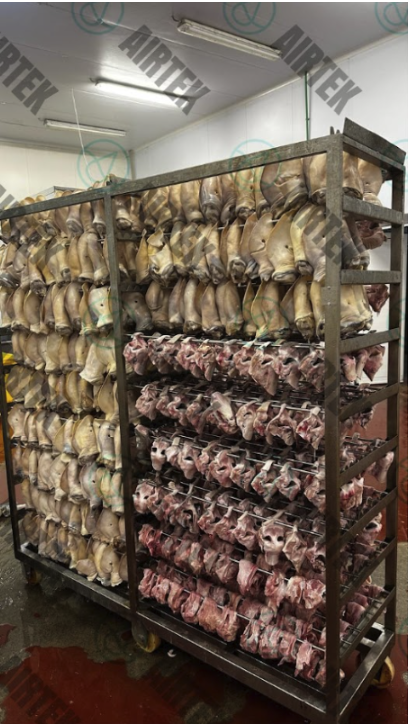
Drying meat looks straightforward. You cut the meat, place it in the dryer, set the required heat, and let the machine do its thing. But that’s not always what happens. One small mistake, even something that seems harmless, can ruin the entire batch. Some folks chalk it up to bad luck. Others blame the machine. But often, it’s the little things—the unnoticed habits—that cause trouble.
The truth? A meat dryer only works well when it’s handled right. It’s not magic. It doesn’t fix poor prep or bad judgment. It follows your lead, good or bad.
Let’s take a closer look at where things usually go wrong.
- Skipping the Prep Work
It’s tempting to toss the meat in and press start. Especially when you’re in a rush, but skipping the early steps can cost you more time—and money—later.
Inconsistent thickness is a problem. So is leftover surface moisture. If one piece is thicker than the others, it won’t dry at the same speed. And water trapped on the surface can turn into steam, which doesn’t just slow things down—it invites bacteria.
A decent check might include:
- Making sure all pieces are more or less the same width
- Drying off wet cuts before loading them
- Not crowding strips or trays too close together
None of this is complicated. But skipping it? That’s how bad batches happen.
- Picking the Wrong Temperature
This one’s surprisingly common. And not always easy to spot.
Some users crank the temperature thinking it’ll speed things up. But when the outside dries too fast, it forms a seal. That keeps the inside wet. Lower temperatures bring their own risks, like under-drying and safety concerns.
People often don’t adjust between meats. But what works for beef might not suit duck or turkey. Even lean cuts behave differently from fatty ones.
Instead of sticking to one default, it helps to:
- Match the settings to the meat and cut
- Keep an eye on the inner heat level, not just the surface
- Understand how airflow velocity impacts drying speed
Getting this part right takes some trial and error. But once it’s dialled in, quality improves across the board.
- Forgetting About Humidity
Temperature gets most of the focus. But air moisture matters, too. A lot, actually.
When the air inside the chamber holds too much water, the drying slows down. Some pieces turn out rubbery. Others over-shrink. Occasionally, there’s a weird smell that no one can quite explain. It all traces back to air that couldn’t be breathed.
Some systems control humidity automatically. Others need adjustment by hand. Either way, it’s smarter to measure using tools, not just guess. Watching the dew point helps prevent a lot of issues that aren’t obvious at first glance.
- Overloading the Trays
It seems efficient to pack more trays and get more output. But it rarely works out that way.
When trays are packed tightly, air doesn’t move properly. Some pieces cook faster, others barely dry at all. You end up with a mix of overdone and underdone, which isn’t just wasteful—it can be dangerous.
Here’s what usually helps:
- Leaving space between pieces
- Avoiding overlap or stacking
- Flipping or rotating trays halfway (if possible)
It’s not just about doing more. It’s about doing it better.
- Not Cleaning the Dryer Enough
This one feels too basic to be a real issue—but it is.
Every dried batch leaves behind oils, particles, and maybe even small bits stuck in corners. That stuff doesn’t just disappear. It builds up. Over time, it affects airflow, causes smells, and changes how future batches turn out.
It’s easy to think a quick wipe-down is enough. But real cleaning means:
- Washing all trays
- Checking fans and filters
- Making sure no damp corners are left
Neglect here doesn’t always show up right away. But when it does, it’s often expensive.
- Letting It Run Unchecked
Some people trust their system too much. Once it’s on, they walk away. Usually, that’s fine—until it isn’t.
Even with smart features, problems can creep in. A change in air flow. A tripped breaker. A seal that didn’t hold.
It’s worth checking once in a while:
- Are things drying evenly early in the cycle?
- Is there an odd noise or smell that wasn’t there before?
- Does the meat look or feel different than last time?
It’s not about staring at the machine all day. Just staying aware. A quick check now avoids a mess later.
- Choosing the Wrong Unit for the Job
Sometimes, the problem starts before the machine is turned on.
Maybe the dryer was meant for smaller loads. Or a different type of meat. Or conditions that don’t match your setup. If it’s not built for what you’re doing, it’s going to struggle.
This isn’t just about size or cost. It’s about a match:
- Can it handle your average batch volume?
- Does it dry evenly, or just quickly?
- How much downtime is needed between cycles?
Even a good unit feels like a bad one if it’s the wrong fit.
- Not Watching Power Use
Power bills don’t lie. If they’re climbing, it might not be your imagination.
Older machines use more energy than they should. Or they dry longer than needed. Or both. Either way, the cost adds up.
That’s why some producers switch to models using heat pump drying. It keeps warmth inside, which means less work for the machine and less heat loss. Others experiment with infrared drying setups, especially when they need fast, repeatable results.
They’re not always cheap. But over time, they pay for themselves in quieter ways.
The Real Difference
Running a meat dryer isn’t hard. But doing it well takes attention. And some habits take time to build. That’s fine. The goal isn’t perfection. It’s consistent.
When drying feels unpredictable—too slow, too uneven, too costly—it’s usually not the machine. It’s how it’s being used. The good news? That part’s fixable.
You don’t have to change everything. Start with one small shift. Maybe it’s spacing the trays better. Maybe it’s adjusting for humidity. Over time, the gaps close. And the results speak for themselves.