

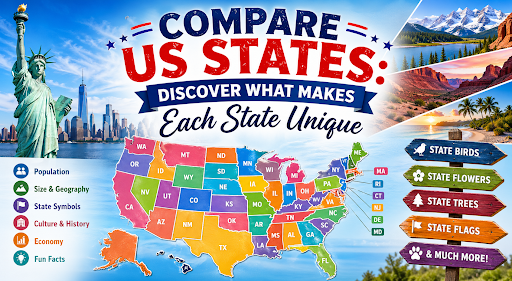
The United States is a vast and diverse country made up of 50 states, each with its own identity, culture, and story. From coast to coast, every state offers something different, whether it is natural beauty, historical significance, or unique traditions. If you want to truly understand the country, the best way is to compare US states and explore what sets them apart.
As someone who works closely with digital content and user behavior, I have seen how people are naturally curious about comparisons. They want to know which state is bigger, which has more population, or which has the most interesting symbols. This curiosity makes state comparisons not only informative but also engaging.
Why It Matters to Compare US States
When you compare US states, you move beyond basic facts and begin to understand deeper patterns. Each state reflects a mix of geography, history, and culture that shapes how people live and what they value.
For example, comparing a state like California with Wyoming shows a dramatic difference in population, economy, and lifestyle. California is densely populated and highly urban, while Wyoming is wide open with a strong connection to nature.
These comparisons help readers:
- Learn geography in a meaningful way
- Understand regional differences
- Discover new places to visit or study
- Appreciate the cultural diversity of the country
It is not just about numbers. It is about stories behind those numbers.
The Role of State Symbols in Identity
One of the most interesting ways to compare US states is through their official symbols. These symbols are not random choices. They often reflect history, environment, and local pride.
Each state has symbols such as:
- State bird
- State flower
- State tree
- State animal
- State flag
- State motto
For instance, the California poppy represents the natural beauty of the state, while the Texas longhorn reflects its ranching history. By looking at these symbols, you gain insight into what each state values.
Symbols also make learning fun and memorable. Instead of memorizing facts, you connect with visual and cultural elements.
Comparing Geography and Natural Features
Geography plays a huge role in defining each state. When you compare US states based on land and environment, the differences become very clear.
Some states are known for mountains, others for plains or coastlines. For example:
- Alaska has vast wilderness and glaciers
- Florida is famous for its beaches and wetlands
- Colorado is known for its Rocky Mountains
- Kansas features open plains and farmland
These geographical differences affect climate, lifestyle, and even economic activities. A coastal state may rely more on tourism and fishing, while a landlocked state may focus on agriculture.
Understanding geography helps readers visualize each state and see how environment shapes daily life.
Population and Size: Big Differences Across States
Another key factor when people compare US states is population and land area. These two elements often reveal surprising contrasts.
California is the most populous state, with millions of residents spread across large cities. On the other hand, states like Vermont or Wyoming have much smaller populations and quieter communities.
Land area also varies greatly:
- Alaska is the largest state by land
- Texas comes next with a massive size
- Rhode Island is the smallest
These differences influence infrastructure, transportation, and even the pace of life. Larger states may offer more opportunities but also more competition, while smaller states provide a slower, more relaxed lifestyle.
Cultural Diversity and Traditions
Culture is one of the most exciting aspects when you compare US states. Each state has its own traditions, festivals, and way of life.
In Louisiana, you will find vibrant celebrations like Mardi Gras. In New Mexico, Native American and Hispanic influences shape art and cuisine. In New York, diversity brings together cultures from all over the world.
Some cultural differences include:
- Regional food styles
- Local festivals and events
- Music and art traditions
- Language influences and accents
These cultural elements give each state a unique personality. They also make travel and learning more enriching.
Economic Strength and Industries
States differ significantly in their economic focus. When you compare US states based on industries, you can see how resources and geography shape economic growth.
For example:
- California leads in technology and entertainment
- Texas is strong in energy and oil production
- Michigan is known for the automobile industry
- Iowa focuses heavily on agriculture
These industries influence job opportunities, income levels, and population growth. They also reflect how states adapt to changing economic conditions over time.
Understanding these differences helps readers see how each state contributes to the national economy.
Education and Lifestyle Factors
Another important area to explore is education and overall lifestyle. Different states offer varying levels of education quality, healthcare access, and living standards.
When comparing states, people often look at:
- School systems and universities
- Cost of living
- Safety and healthcare
- Job opportunities
For example, states like Massachusetts are known for top-tier education, while others may offer more affordable living costs.
Lifestyle also depends on personal preference. Some people prefer the fast pace of city life, while others enjoy quiet rural environments.
Fun Facts That Make Each State Special
Sometimes the best way to compare US states is through fun and unexpected facts. These details add personality and make learning enjoyable.
Here are a few examples:
- Hawaii is the only state made entirely of islands
- Nevada is home to the famous Las Vegas Strip
- Maine produces most of the country’s lobsters
- Montana has more cattle than people
These facts may seem small, but they highlight what makes each state memorable. They also encourage curiosity and deeper exploration.
How to Compare States Effectively
If you want to compare US states in a meaningful way, it helps to follow a simple approach. Instead of focusing on just one factor, look at multiple aspects together.
A good comparison method includes:
- Start with geography and location
- Explore symbols and cultural identity
- Look at population and economy
- Consider lifestyle and education
- Add fun facts for context
By combining these elements, you create a more complete picture of each state. This approach also keeps the reader engaged and informed.
What You Gain from Exploring State Differences
Taking the time to compare US states offers more than just knowledge. It builds a deeper appreciation for diversity and helps you understand how different regions contribute to a larger whole.
Whether you are a student, traveler, or curious reader, these comparisons provide valuable insights. You begin to see patterns, connections, and contrasts that make the United States such a fascinating place.
Each state tells its own story. When you explore them together, you gain a broader perspective and a richer understanding of the country.
A Fresh Way to See the United States
Looking at the United States through comparisons transforms the way you learn and think. Instead of seeing it as one large country, you begin to recognize it as a collection of unique regions, each with its own identity.
From symbols and culture to geography and economy, every state has something special to offer. The more you explore and compare US states, the more you uncover details that might otherwise go unnoticed.
This approach not only makes learning enjoyable but also meaningful. It invites you to ask questions, discover new facts, and connect with the diverse character of the nation in a deeper way.