

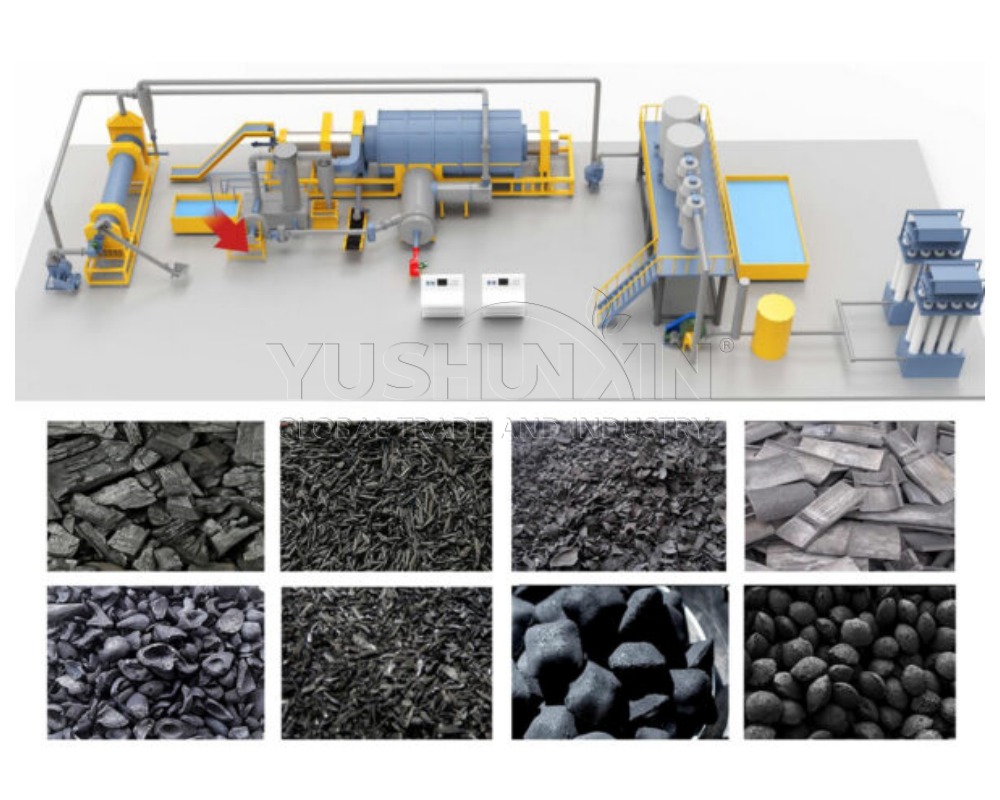
In today’s industrial and commercial landscape, the demand for sustainable energy sources and high-quality charcoal products has been steadily increasing. Charcoal has long been valued not only as a cooking fuel but also in metallurgy, chemical production, and other industrial processes. One of the most efficient ways to produce high-quality charcoal is through a continuous carbonization furnace, a technology that ensures consistent output, better energy efficiency, and reduced environmental impact. This article provides an in-depth exploration of continuous carbonization furnace technology and its critical role in charcoal production.
What is a Continuous Carbonization Furnace?
A continuous carbonization furnace is an advanced piece of equipment designed to convert biomass into charcoal efficiently and consistently. Unlike traditional batch-type furnaces, where materials are processed in limited quantities at a time, continuous furnaces allow for uninterrupted feeding, carbonization, and discharge of charcoal. This results in significantly higher productivity, uniform product quality, and better energy utilization.
Key Features of Continuous Carbonization Furnaces
- Continuous Operation
Traditional batch furnaces require repeated loading, heating, and unloading, which slows production. A continuous furnace eliminates these interruptions by allowing the constant feeding of raw biomass and continuous removal of finished charcoal. - High Capacity
Continuous carbonization furnaces are available in various capacities, ranging from small-scale models producing a few hundred kilograms per hour to large-scale systems capable of producing several tons per hour. This scalability makes them suitable for both small businesses and large industrial operations. - Energy Efficiency
These furnaces are designed to capture and reuse gases released during carbonization, such as volatile organic compounds, reducing energy consumption and minimizing emissions. Some advanced models include heat exchangers that further optimize energy usage. - Versatility
A wide range of raw materials can be processed, including rice husks, sawdust, coconut shells, peanut shells, wood chips, and other biomass materials. This flexibility ensures that businesses can utilize locally available resources efficiently. - Automated Control Systems
Modern continuous carbonization furnaces are equipped with automated systems for temperature control, feeding rate, and gas management. This reduces labor requirements and ensures consistent charcoal quality.
The Process of Charcoal Production in a Continuous Carbonization Furnace
Charcoal production in a continuous carbonization furnace involves several key stages. Each stage plays a crucial role in ensuring high-quality output and operational efficiency.
1. Raw Material Preparation
The first step in charcoal production is preparing the biomass. Raw materials must be cleaned, sized, and sometimes dried to a suitable moisture content. This ensures uniform carbonization and prevents incomplete combustion, which can affect the quality of the charcoal. Common preprocessing steps include:
- Cutting or shredding large biomass pieces
- Drying materials with high moisture content
- Screening to remove impurities
2. Feeding the Furnace
Prepared biomass is then fed into the continuous carbonization furnace. In most systems, a conveyor mechanism or screw feeder is used to ensure a consistent flow of material. This continuous feeding process is key to maintaining constant carbonization conditions.
3. Carbonization
Inside the furnace, the biomass is subjected to high temperatures in the absence of oxygen, a process known as pyrolysis. Depending on the type of furnace and material, temperatures typically range from 500°C to 800°C. During carbonization:
- Moisture is removed from the biomass
- Volatile compounds are released and partially burned to generate heat
- Solid carbon (charcoal) remains
This stage is critical for determining the quality of the final charcoal, including its calorific value, density, and ash content.
4. Cooling and Discharge
Once carbonization is complete, the charcoal must be cooled to prevent spontaneous ignition. In a continuous system, the charcoal moves through a cooling chamber or conveyor, where it is gradually brought to ambient temperature. After cooling, the charcoal is discharged for further processing or packaging.
5. Screening and Shaping
Post-carbonization, charcoal often undergoes screening to separate oversized particles or fines. Depending on market requirements, charcoal may be shaped into briquettes, logs, or other forms for ease of handling, transport, and consumer use.
Advantages of Using a Continuous Carbonization Furnace
Adopting a continuous carbonization furnace for charcoal production offers numerous advantages over traditional batch methods:
- High Productivity
Continuous systems operate non-stop, producing significantly more charcoal per day compared to batch furnaces. - Uniform Product Quality
Automated control systems maintain consistent temperatures and carbonization times, ensuring uniform density, calorific value, and color of charcoal. - Energy Savings
Reusing combustible gases and optimizing heat flow reduces fuel consumption, making the process more economical and environmentally friendly. - Reduced Labor Costs
Automation reduces the need for manual labor, lowering operational costs. - Scalability
Continuous furnaces can easily scale from small commercial units to large industrial plants, accommodating growth in production demand. - Environmental Benefits
Reduced emissions and efficient gas utilization make continuous carbonization furnaces more sustainable than traditional kilns.
Applications of Charcoal Produced in Continuous Carbonization Furnaces
The high-quality charcoal produced using continuous carbonization furnaces has a variety of applications:
- Cooking and Heating Fuel: Ideal for households, restaurants, and commercial kitchens.
- Metallurgical Industry: Used as a reducing agent in iron and steel production.
- Activated Carbon Production: Charcoal can be further processed into activated carbon for filtration and purification applications.
- Chemical Industry: Charcoal is used as a raw material for carbon black, inks, and dyes.
- Export Markets: High-quality, uniform charcoal is in demand globally, offering lucrative export opportunities.
Types of Continuous Carbonization Furnaces
Several types of continuous carbonization furnaces are available, each suited for different production scales and materials:
- Single-Layer Continuous Furnace
Suitable for small to medium-scale operations. Simple design and easier maintenance. - Double-Layer Continuous Furnace
Higher efficiency and output, ideal for larger-scale charcoal production. - Rotary Carbonization Furnace
Rotating drum design ensures uniform heating and carbonization of irregularly sized biomass. - Batch-Integrated Continuous Furnace
Combines the advantages of continuous feeding with batch processing for specialty charcoal products.
Factors to Consider When Choosing a Continuous Carbonization Furnace
Selecting the right furnace for charcoal production requires careful consideration of several factors:
- Capacity Requirements: Assess daily production goals to determine the appropriate furnace size.
- Type of Biomass: Some furnaces perform better with specific materials.
- Energy Efficiency: Evaluate heat recovery systems and fuel consumption rates.
- Automation Level: Higher automation reduces labor but may increase initial cost.
- Maintenance and Durability: Check for robust construction materials and ease of maintenance.
- Cost vs. ROI: Calculate the payback period based on production volume and market price of charcoal.
Cost and Investment
The cost of a continuous carbonization furnace varies depending on capacity, automation, and additional features:
- Small-Scale Furnaces: $1,500 – $5,000
- Medium-Scale Furnaces: $15,000 – $20,000
- Large Industrial Furnaces: $30,000 – $50,000
While the initial investment may be high, the efficiency, productivity, and quality of output ensure a favorable return on investment over time. Additionally, the ability to use diverse biomass sources adds cost-saving flexibility.
Global Trends in Charcoal Production
The global demand for charcoal continues to grow due to its versatile applications and sustainability advantages. Continuous carbonization furnaces have become increasingly popular in regions like:
- Southeast Asia: Utilizing coconut shells, bamboo, and rice husks.
- Africa: Converting wood and agricultural residues into high-quality charcoal.
- South America: Focus on sustainable energy and export-oriented charcoal production.
These furnaces contribute to environmentally friendly practices by reducing smoke emissions and increasing overall efficiency.
Maintenance and Safety Tips
Proper maintenance of a continuous carbonization furnace is essential for long-term performance:
- Regular Cleaning: Remove ash and residue to prevent blockages and ensure uniform airflow.
- Temperature Monitoring: Use automated systems or manual checks to maintain optimal carbonization temperatures.
- Lubrication of Moving Parts: Regularly lubricate conveyors and rotating mechanisms.
- Safety Precautions: Ensure proper ventilation, handle hot materials carefully, and equip the plant with fire safety systems.
Conclusion
In summary, a continuous carbonization furnace is a game-changer for charcoal production, offering high efficiency, consistent quality, energy savings, and scalability. By investing in this technology, businesses can optimize production, reduce operational costs, and meet growing market demand for high-quality charcoal. Whether for household fuel, industrial use, or export, continuous carbonization furnaces provide a reliable, sustainable solution that meets the needs of modern charcoal producers worldwide.