

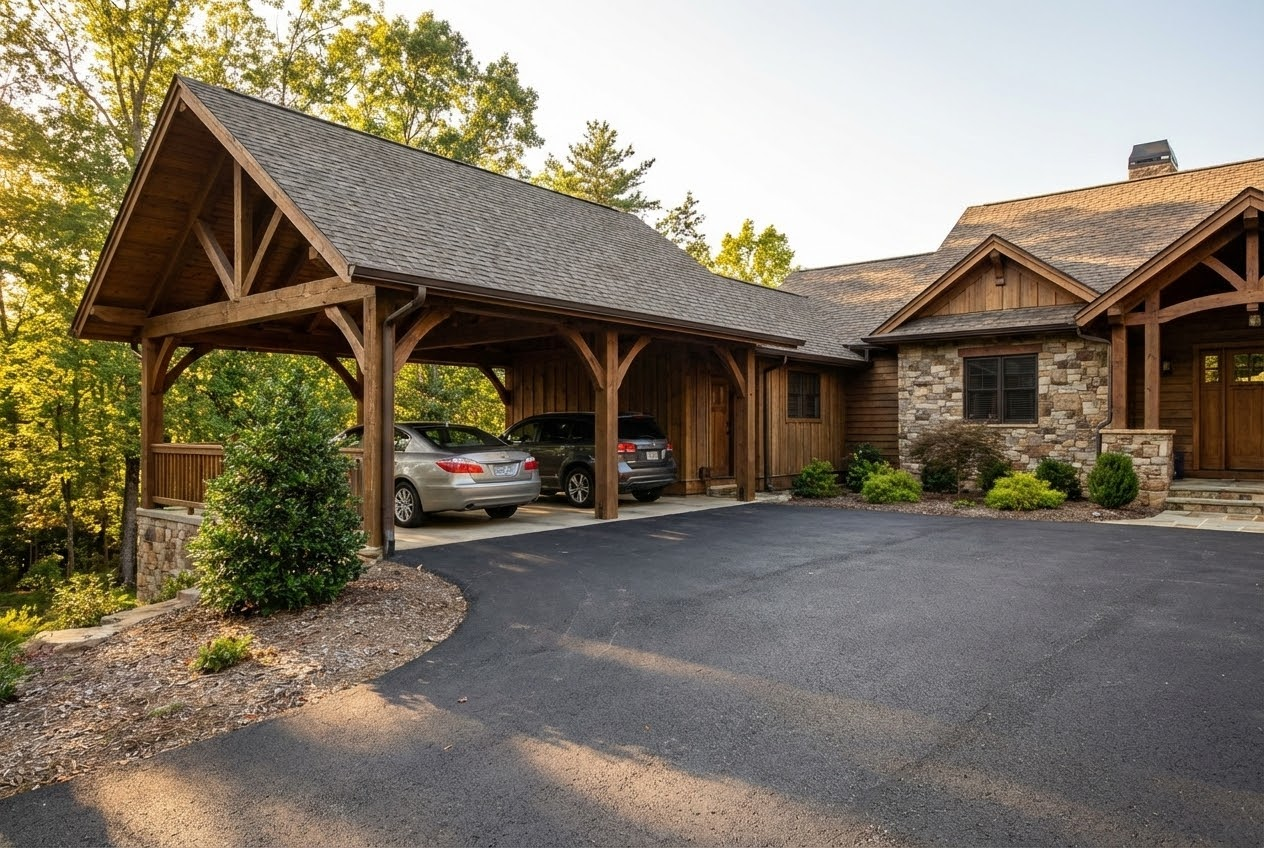
Custom timber carports offer more than just a covered space to park vehicles. When thoughtfully designed, they become architectural extensions of the home, improving curb appeal while providing practical protection from sun, rain, and snow. Heavy timber posts and beams give the structure a substantial presence that feels integrated rather than temporary.
Because each carport is custom, dimensions, roof forms, and details can be tailored to the driveway layout, the number of vehicles, and the style of the house.
Protection from Weather and Everyday Wear
Continuous exposure to sun and precipitation accelerates aging of paint, plastics, and rubber components on vehicles. A carport reduces UV exposure, helps keep interiors cooler, and sheds rain and snow before they reach the vehicle surfaces. This can extend the life of finishes and reduce the frequency of cleaning and maintenance.
In winter climates, a covered carport can significantly reduce ice and snow accumulation on vehicles, saving time and effort on busy mornings.
Attached vs. Freestanding Carports
Timber carports can be attached directly to the house or built as freestanding structures. Attached designs often share a roofline or trim details with the main building, creating a seamless transition between enclosed and open space. Freestanding carports suit wider driveways, secondary parking areas, or situations where attachment is impractical.
In both cases, careful siting ensures comfortable maneuvering space, clear access to doors or walkways, and appropriate setbacks from property boundaries.
Structural Design and Vehicle Accommodation
A well-planned carport must accommodate the size and number of vehicles, as well as doors opening and circulation around them. Standard bays can be sized for passenger cars, SUVs, or larger vehicles as needed. Post locations are chosen to minimize interference with doors and walking paths.
Timber sizing and connections are engineered to safely carry roof loads and environmental forces. The resulting structure often allows for future adaptation, such as converting part of the carport to storage or adding EV charging stations.
Roof Forms and Drainage
Roof design is central to both performance and appearance. Gable roofs echo traditional home forms and allow for ventilation in the ridge area. Mono-slope roofs create a more contemporary look and can direct water away from the house or towards specific drainage zones.
Proper overhangs and gutters protect vehicle doors from dripping water and help manage runoff. In snowy climates, roof pitch and potential snow slide paths must be considered to prevent buildup in front of entry doors or walkways.
Integrating Storage and Functional Features
Custom carports can include built-in or adjacent storage for tools, seasonal tires, bikes, and outdoor equipment. Enclosing one side or adding a small storage room at the rear provides secure, weather-protected space without committing to a full garage.
Lighting and electrical outlets support evening arrivals and maintenance tasks. Where appropriate, motion sensors or integrated fixtures improve convenience and security.
Matching Home Architecture and Materials
To maintain a cohesive appearance, timber carport designs typically reference elements from the main house, such as:
- Roof pitch and direction
- Fascia and trim profiles
- Color palette and finish type
- Column details or stone bases
This alignment helps the carport feel intentional rather than improvised. The warmth of timber also softens hardscape-heavy areas, balancing the visual weight of driveway surfaces.
Durability, Maintenance, and Long-Term Value
As with other exterior structures, species choice and finishes influence longevity. Adequate clearance between timber elements and ground surfaces, along with proper drainage, protects against moisture-related issues. Regular inspections and refinishing as needed keep the structure sound and visually appealing.
By improving both function and appearance, a well-designed timber carport can enhance perceived property value. Prospective buyers often appreciate sheltered parking that is already integrated and does not require further investment.
Future Adaptability
Needs change over time. A carport that is initially sized for two vehicles might later be reconfigured to accommodate:
- One vehicle plus workshop space
- Storage for recreational vehicles or trailers
- Combined parking and covered outdoor living area
The open, column-based nature of timber framing makes such adaptations easier than with enclosed structures.
Conclusion
Custom timber carports combine practical vehicle protection with architectural refinement. Through attention to structure, roof design, storage integration, and stylistic alignment with the home, they become enduring, useful additions that serve daily needs while enhancing the overall look of the property.