

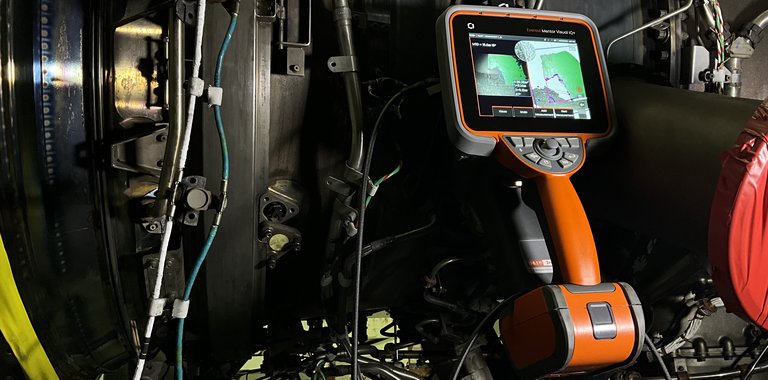
Nuclear power plants are among the most complex and carefully regulated facilities in the world. Ensuring their safe and efficient operation requires constant monitoring, inspection, and maintenance of critical systems. Yet, these tasks come with unique challenges: confined spaces, high-radiation environments, and components that are not easily accessible. To address these challenges, nuclear operators have increasingly turned to video borescopes, advanced remote visual inspection tools that provide detailed imaging in areas that are otherwise out of reach. More than just a safety solution, these tools have become vital in cutting costs, improving reliability, and sustaining the long-term performance of nuclear power plants.
Improving Access In Challenging Environments
One of the distinguishing features of video borescopes is their ability to allow direct access to crucial components without the need to dismantle equipment. In nuclear plants, many systems such as turbines, steam generators, and reactor internals are tightly packed or shielded within protective barriers. Traditionally, inspecting these areas meant lengthy disassembly processes, labor-intensive work, and extended downtime.
With a Video Borescope in Nuclear Power Plants, inspectors can guide a flexible, high-resolution camera into narrow spaces, capturing real-time video and still images. This eliminates the need to dismantle large structures, making inspections faster, less invasive, and significantly more cost-effective. For nuclear operators, the savings in both time and labor translate into measurable financial benefits.
Reducing Radiation Exposure For Personnel
Radiation safety is a top priority in nuclear operations, and inspections have always posed potential risks for workers. By using video borescopes, inspection teams can maintain a safe distance from high-radiation zones while still obtaining the detailed visual data they need.
The extended reach and remote control capabilities of modern borescopes allow operators to position cameras deep into areas that would otherwise expose personnel to radiation. This not only improves worker safety but also reduces the need for specialized protective equipment and complex shielding arrangements. Ultimately, video borescopes enable plants to meet strict safety standards while minimizing exposure risks and associated costs.
Enhancing Reliability Through Early Detection
Reliability is critical in nuclear operations, where even minor equipment failures can have major consequences. Video borescopes enhance reliability by allowing for early detection of wear, cracks, corrosion, or foreign object debris within key systems. High-resolution imaging and recording functions give inspectors the ability to document issues accurately, track changes over time, and schedule maintenance before problems escalate.
Borescopes enable preventive maintenance, which decreases the likelihood of unplanned outages and increases the lifespan of important components. For nuclear facilities, this means not only avoiding costly emergency repairs but also ensuring uninterrupted energy production. The value of early detection cannot be overstated, as it directly supports plant reliability and public trust in nuclear energy.
Streamlining Outage Management
Planned outages are necessary for refueling and maintenance, but they represent periods of lost revenue for power plants. The faster inspections can be completed, the sooner a facility can return to full operation. Video borescopes play a key role in streamlining these outage periods.
Because inspections can be completed without major disassembly and with fewer personnel required, outage durations are significantly shortened. Some plants have reported saving weeks of downtime by relying on borescope inspections instead of traditional methods. This not only reduces financial losses but also helps utilities meet energy demand more consistently.
Supporting Regulatory Compliance
Nuclear power is one of the world’s most severely regulated businesses. Compliance with inspection and reporting standards is mandatory to ensure plant safety and continued operation. Video borescopes provide the documentation and visual evidence needed to satisfy regulatory requirements.
By capturing clear images and video of inspections, operators can present regulators with concrete proof of equipment condition. This transparency builds confidence in plant safety while simplifying the compliance process. In addition, digital storage of borescope data allows for easy retrieval and review during audits or future inspections, further reducing administrative burdens.
Long-Term Cost Savings
While video borescopes require an upfront investment, the long-term cost savings are substantial. The reduction in labor hours, minimized equipment disassembly, shorter outage durations, and prevention of costly failures all combine to deliver a strong return on investment.
Nuclear plants are designed to operate for decades, and maintaining their reliability requires ongoing inspection and maintenance strategies. By incorporating video borescopes into regular inspection routines, operators ensure sustainable cost savings over the plant’s entire lifecycle.
The Future Of Nuclear Inspections
As technology advances, video borescopes are becoming even more powerful. Innovations in imaging quality, digital data integration, and AI-driven defect detection promise to further enhance their role in nuclear operations. Future tools will not only capture clearer images but also analyze them in real time, providing inspectors with instant insights into equipment health.
For nuclear operators, this means even greater reliability, improved predictive maintenance, and more efficient use of resources. The growing role of video borescopes represents a shift toward smarter, safer, and more cost-conscious nuclear plant management.
Conclusion
Video borescopes have transformed how inspections are conducted in nuclear power plants. By improving access, reducing radiation exposure, enhancing reliability, streamlining outages, and supporting compliance, they have proven themselves as indispensable tools in modern nuclear operations. More importantly, they have demonstrated their value not only in improving safety but also in delivering measurable cost savings and long-term operational stability.