

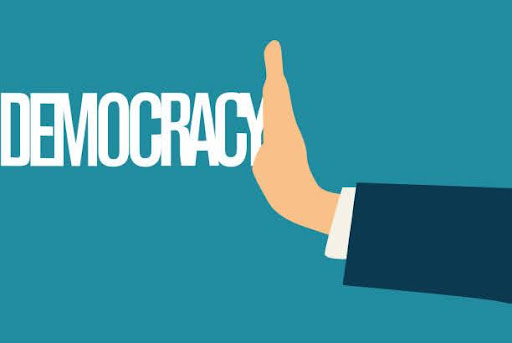
Stressing involvement, representation, and responsibility, government by the people is called democracy. Conversely, autocracy accumulates power under a single dictator or tiny group, sometimes bypassing legislative constraints and popular backing.Autocracy provides effectiveness, decisiveness, and sometimes rapid development even as democracy advances freedom, checks and balances, and civil rights.
The friction between these ideas has shaped human history, and it is still a major global debate. Although they have inefficiency and gridlock, democracies are viewed as strongholds of equality and justice. Though usually at the expense of rights and human dignity, autocracies can be quick and deliberate.
Delineating Autocracy and Democracy
Democracy:
By electing officials, voting straight or by referendum, civic involvement, citizens generate power.Competitive elections, broad civil rights (speech, press, assembly), rule of law, openness, and institutional constraints on power define features.
Autocracy:
Power is concentrated in an individual or tiny elite, usually without significant public agreement. Limited electoral competition or fake elections, restricted liberties, disproportionate institutions, and often opaque decision-making are all traits. Hybrid systems like anocracies which show electoral procedures but lack institutional protections exist between pure democracy and full autocracy shades. Governments in these hybrid systems might use democratic mechanisms to get domestic credibility while also undercutting democratic ideas.
advantages and drawbacks
Democraticism
Advantages:
- Representation and political equality help to generate credibility.
- Governments can be ousted; responsibility comes from elections.
- Protection of liberties and rights.
- Openness via civil society and free media.
- Though sometimes sluggish, long-term stability is crucial.
Disadvantages:
- Decision-making delays and legislative deadlocks
- Vulnerability to majoritarianism, which might overlook minorities.
- Polarization, misleading information, and popular cynicism
- Resource-intensive campaigns, possible impact of money and lobbying
Autocracy
Benefits:
- Rapid decision-making free from restrictions
- Ability to follow long-term strategic goals and stability.
- Efficiency in enacting policies like big infrastructure or quick changes.
Disadvantages:
- Lack of accountability—power mostly concentrated in a few hands
- suppression of opposing ideas and civil rights.
- Risk of institution decay, corruption, and abuse
- fragile credibility based on power or propaganda instead of permission.
Examples in the Real World
Democratic regression
United States:
Experts note worrying developments under the governments of President Trump—expanding executive authority, restricting press freedom, politicizing civil service, and attacking election procedures. Many see these as totalitarian intrusions under the guise of democracy.
- Countries like Hungary (Orbán) and Turkey (Erdogan) have more and more restricted media, judicial, and electoral control.
- Widely protested in Serbia and Georgia were ruling parties stifling dissent, influencing courts, and undermining electoral legitimacy.
Autocracies at Work
Mali and portions of Africa:
- Military regimes canceled elections, disbanded political parties, and governed with limited responsibility.
- Though keeping democratic looks, one-party dictatorships—as found in Nicaragua, Rwanda, and Nigeria (de facto) suppress real opposition and civic space.
Democratic Stability
- Poland (2023–24) Notwithstanding backsliding, opposition came together in elections with high turnout to reinstate democratic values.
- Brazil’s metamorphosis is a textbook example of democratization following military rule (1985–present).
Why autocrats thrive
Modern autocrats use democratic instruments to amass power through what Scientific American refers to as “gaslighting tyranny.” Among general strategies:
- Appeals to “the people” against elites or perceived enemies are populist ones.
- Institutional capture: changing legislation, regulating courts, piling electoral organizations.
- Media control: closed opposition; disseminated propaganda.
- Deepfakes, bots, and algorithmic targeting’s misinformation
- Political driven purges, reorganization of public watchdogs and civic services
Emerging Difficulties
The stealth and size of misinformation campaigns are greatly improved by generative artificial intelligence.
Autocrats use surveillance, data controls, and censorship—threats to democratic openness—called digital authoritarianism.
Climate and Crisis Control
While autocratic governments could react more quickly in a crisis—like climate change democratic systems provide accountability and public support.
World power dynamics
Authoritarian governments (like Russia, Iran, China) are coordinating more tightly, thereby defying liberal ideals and supporting autocratic governance styles .
Asking for answers
Renewable Democratic
- Money regulation, rank-choice voting, campaign transparency are electoral and civically changed.
- Strengthening independent journalism, supporting fact‑checking, and lowering media capture define media freedom.
- Civic education: Foster democratic principles and media literacy to help to withstand manipulation.
Technological Management
Digital precautions:
Ensure voter integrity, demand algorithmic transparency, and control artificial intelligence.
Collaboration models:
Use technology to increase participation in live digital town halls, civic policy platforms.
Citizen Movement and Resistance
Seen in Serbia, Georgia, Turkey—mass protests against creeping autocracy:
Global pressure can halt democratic backward movement by means of diplomatic efforts and penalties.
Looking Toward Future
The future is not two-tiered. Hybrid regimes and ongoing democratic pressure will shape the terrain. The way ahead counts on:
Preserving democratic capital: resilient institutions, trust, and transparency.
Adaptive governance:
- Combining efficient disaster response with procedural democracy.
- Democratic coalitions promoting standards and resisting dictatorial advancement define worldwide cooperation.
Conclusion
The conflict between autocracy and democracy has once again come under attention. Against the attraction of order and decisive action under autocracy, the benefits of democracy rights, accountability, and independence must be protected. The trend of democratic governance can only last with the active alertness, modernization, participation of the citizens and international research. Both the concept of youth to run elections, as well as the need to have free speech, informed citizens and powerful agencies against authoritarian creep, is what will protect the democratic space of the always connected modern society digitally mediated.
Visit The Inscriber Mag for more informative blogs.