

The days of the static, “chalk-and-talk” classroom, where students sat in rigid rows facing a blackboard, are rapidly fading. In their place, a dynamic new era of education has emerged—one that prioritizes collaboration, active learning, and student well-being. As educational philosophies evolve, so too must the physical environments that support them. Architects and school administrators are now tasked with creating flexible ecosystems that can adapt to diverse teaching styles and technological needs. However, sourcing the right equipment for these modern spaces involves more than just picking colors; it requires a strategic partnership with the right vendors. While much attention is often placed on student seating, a holistic approach is vital. A truly functional school requires everything from ergonomic student desks to durable wholesale office cabinets that keep administrative areas organized and efficient.
The Evolution of Learning Spaces
The modern school is a complex organism. It is no longer a collection of isolated boxes but a fluid network of learning zones. This shift is driven by the understanding that the physical environment acts as a “third teacher,” significantly influencing student engagement and academic outcomes.
When students are uncomfortable, they are distracted. When a teacher cannot easily reconfigure a room for group work, valuable instructional time is lost. Therefore, the furniture selected must be viewed as an educational tool, not merely a sunk cost. It must support movement, foster interaction, and withstand the rigors of daily use by hundreds of energetic young people. This places an immense responsibility on the shoulders of procurement teams to find suppliers who understand these pedagogical shifts.
Prioritizing Ergonomics and Student Health
One of the most critical factors in selecting school furniture is ergonomics. Children spend a significant portion of their waking hours sitting. Poorly designed furniture can lead to bad posture, physical discomfort, and a lack of focus.
Top-tier suppliers now offer chairs with flexible shells that allow for natural movement, rather than rigid seating that forces the body into a static position. Height-adjustable desks are also becoming standard, allowing students of different sizes to work comfortably or to alternate between sitting and standing. When evaluating potential partners, look for those who can provide evidence-based designs that support the physical development of growing children.
Identifying the Leaders in the Market
Finding a vendor is easy; finding a true partner is difficult. The market is flooded with options, but the discrepancy in quality and service can be vast. You need a partner who offers more than just a catalog; you need one that offers solutions.
When vetting school furniture suppliers, look for a company that demonstrates a global perspective and a commitment to innovation. The best brand in the world is not defined solely by its sales volume, but by its ability to blend aesthetic excellence with functional durability. A world-class manufacturer stands out by controlling its entire supply chain, ensuring that every weld, stitch, and laminate meets stringent international safety standards. They invest heavily in Research and Development (R&D) to anticipate educational trends before they become mainstream. Furthermore, a leading global brand will offer comprehensive customization options, understanding that a school in Tokyo has different spatial needs than a university in New York. They are characterized by their “consultative” approach—helping you plan your space rather than just selling you a product—and their unwavering commitment to sustainability and after-sales support.
Durability and Safety Certifications
Schools are high-traffic environments. Furniture must be built to survive “student testing”—the inevitable bumps, drops, and spills that occur daily. This makes material selection and construction quality non-negotiable.
A reliable supplier should be transparent about their materials. Look for high-pressure laminates that resist scratching, steel frames with reinforced welds, and high-density polypropylene shells that won’t crack under pressure. Equally important are safety certifications. Reputable suppliers will have their products tested by independent bodies (such as BIFMA or ISO standards) to ensure stability, strength, and low chemical emissions. Asking for these certifications upfront can save you from costly replacements and liability issues down the line.
Creating the Collaborative Classroom
The core of the school is the learning space itself. The furniture here must be the chameleon of the campus, capable of changing function at a moment’s notice.
Modern classroom furniture must be modular, mobile, and multifunctional to support Activity-Based Learning (ABL). Look for tables on durable, lockable casters that can be easily pushed together for group projects or separated for individual testing. Desks with geometric shapes—like trapezoids or triangles—are particularly valuable as they can be tessellated into various clusters and circles. This flexibility empowers teachers to change the “topography” of the room to suit the lesson plan, whether it’s a Socratic seminar, a laboratory experiment, or a lecture.
Integrating Technology Seamlessly
We live in a digital age, and schools are at the forefront of this transformation. Furniture must support the integration of technology, not fight against it.
This goes beyond just having a hole for cables. Advanced suppliers offer tables with built-in power modules, USB charging ports, and wire management trays that keep cords out of sight and out of the way. For “Bring Your Own Device” (BYOD) environments, consider soft seating with integrated power, allowing students to charge their laptops or tablets in common areas. The furniture should facilitate the use of technology as a tool for learning, ensuring that devices are always powered and ready to use without creating trip hazards.
Beyond the Classroom: Libraries and Common Areas
Learning happens everywhere, not just in the classroom. Libraries are transforming into “media centers” or “learning commons,” and hallways are becoming “breakout zones.”
Furniture for these areas requires a different aesthetic—often referred to as “resimercial” design. This blends the comfort of residential furniture with the durability of commercial grade. Think soft, upholstered lounge seating, acoustic pods for quiet study, and café-style high tables for social interaction. These spaces provide students with autonomy, allowing them to choose where and how they learn best outside of formal instruction. A good supplier will have a diverse portfolio that covers these auxiliary spaces with the same quality as their classroom lines.
The Importance of Administrative Support
While the students are the primary focus, the faculty and administration are the engine that keeps the school running. Their workspaces need to be just as carefully considered. Teachers need ergonomic task chairs and efficient workstations that allow them to grade papers, plan lessons, and meet with parents in comfort, while administrative offices require professional, organized, and secure furniture solutions. This is where the relationship with a comprehensive supplier like the Meet&Co brand becomes valuable. They understand the “whole school” approach, ensuring that the aesthetic language flows seamlessly from the reception area to the principal’s office.
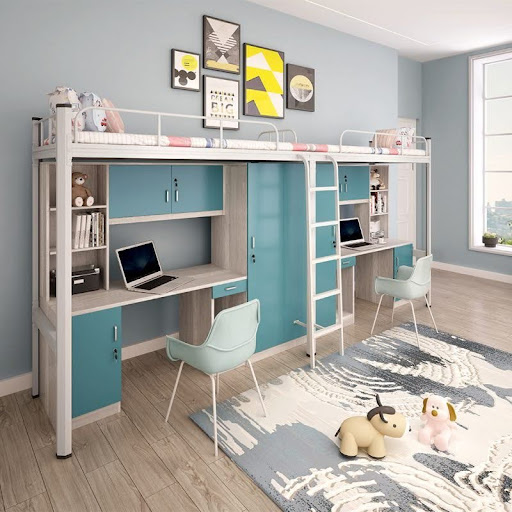
This expertise even extends to institutions with residential facilities, where the need for durability meets the need for rest. For student dormitories, the Meet&Co brand can provide space-saving solutions like full size loft beds, which maximize vertical space to create room for study desks underneath. By addressing every need—from the administrative hub to the sleeping quarters—a school can create a cohesive professional identity and a fully supported campus environment.
Sustainability and Environmental Responsibility
Educational institutions have a moral imperative to lead by example regarding sustainability. The furniture you buy sends a message to your students about your values.
Investigate the environmental practices of your potential suppliers. Do they use recycled materials? Is the wood FSC-certified? do their manufacturing processes minimize waste and carbon emissions? “Green” furniture is no longer a niche market; it is an expectation. High-quality suppliers will have Environmental Product Declarations (EPDs) available and will design their products for a long lifecycle, reducing the frequency of disposal and replacement.
Conclusion: Investing in the Future
Selecting a school furniture supplier is a decision with long-term consequences. The right furniture shapes the daily experience of every student and staff member, influencing behavior, comfort, and learning outcomes. By looking for suppliers who prioritize ergonomics, durability, flexibility, and sustainability, schools can create environments that are not just buildings, but vibrant ecosystems for growth. It is an investment not just in desks and chairs, but in the future potential of the next generation.