

Designing with Purpose in a Rapidly Evolving World
In a time when design choices can either entrench inequality or inspire systemic transformation, Sarah Zaheer stands out as a formidable force in ethical innovation. A 2021 graduate of the Human Computer Interaction program at California College of the Arts, Zaheer’s undergraduate portfolio transcended traditional academic expectations; it served as a visionary blueprint for a more inclusive and sustainable future. Seamlessly integrating behavioral insights, environmental responsibility, and universal accessibility, she demonstrated that even student-led initiatives can confront real-world problems with enduring impact.
From addressing the crisis of fashion waste to cultivating empathy in digital interactions, Zaheer’s body of work reflects a profound grasp of design as a discipline rooted not merely in aesthetics, but in systems thinking, behavioral dynamics, and moral accountability. Backed by rigorous research and driven by fearless experimentation, she is actively reshaping the paradigm of what it means to “design for good” on a global scale.
Research as a Launchpad for Impact
For Sarah Zaheer, accessibility isn’t an afterthought; it is the cornerstone of principled, future- forward design. Her pioneering research continually probes a critical question: Who is excluded in digital experiences, and how might we architect systems that inherently include them from inception?
In her groundbreaking study, Inclusive Data Visualization: Designing for Cognitive and Visual Accessibility (Zaheer, 2018), Zaheer confronted the entrenched biases of traditional data interfaces that often marginalize users with cognitive or visual impairments. Her research yielded pragmatic, human-centric solutions, including colourblind-accessible palettes, screen reader– friendly visualizations, tactile cues, and adaptive feedback, reimagining complex data as a universally navigable experience.
Equally transformative was her project, Designing Inclusive Forms (Zaheer, 2019), which dissected critical accessibility failures in digital input systems, ranging from ambiguous labelling and non-operational keyboard flows to inaccessible error states. Anchored in WCAG standards, her recommendations underscored the imperative of operability, perceptibility, and robust assistive technology integration in digital interfaces.
Taken together, her body of research articulates a singular, unyielding vision: accessibility is not merely a compliance metric; it is the engine that powers equitable, compassionate, and enduring digital innovation.
Foresight in Form: Crafting a More Inclusive and Sustainable Digital Future
Sarah Zaheer’s portfolio transcends conventional design, offering a compelling blueprint for socially responsible innovation. Her work stands out for its ability to distill rigorous research into elegant, user-centric interventions that provoke reflection and inspire action.
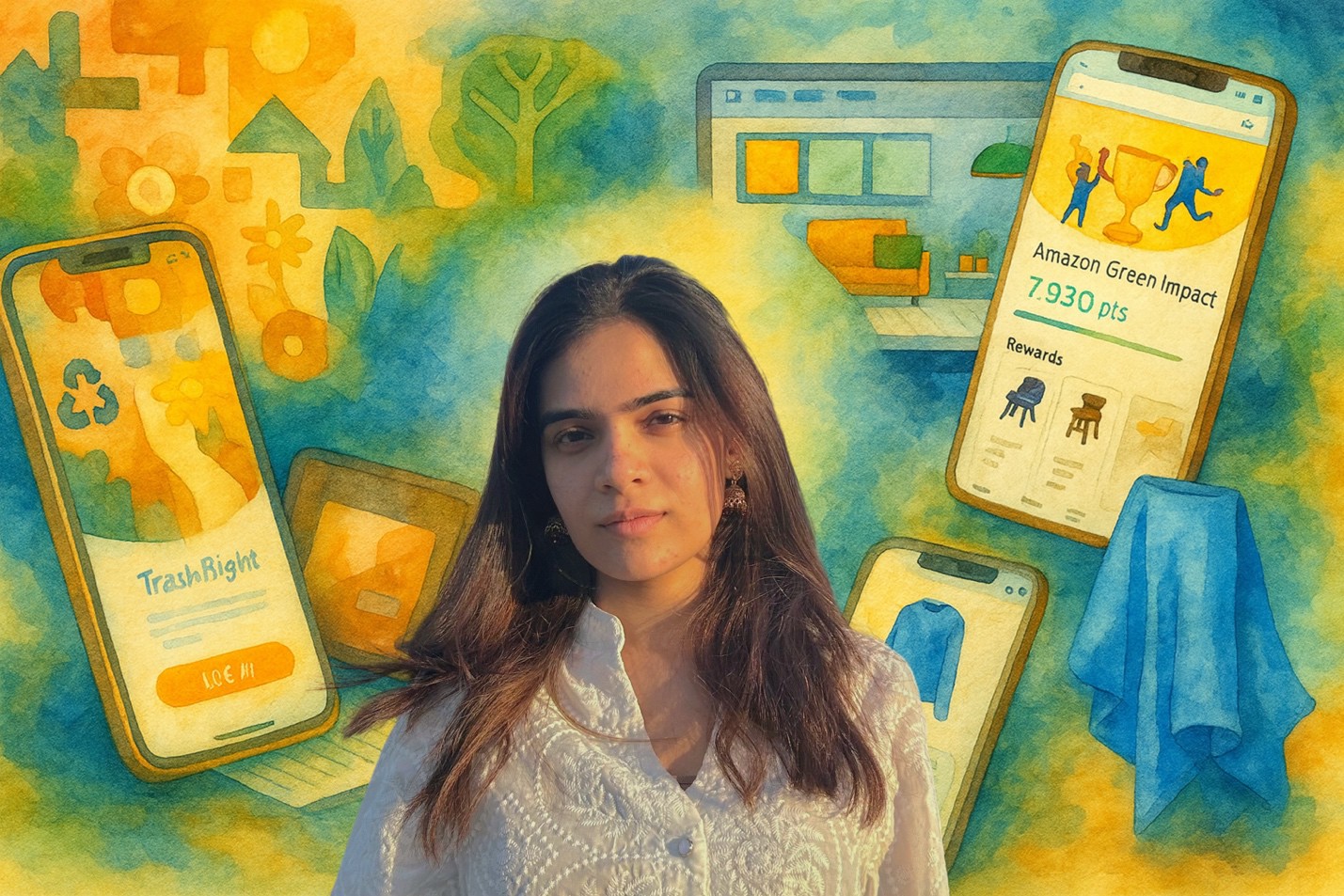
In TrashitRight, Zaheer gamified responsible waste management through an integrated physical bin and mobile app ecosystem. By rewarding users for correctly sorting waste, using behavioural cues, real-time feedback, and persuasive design, she transformed an everyday task into a habit- forming act of environmental stewardship. Empirical validation through user testing and behaviour mapping demonstrated the project’s capacity to rewire routines through intelligent, intention-driven nudges.
With Redux, she reimagined the online retail experience by placing sustainability at its core. This forward-thinking e-commerce concept empowered consumers with transparency, allowing them to compare product lifecycles, environmental impact, and ethical sourcing. Redux recast consumption as a conscious, values-aligned decision, creating a space where informed choices became as intuitive as they were impactful.
Zaheer’s Closet360, initially developed in an “Objects and Spaces” studio, brought speculative fashion into practical dialogue. The project introduced a six-way convertible garment aimed at curbing fashion waste, augmented by a digital styling companion app. Beyond functionality, Closet360 critiqued the relentless churn of social media-fueled fashion trends, offering personalization without disposability; a prescient glimpse into today’s emerging sustainable fashion-tech hybrids.
Her capstone thesis, Green, synthesized her vision into a powerful, data-driven solution embedded within a fictional e-commerce interface. Users could monitor their carbon footprint in real time while shopping, earning incentives for eco-conscious purchases. Through a visual-first UX, she translated abstract sustainability metrics into tangible behavioural shifts, proving that ecological awareness and seamless user experience can harmoniously coexist.
Across these projects, Zaheer articulates a compelling thesis: design is not just a tool for usability; it is a medium for cultural transformation, where ethics, behaviour, and technology converge for a more conscious future.
Human-Centered Methods for a Planet-Conscious Future
Zaheer’s design methodology is as deliberate as the outcomes it yields—anchored in empathy, interdisciplinary collaboration, and systemic insight. Each project was shaped through rigorous ethnographic interviews, stakeholder mapping, usability testing, and systems thinking, integrating perspectives from psychology, sustainability, and commerce to craft solutions that are not only technically sound, but profoundly human.
Accessibility was never a postscript; it was embedded from the outset. From WCAG-compliant interfaces to inclusive content strategies, Zaheer championed digital equity at every stage of the design process. Her commitment extended beyond individual projects: as a mentor and design competition judge, she consistently empowered the next generation of designers to adopt ethical, accessible, and future-forward design practices.
Designing with Empathy, Leading with Purpose
Sarah Zaheer’s body of work exemplifies how design, when rooted in empathy and fortified by rigorous research, can catalyse systemic transformation. Her undergraduate trajectory stands as a compelling blueprint for aspiring designers and seasoned professionals alike: interrogate the status quo, engage users with depth and sincerity, and prototype not merely for utility, but for enduring, meaningful impact.
Whether crafting tangible products, immersive digital experiences, or integrated hybrid systems, Zaheer operates with an uncommon clarity of intent. Her designs transcend superficial
engagement; they provoke contemplation, inspire purposeful action, and envision a future where sustainability and accessibility are foundational, not optional.
In a field frequently captivated by fleeting innovation, Zaheer’s philosophy is a timely and vital reminder: the true frontier of design lies in its capacity to care—for individuals, for communities, and for the planet. For those committed to building ethical, inclusive, and forward-thinking experiences, her work is more than a source of inspiration; it’s a benchmark.