

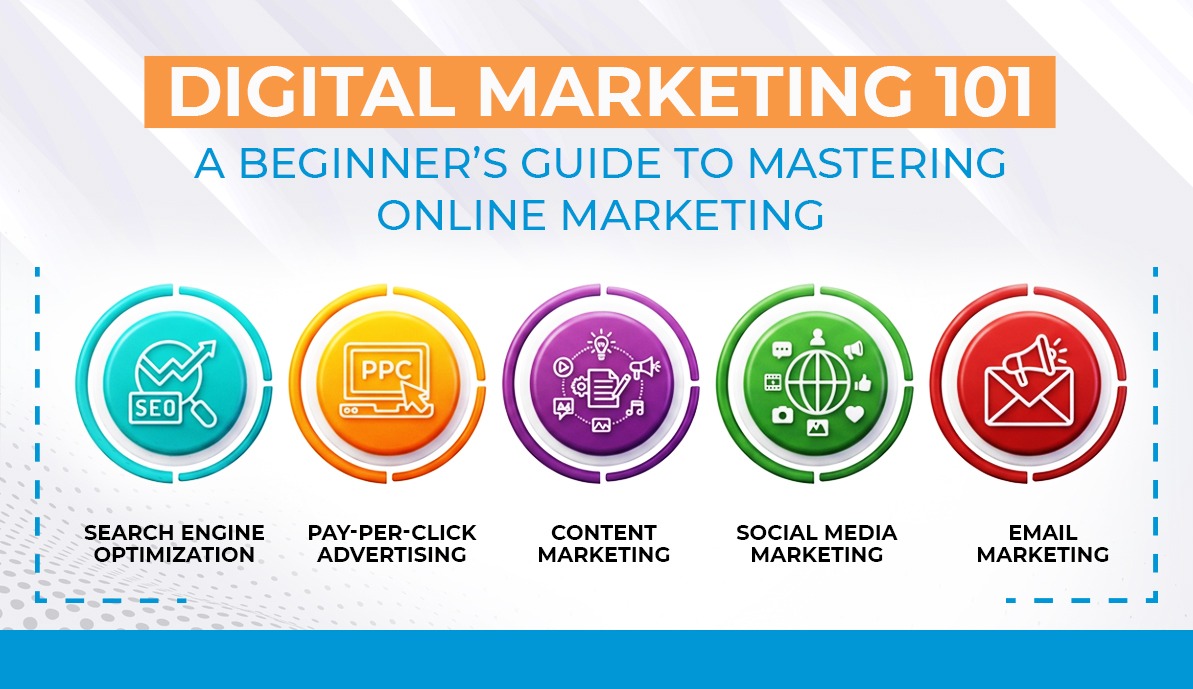
The field of digital marketing has completely changed the way businesses do engage with customers, marketing their own products/services, and will help generate more sales and grow their business over time. For someone just starting to learn about digital marketing, diving into such a large area may seem overwhelming, but it’s necessary in today’s world of business. This guide will give you basic information on what digital marketing is and what its different parts comprise.
What Is Digital Marketing?
Digital marketing encompasses marketing activities typically conducted via electronic devices and the Internet. Digital marketing uses digital channels, platforms, and technologies to connect with consumers in their primary online locations.
Key Components of Digital Marketing
To comprehend the fundamentals of digital marketing, we will first identify the major aspects of it:
Website Marketing
Your website is the very first interaction with potential clients, and your only shopfront in the digital space. As far as website marketing goes, you need to ensure that your website can be found in search results (Search Engine Optimisation-SEO) and it is user-friendly and designed to provide a positive user experience.
Content Marketing
Content is the foundation of digital marketing. Be it in the form of blog posts, articles, infographics, or videos. Content marketing is all about providing relevant, value-based content to all readers to build a customer base by retaining and attracting customers over time.
Social Media Marketing
Social Media Marketing includes platforms such as Facebook, Instagram, Twitter, and LinkedIn, among others. Provides brands the chance to connect with their audience easily while also establishing a brand image and increasing engagement. Marketing on Social Media involves creating and sharing engaging content through these channels to achieve marketing objectives.
Email Marketing
Through email marketing, you can reach the target audience. By sending your subscribers emails, you can build lasting relationships, increase brand awareness, promote products and services, and generate leads and conversions.
Search Engine Marketing
Creating (SEM) is a type of paid search advertising that utilizes keywords in your campaign, which is similar to PPC, where you bid on specific keywords. The main goal of this type of advertising is to increase your product’s visibility in search results and drive visitors to your website quickly.
Many advertisers often use Google Ads (AdWords) as an SEM platform. Advertisers use Google Ads (AdWords) to find new customers and drive existing customers to their websites.
Affiliate Marketing
Affiliate Marketing is an example of performance-based marketing in which affiliate business partners receive commissions for referring businesses to your website and for continuously driving sales/traffic to it.
Influencer Marketing
By leveraging influencer marketing, a business can amplify its influencers’ influence to promote all its products and services to its broad, dedicated audiences, who will trust their recommendations.
Mobile Marketing
Mobile Marketing focuses on reaching your customers who use smartphones or tablets. Mobile Marketing can involve mobile apps, SMS marketing, and responsive web design. To provide an optimized mobile user experience for the end user.
Analytics and Data Analysis
The data is recognized as a vital component in the digital marketing realm. While analysing data from multiple sources, including social media, website traffic, and email campaigns, allows you to measure your total performance, understand your target market, and make data-driven decisions.
Remarketing and Retargeting
Remarketing is a technique of reconnecting with the customers who have engaged with your brand but did not complete the purchasing process (i.e., did not convert). In this case, remarketing is closely related to advertising to persuade customers to return to your website and take the desired action (i.e., complete the purchase).
Video Marketing
Video marketing is the most engaging type of content. Video marketing involves creating and distributing videos that encourage audience interaction, share important information, and ultimately tell your brand’s story.
Chatbot Marketing
Chatbots are artificial intelligence-based tools that can interact with all visitors to websites or users on social media. Chatbots can respond to queries, provide useful information, and guide users through a defined sales funnel.
Local SEO
Local SEO is essential for all businesses that have a local presence. Local SEO is concerned with optimising your online presence to attract local customers in your area. Local SEO is essential for both brick-and-mortar establishments and businesses that serve a specific geographic region.
The Digital Marketing Funnel
A renowned digital marketing company believes that the process of digital marketing follows a funnel shape, mapping the path people take to make a purchase. There are four different stages in the funnel:
Awareness Level
At the Awareness level, marketers from Exnovation believe the objective is to create total brand awareness and capture the attention of all prospective customers and clients.
Consideration Stage
In the Consideration stage, when potential customers and prospects are beginning their decision-making process, marketers provide valuable content to educate and nurture them, helping them decide whether to buy your products and services.
Conversion Level
At the Conversion level, the objective is to convert leads into new customers. There are three possible ways that it occurs: either by purchase, sign-up, or other desired action.
Retention Level
Ultimately, after conversion, the journey continues. Retention Strategies are designed to engage and retain customers, inspiring them to become repeat customers and brand advocates.
Building Your Digital Marketing Strategy
An advertising agency believes that when you create your digital marketing plan, many factors go into developing a successful strategy for your business, including clearly defined objectives, identifying your target market, etc. Below are some of the most critical initial steps to consider when creating your digital marketing plan.
Step 1 – Determine what your goals are
The first question you should be asking yourself is what do you plan to achieve from digital marketing? You can increase traffic to your website, generate more leads, boost sales, or simply improve your brand’s visibility very quickly. What you would like to achieve will determine the steps you take to create your successful digital marketing plan.
Step 2 – Identify your Target Audience
Create buyer personas to help you understand who your prospective customers are and how you will communicate with them. These detailed personas will help you provide them with the appropriate communications and content they require.
Step 3 – Choose the Appropriate Channels
Select your digital channels based on what fits your overall goals and your target audience. Many businesses will have very few digital channels available to them; therefore, depending on who your target market is, you may only utilize a few specific channels to achieve results.
Step 4 – Develop High Quality Content
Create high-quality content that is relevant, meaningful, valuable, and engaging to your ideal target audience, meeting their needs and interests.
Step 5 – Optimize your Content/Website via Search Engine Optimisation (SEO)
You should be optimising your content/website for discoverability in search engines. SEO consists of ensuring your website contains relevant keywords, loads quickly, and establishes links back to your website to improve your organic visibility.
Step 6- Use Social Media Marketing To Build Community Around Your Brand
Utilize social networks by consistently showcasing your brand and engaging with your customers through posts, comments, etc.
Step 7- Create an Effective Email Campaign
Create an effective email marketing campaign that targets your audience and produces results through the use of personalized and segmented emails.
Step 8- Advertise with Paid Ads
If you have the budget, you should use paid advertising. You can use Google Ads and various social media platforms to reach your target customers cost-effectively.
Step 9 – Track Performance and Use Analytics
Definitely use the analytics tools to track the performance of your digital marketing strategies. You should analyze the analytics data to assess the effectiveness of your strategies and make necessary updates and revisions.
Step 10- Make Changes and Optimize Your Digital Marketing Strategies
Digital marketing is constantly evolving, so you must continually evaluate your digital marketing strategy’s performance and refine it to meet your business goals and objectives. Additionally, remember that digital marketing does not have a “one-size-fits-all” approach; therefore, you develop a unique digital marketing strategy that fits your industry, your customers’ interests, and your company’s goals.
Final Thought
Digital Marketing is a continuously evolving field where businesses have many effective ways to reach their target consumers. Understanding the basic elements and establishing a thought proof strategy that works for you will enable you to maximize the full potentials of digital marketing and reach your business objectives; regardless of whether you’re a small business just starting or a large global company, these principles apply to everyone, and there is no limit to what you can do.
This article on Digital Marketing 101: A Beginner’s Guide to Mastering Online Marketing is very helpful for students, entrepreneurs, and business owners who want to understand the basics of online growth. Learning with the Top Digital Marketing Expert in Perinthalmanna can make it easier to master key areas like SEO, social media marketing, Google Ads, content creation, email marketing, and analytics.”