

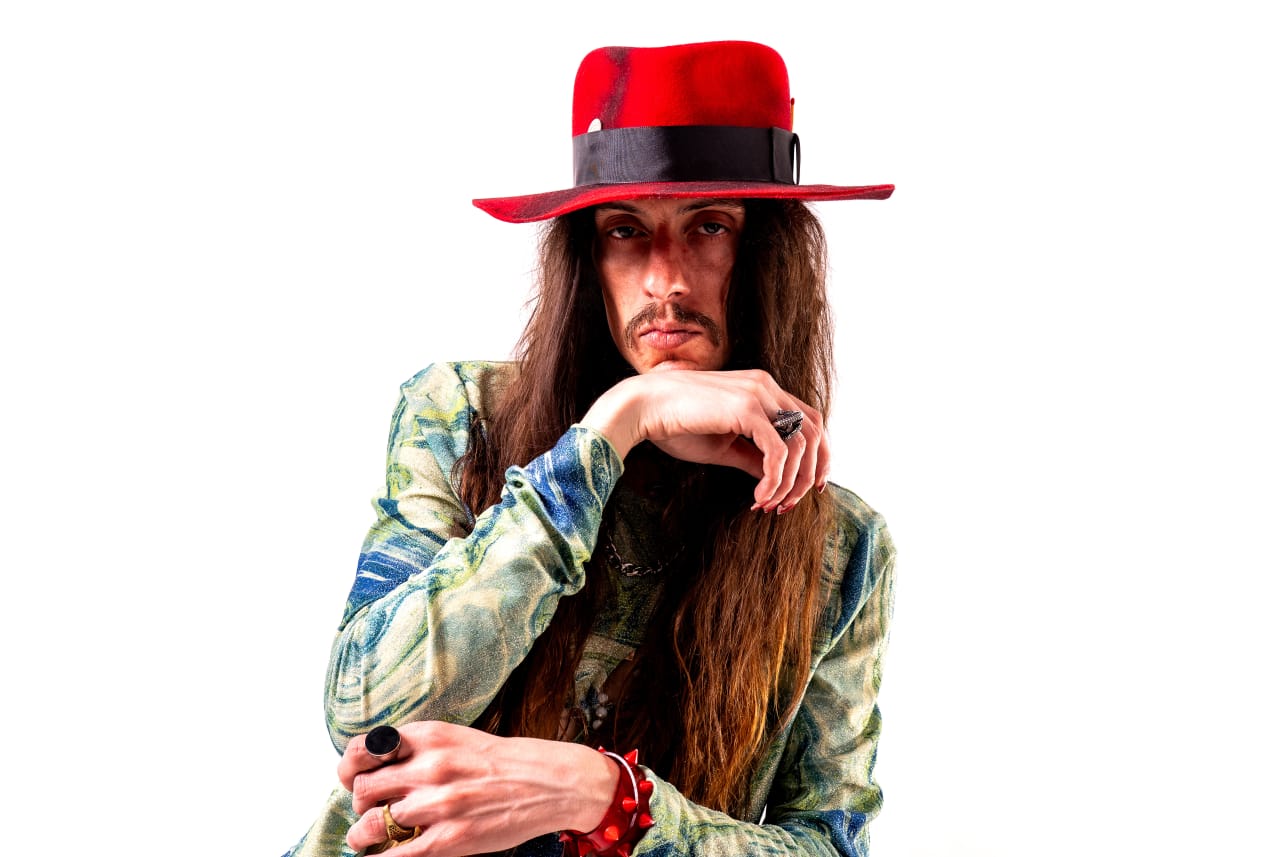
0There’s something deeply unsettling about El Niño de la Pili, and that’s exactly why people can’t stop talking about him. In an industry flooded with polished personalities and media-trained answers, Mario moves like somebody actively resisting being understood. One night he’s being called the future of spoken word, the next people are accusing him of hiding behind chaos, ego and performance. His shows swing between intimacy and confrontation, tenderness and pure tension, often leaving audiences divided somewhere between fascination and discomfort. Maybe that’s why El Niño de la Pili keeps gaining attention so fast: whether people love him, hate him or genuinely don’t know what to make of him yet, nobody seems to walk out of the room without an opinion.
Questions with Msb Mario ‘El Niño de la Pili’
Some artists go on stage to entertain people. You almost seem to go on stage to make people slightly uncomfortable. Is that intentional, or do you genuinely not know how to behave “normally”?
El Niño de la Pili: What is “normally” for you? What does entertaining even mean to you? What’s your next wife gonna be called? I don’t know. My questions are better than your first one anyway. More rhythm, brother, you’re gonna bore me if you start that deep. I’ve got a hangover.
After Brixton, there were people calling you brilliant and other people literally saying, “I have no idea what the hell this guy is doing.” Which reaction do you enjoy more?
El Niño de la Pili: The blowjob after the show, without a doubt, brilliant.
Can we get serious for a second, Mario? Your project exists somewhere between poetry, concert and performance art. But honestly, sometimes it feels like you’re two inches away from becoming a character. Where does Mario end and “El Niño de la Pili” begin?
El Niño de la Pili: You want me to get serious? You? Nah, wait. I’m always El Niño de la Pili. Mario died four years ago, I’m sorry.
A lot of underground artists say they hate the industry, right up until the industry calls them. If a major platform came tomorrow and asked you to smooth out the chaos and make something more commercial, what part of yourself would you sell first?
El Niño de la Pili: What a good question, bro. Ask them. They’re good people, and they know exactly how to “stealarte”.
In a lot of articles you get described as “authentic,” which honestly has become a suspicious word in 2026. Are you worried about turning into a brand?
El Niño de la Pili: I’m a marca de la casa. El Montserrat, El Niño de la Pili, successor of El Jero, I don’t know what else you want. You’re lucky right now. If I felt like it I’d touch your forehead and that would already be the peak of your life. Your wife, on the other hand, I’d touch differently, and she’d become the Virgin Mary.
Your shows feel built around tension and improvisation. Have you ever thought maybe part of the audience is also paying to watch you lose control?
El Niño de la Pili: I live out of control. I understand people paying to watch me lose control. They live holding themselves together, they come to me to lose control with me, to watch the depressed bastard make their sadness disappear for an hour and turn it into chaos. I don’t know a better way to fight sadness, monotony, and everyday life than chaos. You see? I’m excellent at answering, but this is the last long answer I give you because I told you, I’ve got a big hangover lad.
What’s interesting about your work is that nobody really knows where to place you. The dangerous part is that this can also become an excuse to never fully commit to anything. How do you respond to that criticism?
El Niño de la Pili: Why do I have to respond to criticism? It feels me “cachondo” lad, honestly. Not as much as your wife, but still roughly the same. So yeah, in conclusion: anything.
There’s something very masculine about your stage presence. Intensity, silence, eye contact, the way you hold tension… but at the same time there’s also a very feminine side in the way you dress: the glitter, the leggings, certain gestures. Does all of that come out naturally, or are you completely aware of the psychological effect you have on a room when you walk in?
El Niño de la Pili: Because I’m a woman. I don’t know if you’ve noticed. I’m extremely gay and a woman.
A lot of performers use mystery because there isn’t enough substance underneath. In your case, does the mystery protect something, or is the mystery itself part of the performance?
El Niño de la Pili: I don’t know bro, this question is sh*t. Ask another one. Fast.
In London, some people walked out fascinated and others looked genuinely confused. Does it bother you not being accessible to everybody?
El Niño de la Pili: I’m accessible to everyone. There are churches everywhere in the world. Relax.
Your interviews have awkward pauses. Long silences. Strange eye contact. Is that really who you are, or do you direct interviews like performances too?
El Niño de la Pili: Because I’ve got a really good relationship with slow drugs, so everything is short, slow, keep it simple, pass it to the keeper, we start again, one, two, three, Barrio Montserrat already has it in the middle of the pitch and guess who puts it through your wife’s defense? Here you need to put it “awkward pause”, brother.
You’re playing Newcastle at The Cluny, which is the kind of venue where people immediately detect whether somebody is real or just posture. Is that risk exactly what attracts you to it?
El Niño de la Pili: It’s a total risk, yeah. But you’re completely wrong, people in Newcastle just want to have a good time listening to high-quality music and poetry. You don’t know anyone else in the world who can do that. So the risk is on you, still asking the wrong questions.
Brighton feels like the complete opposite atmosphere: Intimate, seated, almost physically close according to the show description. Is your fear there connecting too much or not connecting at all?
El Niño de la Pili: You love talking about fears, and I like projecting them through music with poetry so other people don’t have to feel them. You think that doesn’t connect? Fine. You win.
Your project mixes flamenco, spoken word, rock, reggaeton; genres that normally shouldn’t work together without sounding forced. Have there been moments where even you thought, “This absolutely does not fit together”? And at the same time, have you ever wondered if chaos is actually your real genre? Because watching you from the outside, it almost feels like you don’t try to resolve contradictions, you feed them on purpose. Are you more interested in discomfort than harmony?
El Niño de la Pili: Uf, that’s too many questions in one. But nice, it always fits. If there’s space, it fits, not speaking about music for sure. Chaos can’t be a genre because it’s a feeling, and what else? Harmony? That’s on you. I’ve got insane harmony; haven’t you tuned me properly or what? Horizontally harmonic
Some artists need approval. You seem to need reaction. Do you genuinely not care if the reaction is negative as long as people aren’t indifferent?
El Niño de la Pili: You provoke indifference, that’s why nobody is going to remember you. Did I answer that seriously?
At a time when everybody online is trying to look polished and emotionally safe, you come across deliberately unpredictable. Is that artistic freedom, or a very intelligent branding strategy?
El Niño de la Pili: I’m perfect lad. Have you ever seen me play in a 4-3-3 that turns into a 3-1-3-1-1-1 when I’ve got the ball? Have you ever seen me defend with a single player while dragging the entire midfield forward? You need to analyze me properly, brother. And integrating all of this into a sports system is easy; but in a musical live show, do you think it is? Safe God. Amen.
I’m going to say something maybe nobody tells you directly: sometimes it feels like you provoke people just to see who has enough personality to stay and who immediately runs away. Am I wrong?
El Niño de la Pili: Oh no, you’re right, like in the rest of this amazing interview. You’re perfect. They should raise your salary. Now run away.
Your whole project leans heavily into ideas of being “human,” “real,” “imperfect.” But even authenticity can become marketing eventually. How do you stop authenticity itself from becoming another costume?
El Niño de la Pili: You keep insisting, and that’s fine, but you’re annoying. I’m not imperfect. I’m perfection.
With more than five million views on YouTube and currently holding the record in the spoken word genre on the platform, are you worried about the weight that comes after that? I’m asking because the internet also has this cruelty where somebody becomes “the artist of the moment” and six months later people act like they never existed. Do you ever worry about getting trapped between the pressure to constantly outdo yourself and the reality that online culture is always looking for the next name that’s trending right now?
El Niño de la Pili: I’m really worried. I’m going to smoke a jo*nt, wait.
Most uncomfortable question of all: how much of Msb Mario is completely real and how much of it has been carefully designed so that we’re sitting here having this exact conversation right now?
El Niño de la Pili: What an uncomfortable question lad. Seriously, give yourself a raise. You’re terrible. I’m El Niño de la Pili always. The stage, this interview, your questions, and even your wife don’t change anything. But I’d rather just sit in silence and maybe end this interview now, with your permission.
Tickets Msb Shows: https://linktr.ee/msbmarioukshows