

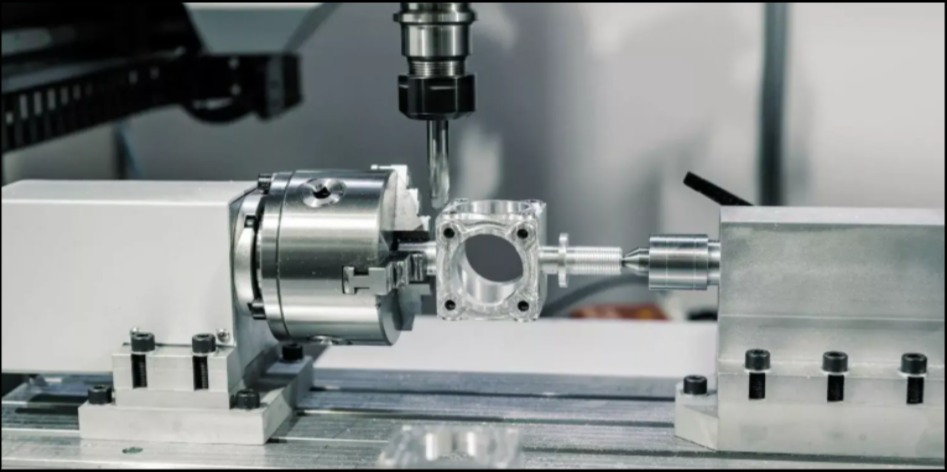
In the world of CNC machining, tool selection plays a decisive role in determining efficiency, surface finish, and overall project cost. Among the many cutting tools available, end mills and face mills stand out as two of the most frequently used. However, confusion often arises when machinists, engineers, or even procurement managers compare end mill vs face mill applications. At first glance, both seem to perform similar functions—removing material from a workpiece. But in reality, their design, cutting action, and ideal applications are quite different.
In this in-depth guide, we will explore the key differences between end mills and face mills, when to use each, and how understanding their unique advantages can improve machining outcomes. Whether you are new to CNC machining or a seasoned professional looking to optimize tooling strategies, this article will provide clarity on the ongoing discussion of end mill vs face mill.
Understanding the Basics
Before diving into the comparison of end mill vs face mill, it’s important to define what each tool is.
What is an End Mill?
An end mill is a cutting tool used mainly for milling applications such as profile cutting, slotting, contouring, and pocketing. Unlike a drill bit, which cuts only in the axial direction, an end mill can cut both radially (side-to-side) and axially (downward). This makes it one of the most versatile cutting tools in CNC machining.
Key characteristics of end mills:
- They come in a variety of geometries: flat, ball nose, corner radius, etc.
- They can cut materials from metals to plastics and composites.
- They are suitable for intricate details and fine surface finishes.
End mills usually feature multiple flutes that determine feed rate and chip evacuation.
What is a Face Mill?
A face mill, by contrast, is primarily used for machining flat surfaces. Instead of being a solid piece of carbide like an end mill, a face mill is typically larger in diameter and equipped with multiple replaceable carbide inserts mounted on the cutter body. Its main function is to remove a large volume of material quickly and produce a flat, smooth finish on the face of a workpiece.
Key characteristics of face mills:
- Larger cutting diameter compared to end mills.
- Replaceable carbide inserts instead of a solid cutting edge.
- Ideal for high-efficiency surface cutting.
- Commonly used in heavy-duty machining and large-scale material removal.
End Mill vs Face Mill: The Core Differences
The comparison of end mill vs face mill comes down to three main factors: cutting direction, efficiency, and application suitability.
1. Cutting Direction
- End mills cut both axially and radially. This allows them to plunge directly into a material (like drilling) and also move sideways to shape profiles and contours.
- Face mills cut primarily in the radial direction. They sweep across the surface of the material, shaving off layers to create a smooth face.
This means that if your project involves pockets, slots, or intricate geometries, an end mill is the better choice. If the requirement is to level a large workpiece or create a flat surface, a face mill is more efficient.
2. Cutting Efficiency
- End mills are smaller and designed for precision rather than bulk material removal. While they can produce smooth surfaces, their efficiency in removing large amounts of material is limited by their diameter.
- Face mills, due to their larger diameter and multiple inserts, are highly efficient in covering wide surface areas quickly. They excel in high-speed machining of flat surfaces.
3. Tool Life and Cost
- End mills are solid tools, and once the cutting edge wears out, the entire tool must be replaced (though they can be re-sharpened in some cases). This makes them costlier over time for bulk cutting.
- Face mills use replaceable carbide inserts. When one insert becomes dull, it can be replaced individually, making face milling more cost-effective for heavy-duty applications.
Practical Applications: End Mill vs Face Mill in Real Projects
To better illustrate the difference, let’s explore real-world machining scenarios.
Case 1: Pocketing in a Mold Base
A mold base often requires deep cavities and intricate profiles. Using a face mill here would be inefficient, as it cannot reach into tight spaces or produce detailed shapes. An end mill is the ideal tool, offering flexibility in both depth and lateral cutting.
Case 2: Preparing a Flat Surface on a Steel Plate
If the task is to create a flat, smooth surface on a large steel plate, using an end mill would be slow and uneconomical. Instead, a face mill would quickly remove material, leaving behind a superior finish with fewer passes.
Case 3: Finishing an Aerospace Component
Aerospace components often require both precision features and flat surfaces. In such cases, machinists may use end mills for detailed areas and face mills for preparing flat reference surfaces—demonstrating how the end mill vs face mill debate is not about choosing one over the other, but knowing when to use each.
Surface Finish: End Mill vs Face Mill
Another crucial consideration when comparing end mill vs face mill is the surface finish.
- End mills can produce fine finishes, especially when using smaller step-overs and higher spindle speeds. However, they may leave tool marks depending on the cutting path.
- Face mills excel at surface finishing due to their larger contact area and multiple cutting edges. They often provide a smoother and more uniform finish, particularly in high-volume production.
Material Removal Rates
When production speed matters, the end mill vs face mill decision becomes clear:
- End mills are slower in removing material because they focus on precision.
- Face mills are designed for bulk material removal with maximum efficiency.
For example, if you need to machine a 200 mm × 200 mm aluminum block, a face mill can flatten the surface in a fraction of the time it would take multiple passes of a smaller end mill.
End Mill vs Face Mill: Cost Efficiency
The economics of machining cannot be ignored. Here’s how end mill vs face mill compares in terms of cost:
- End mills are cheaper upfront but wear out as a unit. Once dull, the whole tool is replaced or resharpened.
- Face mills are more expensive upfront but allow replacement of individual inserts. Over time, this makes them more economical for high-volume material removal.
Choosing Between End Mill and Face Mill
When deciding end mill vs face mill, consider the following:
1.Project Requirements: Complex shapes → End mill. Flat surfaces → Face mill.
2.Material Type: Harder materials may favor face milling for durability.
3.Tolerance and Finish: High precision contours → End mill. Uniform surface finish → Face mill.
4.Budget and Tool Life: Low-volume work may justify end mills, but high-volume production favors face mills.
End Mill vs Face Mill: Not a Competition but a Partnership
It’s important to note that the discussion of end mill vs face mill isn’t about declaring one tool superior to the other. Instead, it’s about using them together strategically. Many machine shops utilize both, depending on the machining stage:
- Face mills are used first for roughing and preparing flat reference surfaces.
- End mills are used later for finishing details and precision features.
This complementary use ensures both speed and precision in the same project.
Conclusion
In summary, the comparison of end mill vs face mill reveals that while both tools remove material, their design, efficiency, and ideal applications differ significantly. End mills are versatile, capable of intricate work, and suitable for cutting in multiple directions. Face mills, on the other hand, are powerhouses of surface machining, delivering high efficiency and excellent finishes on large flat areas.
The real secret to successful machining lies not in choosing one tool over the other, but in understanding how to use both to their strengths. In any professional CNC environment, the end mill vs face mill debate becomes less about competition and more about optimization. By selecting the right tool for the right application, machinists can save time, reduce costs, and achieve superior results.