

Art has always been more than visual expression. It is memory, identity, emotion, and history preserved through color, form, and imagination. Across generations and cultures, art continues to connect people beyond language and geography, creating spaces where stories can be shared and humanity can recognize itself in others.
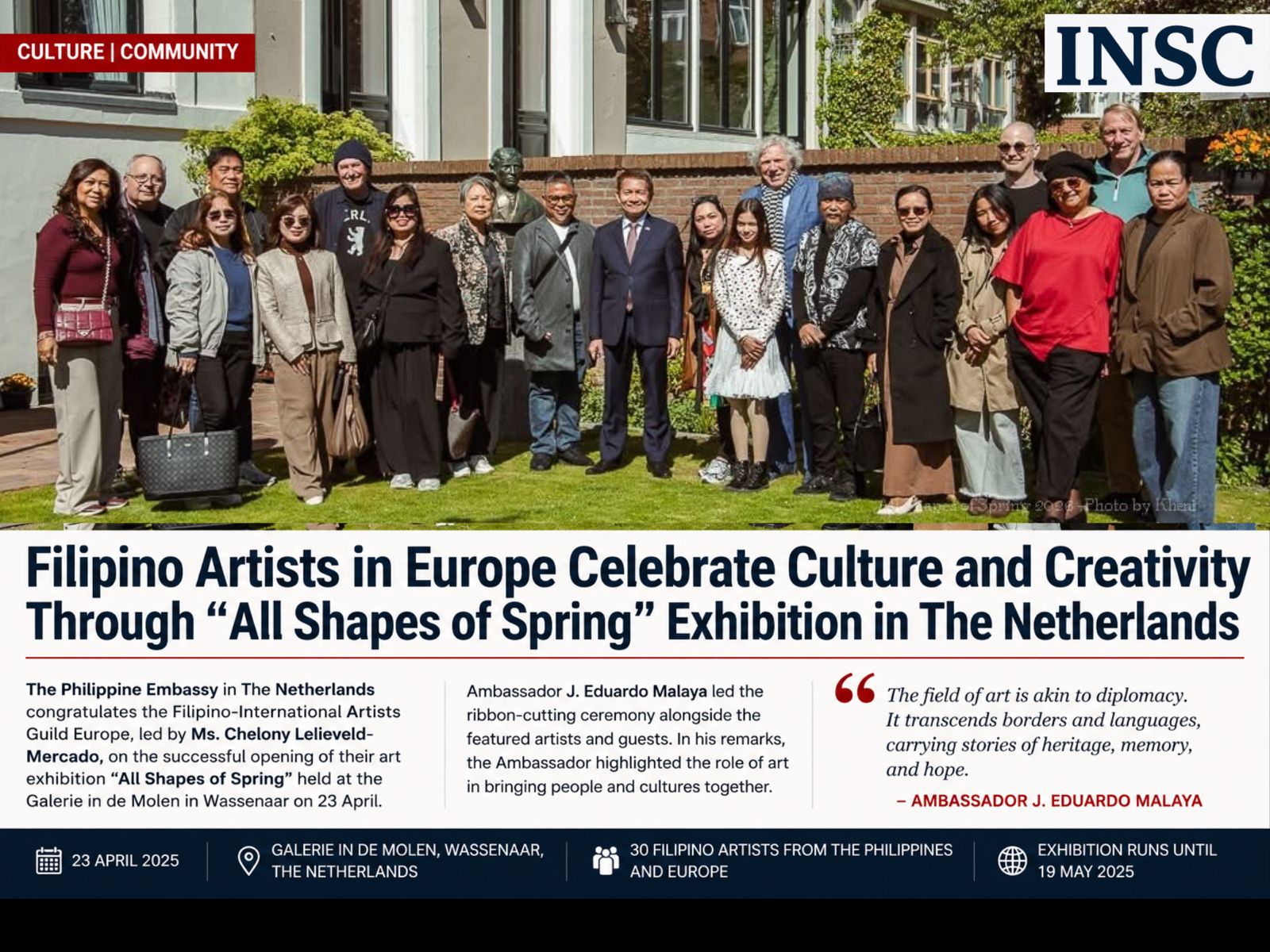
This powerful truth became evident during the opening of “All Shapes of Spring,” a remarkable international exhibition held at Galerie in de Molen in Wassenaar, The Netherlands. Organized by the Filipino-International Artists Guild Europe under the leadership of Filipina artist and cultural advocate Chelony Lelieveld-Mercado, the exhibition gathered Filipino artists from across Europe and the Philippines in a celebration of creativity, heritage, and international cultural dialogue.
More than an exhibition inspired by springtime, the event became a meaningful reflection of the growing global presence of Filipino artists and the enduring connection of overseas Filipinos to their roots and identity.
The opening ceremony was led by Philippine Ambassador J. Eduardo Malaya, who joined the featured artists during the ribbon-cutting ceremony alongside guests, supporters, members of the Filipino-Dutch community, and advocates of cultural exchange.
In his remarks, Ambassador Malaya emphasized the important role of art in diplomacy and people-to-people relations.
“The field of art is akin to diplomacy. It transcends borders and languages, carrying stories of heritage, memory, and hope.”
His statement perfectly captured the spirit of the exhibition.
For many Filipinos living abroad, artistic expression becomes more than personal passion. It becomes a form of cultural preservation. Living in another country often means balancing adaptation with remembrance—embracing new cultures while trying to remain connected to home. Through art, many overseas Filipinos continue carrying their heritage wherever they go.
As visitors explored the gallery, they encountered works that reflected diverse emotions and experiences. Some pieces embraced the optimism and renewal associated with spring, while others explored themes of migration, resilience, nostalgia, womanhood, healing, and identity.
Despite the diversity of artistic styles and mediums, the exhibition carried a unified emotional message: Filipino creativity continues to flourish beyond borders.
The exhibition featured artists from Germany, France, Belgium, The Netherlands, and the Philippines, including Brando Bati, Day Pajarillo, Art Lozano, Chelony Mercado, Mhaj Den Ouden, Vica Bon, Tere Bati, Carmie Perez, Andrei Solmirano, Jes Evangelista, Anton Quisimbing, Edna Babao, Michael Velasco, Ian Maigan, Candys Bati, Aurea Calanog, Myse Salonga, Tei Leonardo-Ampon, Maita Acevedo, Carmela Geisert, Liam Lardizabal, Bong Canuel, Kath Beredo, Jindra Lardizabal, Ma. Ronabee Pinquihan, RC Ampon, Rafie Lelieveld, Malou Orozco Suaverdez, Jovy Medalle, and Dorie Reyes Polo.
At the center of this initiative was Chelony Lelieveld-Mercado, whose efforts continue strengthening the visibility of Filipino artists in Europe. Beyond her own artistic achievements, Mercado has become an advocate for Filipino creatives abroad, creating opportunities for collaboration, cultural exchange, and international exposure.
Over the years, she has steadily built a respected presence within the European art scene through works that blend realism, portraiture, pop art influences, and Filipino-inspired themes. Her commitment to promoting Filipino artistry internationally reflects a growing movement among overseas Filipino creatives who are redefining representation through their work.
Her vision for “All Shapes of Spring” was rooted not only in artistic celebration, but also in cultural connection.
The exhibition was organized to celebrate the vibrance of spring in The Netherlands while showcasing the creativity and talent of Filipino visual artists from different parts of Europe and the Philippines.
What made the exhibition particularly meaningful was the atmosphere of unity it created.
Artists from different countries, backgrounds, and artistic styles came together not as competitors, but as storytellers carrying shared heritage. In many ways, the exhibition reflected the evolving journey of the Filipino diaspora itself—diverse in experience, yet connected by culture, resilience, and memory.
Among the featured artists, one presence that deeply resonated emotionally was Dorie Reyes Polo.
Based in Germany, Dorie Reyes Polo is internationally recognized as a poet, visual artist, cultural advocate, and former healthcare professional whose life story reflects healing, transformation, and resilience.
Her journey into literature and visual arts became even more powerful following her battle with breast cancer in 2019. Instead of allowing pain and illness to silence her, she transformed her experiences into poetry and artistic expression that now inspire audiences internationally.
There is something profoundly moving about artists who create from lived experience.
Dorie’s works carry emotional honesty shaped by survival, faith, courage, and healing. Her artistic voice reflects the quiet strength shared by many Filipinos abroad who continue rebuilding themselves while carrying responsibilities, memories, and cultural identity far from home.
As I reflected on the exhibition, I realized that events like this hold significance beyond artistic appreciation.
They remind us that Filipino artistry is evolving globally and gaining stronger recognition in international cultural spaces.
Today, Filipino artists are no longer merely participating in exhibitions abroad—they are organizing them, leading them, and shaping conversations through their work. They are becoming cultural ambassadors who introduce Filipino narratives, traditions, and perspectives to wider audiences around the world.
Art becomes their language of representation.
For many members of the Filipino diaspora, preserving identity while adapting to foreign environments can be emotionally complex. Distance from home can gradually weaken connection to language, traditions, and heritage. Yet through artistic expression, these connections remain alive.
Paintings become memory.
Colors become emotion.
Exhibitions become spaces of belonging.
This was perhaps the most beautiful aspect of “All Shapes of Spring.”
The exhibition carried sincerity and emotional authenticity. Every artwork seemed to speak not only of individual creativity, but also of collective identity and shared cultural pride.
The venue itself added symbolic beauty to the event.
Galerie in de Molen, the only gallery in The Netherlands housed inside a functioning flour mill, created a unique atmosphere where history and contemporary creativity naturally intersected. The historic European structure alongside Filipino artworks reflected the blending of worlds experienced daily by many overseas Filipinos.
Guests attending the exhibition were welcomed by gallery director Otto Altman, while artists, sponsors, supporters, and members of the Filipino-Dutch community gathered together in celebration of Filipino excellence abroad.
Throughout the gallery, conversations flowed naturally between artists, diplomats, visitors, and supporters. It became clear that the exhibition was not only about displaying paintings—it was about building relationships, cultural understanding, and shared appreciation through art.
This reflects one of the most important roles of cultural exhibitions today.
In a world increasingly shaped by political division and social uncertainty, art continues to create spaces where humanity can still connect peacefully and meaningfully. Through exhibitions like this, artists help build bridges between nations and communities.
As someone who continuously encounters stories of Filipino achievement around the world, moments like this inspire hope and pride.
Filipinos continue contributing globally not only through professional excellence, but also through creativity, compassion, leadership, and cultural representation.
Whether in healthcare, education, literature, diplomacy, entrepreneurship, or the arts, Filipinos abroad continue carrying with them the values deeply rooted in Filipino identity—resilience, warmth, adaptability, and humanity.
And perhaps this is the true beauty of Filipino artistry abroad:
even while embracing international influences, Filipino artists continue creating works that remain unmistakably rooted in heritage and emotional truth.
Long after the exhibition closes, its message will remain.
Filipino creativity knows no borders.
And through initiatives like “All Shapes of Spring,” Filipino artists continue proving that art can become one of the strongest bridges connecting cultures, nations, and humanity itself.