

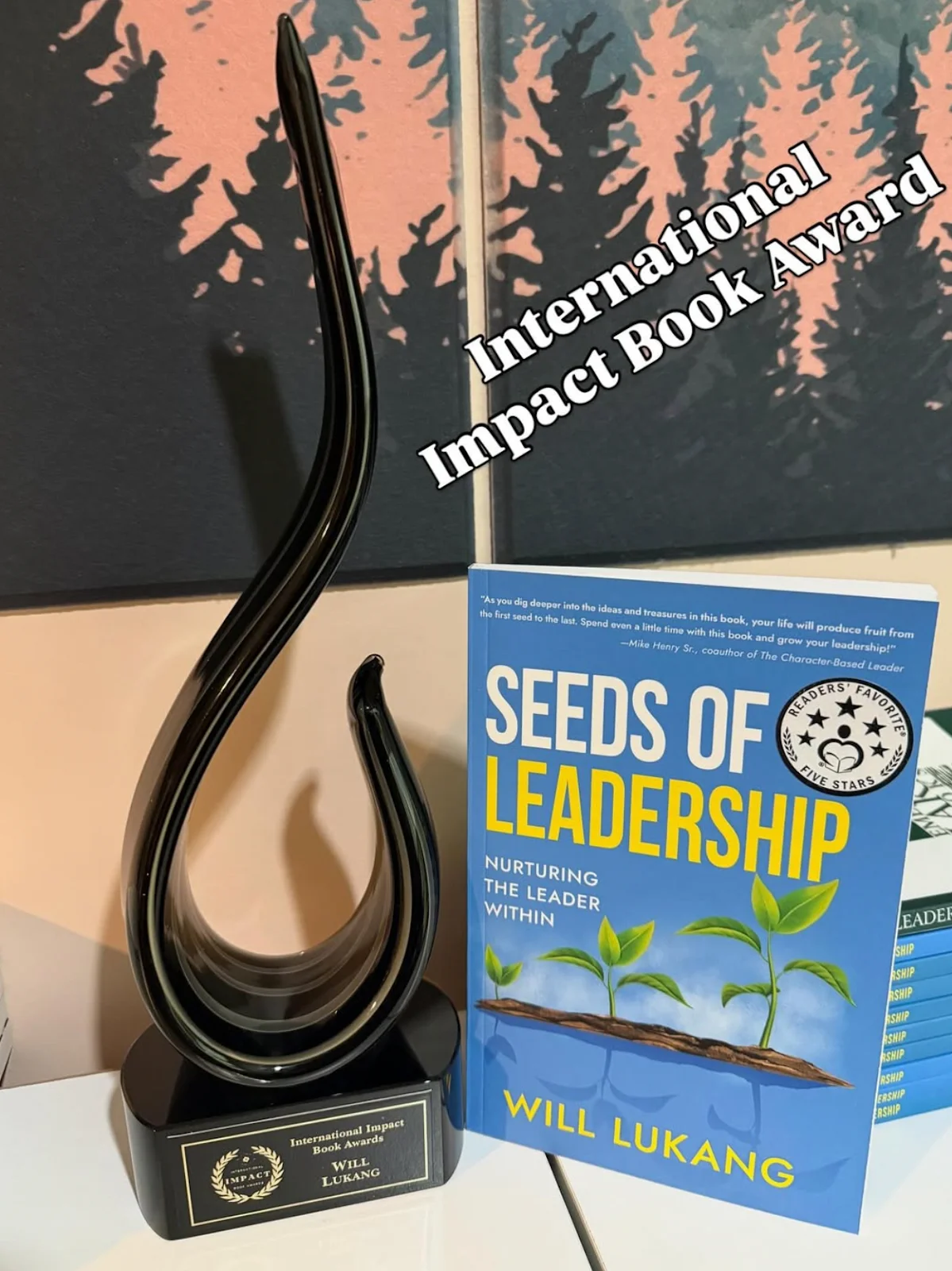
The path from personal struggle to leadership wisdom rarely follows a straight line, but for Will Lukang, each challenge became a stepping stone toward a deeper understanding of what it means to lead with authenticity and purpose. His acclaimed book “Seeds of Leadership: Nurturing the Leader Within” stands as testament to this transformative journey, weaving together intimate reflections on his upbringing, the obstacles he overcame, and the core values he embraced along the way. Rather than presenting leadership as a fixed style or predetermined set of characteristics, Lukang reframes it as what he calls “a dynamic attitude”—an evolving mindset that can be cultivated through intentional practice and continuous growth. This approach has resonated powerfully with readers and critics alike, earning the book the prestigious NABE Pinnacle Book Achievement Award Fall 2024, among its impressive collection of 15 literary awards. The Midwest Book Review praised it as “an ideal and unreservedly recommended pick for personal, professional, community, corporate, and college/university library Business Management collections,” while Readers’ Favorite celebrated it as “a leadership book that goes beyond the typical corporate jargon and delivers something far more meaningful—authenticity.” Literary Titan noted that “His book is not just a guide—it is an invitation to grow, lead, and inspire with intentionality and heart.” Through practical strategies for identifying unique leadership styles, communicating vision with clarity, navigating team dynamics, and fostering cultures of continuous improvement, Will Lukang has created what serves as both a personal development journey and a comprehensive toolkit for preparing the next generation of visionary leaders.
Q. The Midwest Book Review called your book “an ideal pick for MBA curriculum studies,” while Literary Titan described it as “an invitation to grow, lead, and inspire with intentionality and heart.” Your book provides practical strategies for identifying unique leadership styles, communicating vision with clarity, and navigating team dynamics. Can you walk us through how you structured the book to serve both academic study and real-world application, and what specific methodology you used to ensure readers can move from theory to tangible leadership impact?
Will Lukang. I developed my own framework called Story–Concept–Reflection. It begins with a short story to help the reader connect with the situation, transitions into the concept to provide depth and context, and concludes with a reflection that challenges the reader to apply what they’ve learned. By starting with a relatable story, expanding with insights, and closing with reflection, the framework creates both understanding and action.
Q. Readers’ Favorite praised your work for going “beyond typical corporate jargon” to deliver “something far more meaningful—authenticity.” Given that authenticity can be difficult to teach or quantify, how do you guide readers through the process of discovering and expressing their authentic leadership voice, particularly in corporate environments that often reward conformity over genuine self-expression?
Will Lukang. Authenticity is at the heart of Seeds of Leadership. I don’t present it as a checklist item or a corporate buzzword. Instead, I weave authenticity into the framework by starting with self-awareness, helping readers reflect on their values, experiences, and the “seeds” that shaped them. Through the stories in the book, I show that leadership isn’t about imitating someone else’s style; it’s about cultivating your own.
In environments that reward conformity, I encourage readers to first anchor themselves in what truly matters to them. From there, I introduce concepts and reflections that help them recognize the impact of showing up as their genuine selves, how authenticity builds trust, inspires loyalty, and drives stronger results. The exercises and reflections in the book challenge them to take small but intentional steps toward aligning who they are with how they lead.
Q. Your book emphasizes “preparing the next generation of leaders” as one of its core strategies. As someone who has transformed your own leadership journey through personal challenges and growth, what specific approaches do you recommend for current leaders to identify and develop emerging talent, especially those who may not fit traditional leadership profiles or come from underrepresented backgrounds?
Will Lukang. Leaders need to take a genuine interest in spotting talent. Developing an eye for talent starts with being intentional—spending time with your team, observing how they work, and engaging in genuine conversations. It’s about being mindful and purposeful in getting to know them beyond their job titles. Once you recognize the next generation of leaders, take action: if you have the skills to train and mentor them, invest in their growth yourself. If not, don’t hesitate to bring in others who can help them develop. The key is to ensure that potential doesn’t go unnoticed or unsupported.
Q. Your book emphasizes fostering “a culture of continuous improvement” as a key leadership strategy. Drawing from your years of C-suite experience and the practical examples throughout the book, what are the most common obstacles leaders face when trying to implement continuous improvement cultures, and how do the reflective exercises in your book help leaders overcome resistance to change within their organizations?
Will Lukang. A common challenge leaders face is not having enough time, as their plates are often too full. While that may be true, the solution usually comes down to priorities. By learning to prioritize and delegate effectively, leaders can create the breathing room they need. There’s a saying: you can’t pour from an empty cup. Leaders must invest in themselves first so they can add greater value to their people.
One practice I’ve found helpful is scheduling learning time directly into my calendar. When it’s booked, it gets done. When it isn’t, it’s easy to keep pushing it aside until it never happens. Being intentional with our time is the difference between growth and stagnation.
Q. You position the book as a roadmap for becoming “a visionary leader who inspires others and drives meaningful change.” Given that vision and inspiration are often seen as intangible leadership qualities, how do you help readers develop and communicate their vision with the clarity that the book promises, and what practical tools do you provide for measuring whether their leadership is truly driving meaningful change rather than just surface-level improvements?
Will Lukang. While vision and inspiration may feel intangible, they are powerful forces that drive leaders to be intentional in how they guide others. I use reflective questions to push leaders to think beyond the obvious and explore new ways to grow their people. At the end of the day, a leader’s true responsibility is to develop other leaders, and to succeed, that requires clarity, purpose, and intentional action.
Conclusion
Will Lukang’s “Seeds of Leadership” represents a profound shift from theoretical leadership concepts to deeply personal, experientially grounded wisdom that readers can immediately apply to their own leadership journeys. His decision to share his own vulnerabilities and challenges creates a powerful foundation of authenticity that sets his work apart in the crowded leadership development space. By reframing leadership as a dynamic attitude that can be nurtured through intentional practice, reflection, and service to others, Lukang offers readers not just another set of leadership principles but a transformative framework for becoming the kind of leaders the world desperately needs. The book’s impressive collection of literary awards, including the National Association of Book Entrepreneurs’ top honor in Leadership, validates what readers are discovering: that true leadership development happens when we have the courage to look inward, learn from our experiences, and commit to serving others with genuine authenticity and purpose.