

When your cruise ship docks at Civitavecchia, you’re standing at the doorstep of Rome—but with only 8 to 10 hours before you need to be back on board. The clock is ticking, the port is bustling, and suddenly that dream of tossing a coin in the Trevi Fountain feels impossibly far away.
Here’s the truth: most cruise passengers waste precious hours figuring out transportation instead of experiencing Italy. But it doesn’t have to be that way.
Understanding Civitavecchia’s golden position
Civitavecchia isn’t just another port town—it’s one of the busiest cruise terminals in the Mediterranean and your gateway to central Italy’s treasures. Located roughly 80 kilometers northwest of Rome, the port sees hundreds of thousands of passengers each year, all facing the same question: how do I maximize my limited time ashore?
The journey to Rome takes about an hour, which means you’re working with approximately 6-7 hours of actual sightseeing time once you factor in travel and the necessary buffer for returning to your ship. This time constraint makes transportation choice absolutely critical.
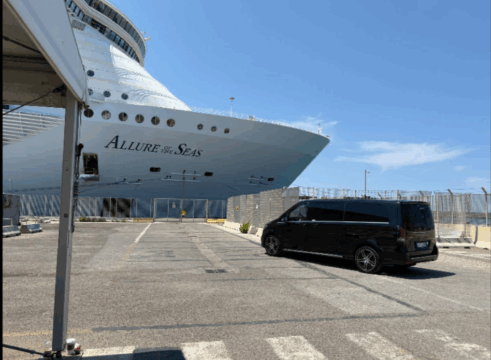
The transportation reality check
Let’s address the options honestly. Cruise line shuttle buses are reliable but rigid—you’re locked into their schedule, often sharing space with 50+ passengers, and you’ll likely spend time waiting at designated meeting points. The return trip can be equally frustrating when you’re watching the clock and hoping everyone shows up on time.
Public trains from Civitavecchia station to Rome run regularly, but here’s the catch: the station is about 700 meters from the cruise terminal, and schedules don’t always align perfectly with your ship’s docking times. You’ll also need to navigate Rome’s public transport system once you arrive, which eats into your precious sightseeing hours.
For cruise passengers who value flexibility and time efficiency, private Civitavecchia transfer services have become increasingly popular. With fixed rates and English-speaking drivers familiar with ship schedules, they eliminate transportation anxiety while giving you control over your itinerary.
What you can actually accomplish in one day
The Rome essential experience (6-7 hours)
If this is your first time in Rome, you can hit the major highlights with smart planning. Start early—aim to leave the port by 8:00 AM. Your ideal route: Colosseum and Roman Forum (book skip-the-line tickets in advance), then work your way through Piazza Venezia to the Trevi Fountain, Pantheon, and Piazza Navona. If time permits, add the Spanish Steps or a quick visit to Vatican City’s St. Peter’s Square.
The key is clustering attractions geographically. The historic center from the Colosseum to Piazza Navona is surprisingly walkable, and having a driver who can drop you at optimal points and adjust pickup locations saves enormous time.
The alternative route: beyond the obvious
Not your first Rome rodeo? Consider Tivoli, just 30 minutes from Civitavecchia. Villa d’Este’s Renaissance gardens and Villa Adriana (Hadrian’s Villa) offer spectacular experiences with fewer crowds than central Rome. You’ll have time to actually breathe and enjoy a leisurely lunch in a local trattoria.
Wine lovers might explore the Castelli Romani region, where volcanic hills produce excellent white wines. Towns like Frascati and Castel Gandolfo (the Pope’s summer residence) offer authentic Italian experiences without the tourist intensity of Rome.
For history buffs seeking something unique, Tarquinia’s Etruscan necropolis—a UNESCO World Heritage site—is remarkably close to Civitavecchia and rarely crowded. The painted tombs date back to the 7th century BC and offer an entirely different perspective on ancient Italy.
Insider strategies for success
Timing is everything
Book any skip-the-line tickets or reservations at least two weeks in advance. Popular sites like the Colosseum can sell out, and you cannot afford to waste an hour standing in line. Set your phone to ship time and build in a comfortable buffer—most experts recommend being back at the port at least 90 minutes before all-aboard time.
Travel light, travel smart
Bring only a small backpack with essentials: water, sunscreen, comfortable walking shoes, a portable phone charger, and your ship card. Leave valuables on board. Download offline maps (Google Maps allows this) in case you lose signal. Screenshot your ship’s contact information and your transportation details.
The communication lifeline
If you’re exploring independently, get an Italian SIM card or activate international data. Apps like Google Translate, Citymapper (for Rome public transport), and WhatsApp are invaluable. Share your itinerary with someone on the ship and keep your transportation provider’s contact information readily accessible.
When you have very little time
Sometimes port delays or late arrivals leave you with only 3-4 hours. Don’t despair—Civitavecchia itself offers worthwhile experiences. The Forte Michelangelo, a 16th-century fortress designed by Bramante, sits right at the port entrance. The Terme Taurine, ancient Roman baths, are just a few kilometers away. The town’s historic center has charming cafés and authentic restaurants where you can enjoy a leisurely Italian lunch without the stress of long-distance travel.
The lungomare (seafront promenade) offers pleasant walking with views of the Tyrrhenian Sea. It’s not Rome, but it’s genuinely Italian and completely stress-free.
The bottom line
Your Civitavecchia port stop can be either a logistical headache or a highlight of your cruise—the difference lies entirely in planning. Decide what matters most to you: checking off Rome’s major sites, diving deep into one specific interest, or simply enjoying authentic Italian atmosphere without rushing.
Research your options thoroughly, book essentials in advance, and choose transportation that aligns with your priorities and comfort level. Fixed-rate private transfers offer predictability and flexibility; shuttle buses provide budget-friendly reliability; trains give you authentic local experience with more uncertainty.
The cruise ship will sail with or without your stress. But the memories you create in those precious hours ashore—whether standing in awe before the Colosseum, sipping wine in a hillside village, or simply savoring the perfect carbonara—those stay with you forever.
Make them count.