

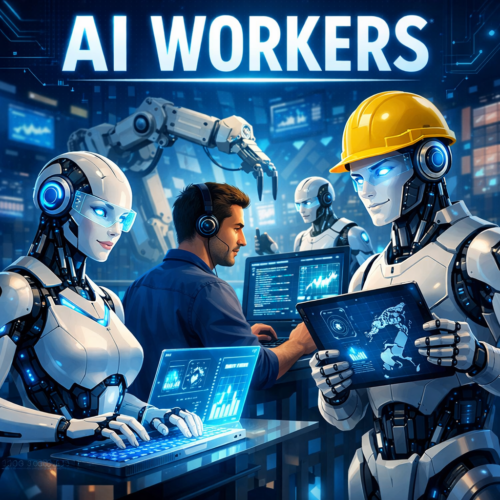
The concept of an AI worker is not a far-off idea anymore. As artificial intelligence continues to evolve at a rapid pace, AI workers are becoming an integral part of businesses and industries worldwide. From virtual assistants handling simple tasks to full-time AI employees performing complex roles, the impact of AI in the workforce is undeniable. In this article, we’ll explore how AI workers are transforming industries, the benefits they bring, and the challenges they pose.
The Growth of AI Workers: A New Era of Employment
The rise of AI has opened doors to numerous possibilities, especially in the realm of automation. AI workers, once limited to chatbots and virtual assistants, are now taking on a variety of roles across different industries. With the development of machine learning, natural language processing, and other advanced AI technologies, AI workers can now perform tasks that were previously thought to be reserved for humans.
In the early stages, AI workers were predominantly used in customer service, primarily as virtual assistants or chatbots. These AI systems were designed to handle basic queries, schedule appointments, and manage calendars. While these tasks were once handled by humans, AI workers could perform them more efficiently and accurately, leading to the widespread adoption of AI in businesses of all sizes.
However, as AI technology progressed, so did the roles of these workers. AI workers are now involved in more complex tasks such as data analysis, decision-making, and even content creation. Their ability to analyze vast amounts of data in real-time, draw insights, and make decisions based on algorithms has made them valuable assets in fields like marketing, finance, healthcare, and logistics.
AI Workers in the Workplace: Transforming Business Operations
One of the most significant ways AI workers are changing the workforce is by automating repetitive and time-consuming tasks. By handling these routine tasks, AI workers allow human employees to focus on more strategic and creative aspects of their jobs. For example, AI can automatically generate reports, analyze market trends, or optimize supply chain processes, allowing businesses to operate more efficiently.
In marketing, AI workers are being used to personalize customer experiences, predict buying behaviors, and optimize advertising campaigns. By processing large datasets and identifying patterns, AI can help businesses tailor their messaging to specific audiences, increasing the likelihood of conversions and customer retention.
In healthcare, AI workers are assisting in the diagnosis and treatment of patients. Machine learning algorithms are capable of analyzing medical images, identifying potential issues, and suggesting treatments based on historical data. This technology has the potential to revolutionize healthcare by improving accuracy, reducing human error, and speeding up decision-making.
The logistics industry is also seeing the benefits of AI workers. Automated systems powered by AI are now handling everything from inventory management to route optimization for delivery vehicles. These AI-powered systems can analyze real-time data, predict delays, and suggest alternative routes to ensure timely deliveries, ultimately saving businesses time and money.
The Benefits of AI Workers: Efficiency and Cost Savings
The benefits of incorporating AI workers into the workforce are numerous. For businesses, AI workers provide a significant increase in efficiency, allowing companies to streamline operations and reduce overhead costs. AI systems are capable of working around the clock without the need for breaks, making them ideal for tasks that require constant monitoring or repetitive actions.
In addition to efficiency, AI workers can help businesses cut costs by reducing the need for human labor in specific roles. For example, in industries like customer service and support, AI workers can handle a large volume of inquiries without the need for human intervention. This not only reduces staffing costs but also ensures that customers receive timely responses to their questions, improving overall satisfaction.
AI workers also offer a level of scalability that human workers cannot match. As businesses grow, they often need to expand their workforce to meet demand. With AI workers, businesses can scale their operations quickly without the need for additional human employees. This flexibility is especially valuable for startups and small businesses that may not have the resources to hire and train a large team.
The Challenges of Integrating AI Workers
While the benefits of AI workers are clear, there are also challenges associated with their integration into the workforce. One of the primary concerns is the potential for job displacement. As AI systems take on more roles traditionally performed by humans, there is a fear that automation will lead to widespread unemployment. This concern is particularly prevalent in industries like manufacturing and customer service, where AI workers are replacing human employees at an alarming rate.
Another challenge is the ethical considerations surrounding the use of AI workers. As AI technology becomes more advanced, there are questions about accountability and transparency. For example, if an AI system makes a mistake in a decision-making process, who is responsible? Is it the company that implemented the AI, or is the fault with the AI itself? These are questions that need to be addressed as AI workers become more prevalent in the workplace.
There is also the issue of bias in AI systems. AI workers are trained on data, and if that data is biased, the AI’s decisions may reflect those biases. For example, if an AI system used for hiring is trained on data that favors one gender or ethnicity over another, the AI may unintentionally discriminate against certain groups of people. Ensuring that AI systems are free from bias is crucial to their successful integration into the workforce.
AI Workers in the Future: What Lies Ahead?
As AI technology continues to evolve, the role of AI workers is likely to expand even further. One area where AI workers are expected to play a larger role is in creative industries. AI is already being used to generate music, write articles, and even create artwork. In the future, AI workers could assist in content creation on a larger scale, helping businesses produce high-quality content more efficiently.
AI workers may also play a significant role in education. As the demand for online learning continues to rise, AI-powered tutors and teaching assistants could help students learn at their own pace. These AI workers could provide personalized feedback, answer questions, and even grade assignments, making education more accessible to people around the world.
The integration of AI workers in the workplace will also lead to the creation of new roles. As AI takes on more tasks, human employees will need to focus on managing and overseeing AI systems. There will be a demand for people who can train, monitor, and fine-tune AI systems to ensure they are functioning as intended.
Embracing the Future: Preparing for an AI-Driven Workforce
The rise of AI workers is not a trend but a permanent shift in the way we work. Businesses must prepare for this change by investing in AI technologies, training their employees to work alongside AI systems, and addressing the challenges that come with automation. By embracing AI workers, companies can unlock new opportunities for growth and efficiency while ensuring that their workforce remains competitive in an increasingly automated world.
In the future, AI workers will continue to play an essential role in shaping industries, from healthcare to entertainment and beyond. As technology advances, these AI workers will become even more sophisticated, taking on even more complex tasks that were once reserved for humans. The key to success in this AI-driven future will be finding the right balance between human creativity and AI efficiency.
The expanding role of AI workers is a sign of the times. As businesses continue to integrate AI into their operations, the workforce will undergo a transformation that promises greater efficiency, innovation, and opportunities for growth. The journey ahead will be exciting, and those who embrace AI will be at the forefront of this new era of work.