

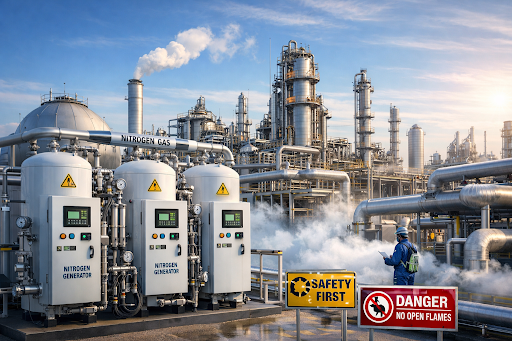
The chemical industry relies on precision, efficiency, and safety at every stage of production. One critical component that often goes unnoticed but plays a vital role is the supply of nitrogen. Nitrogen is an inert gas that prevents unwanted chemical reactions, protects sensitive equipment, and maintains product quality. Traditionally, industries have relied on bulk nitrogen cylinders or liquid nitrogen tanks, but modern advances have made on-site nitrogen generation a preferred solution. High-efficiency nitrogen generators for chemical industry applications are transforming operations by offering consistent supply, cost savings, and enhanced safety.
The Role of Nitrogen in Chemical Manufacturing
Nitrogen serves multiple purposes in chemical manufacturing. It acts as a blanketing agent to prevent oxidation, reduces fire and explosion risks by creating an inert atmosphere, and is used in purging and stripping processes to remove oxygen and other reactive gases. In sensitive chemical reactions, even a small amount of oxygen can compromise product quality or lead to hazardous conditions. Therefore, a reliable nitrogen supply is not just a convenience but a necessity.
Nitrogen generators for chemical industry operations provide a continuous flow of high-purity nitrogen, eliminating the uncertainty associated with deliveries of compressed or liquid nitrogen. With production rates tailored to the specific needs of a facility, these generators ensure that chemical processes run smoothly and consistently.
How Nitrogen Generators Work
Modern nitrogen generators use advanced separation technologies to extract nitrogen from ambient air. The two most common methods are Pressure Swing Adsorption (PSA) and membrane separation. PSA systems rely on molecular sieves to selectively absorb oxygen and other trace gases, leaving nitrogen with purities ranging from 95% to 99.999%. Membrane systems use selective permeable fibers that allow oxygen to pass through while retaining nitrogen.
Choosing the right technology depends on factors such as required purity, flow rate, and energy efficiency. For many chemical industry applications, high-purity PSA systems are preferred for processes that require near-zero oxygen levels. Membrane systems, on the other hand, are ideal for applications where moderate purity is sufficient and space constraints exist.
Benefits of On-Site Nitrogen Generation
Switching from delivered nitrogen to on-site generation offers multiple advantages for chemical manufacturers. First, it reduces operational costs by eliminating recurring cylinder rental and delivery charges. Facilities can produce nitrogen on demand, avoiding the need for storage tanks and minimizing the risks associated with handling high-pressure gas cylinders.
Second, on-site nitrogen generation enhances safety. Compressed and liquid nitrogen pose significant hazards, including asphyxiation and cold burns. By producing nitrogen on-site, companies can control flow rates and pressure, reducing exposure risks for workers and minimizing emergency incidents. Additionally, uninterrupted nitrogen supply ensures that critical chemical processes are not halted, which could otherwise result in safety or quality issues.
Third, these systems contribute to sustainability. Generating nitrogen on-site reduces the carbon footprint associated with transportation of cylinders and liquid nitrogen, while optimized systems consume less energy than traditional methods. Many high-efficiency generators are designed with intelligent controls that adjust production according to demand, further improving energy efficiency.
Selecting the Right Nitrogen Generator
When evaluating nitrogen generators for chemical industry operations, several factors must be considered. Purity requirements are paramount. While some applications only require 95% nitrogen, others, such as sensitive reactions or pharmaceutical intermediates, demand purities above 99.99%. Flow rate is another critical consideration, as the system must meet peak production demands without interruptions.
Reliability and maintenance are equally important. Chemical plants cannot afford downtime caused by nitrogen shortages or equipment failure. High-quality generators often come with features such as automatic monitoring, remote diagnostics, and modular designs that simplify maintenance and reduce downtime. Ease of integration with existing plant infrastructure is also crucial, as some processes require nitrogen to be delivered at specific pressures or temperatures.
Finally, cost-effectiveness should be assessed not just in terms of upfront investment but also long-term operational savings. While a high-efficiency nitrogen generator may have a higher initial cost than cylinder deliveries, the reduction in ongoing expenses, combined with enhanced safety and reliability, usually results in a faster return on investment.
Applications Across the Chemical Industry
Nitrogen generators are versatile and find use in a wide range of chemical industry applications. They are commonly used for blanketing flammable liquids in storage tanks, preventing oxidation of reactive chemicals, and purging pipelines and reactors. In polymer production, nitrogen ensures that sensitive processes remain stable and free from contamination. Pharmaceutical manufacturing also benefits from nitrogen generators, as they provide an inert atmosphere for active pharmaceutical ingredients and reduce the risk of unwanted reactions.
Another notable application is in analytical chemistry and laboratory environments. Nitrogen is essential in chromatography, mass spectrometry, and other high-precision analytical techniques. On-site generators provide a cost-effective and consistent source of nitrogen, allowing laboratories to operate without the interruptions or delays associated with cylinder deliveries.
Optimizing Production with Smart Technology
Modern nitrogen generators are not just standalone units; they are often equipped with smart technology that enhances their performance. Intelligent control systems can adjust nitrogen production based on real-time demand, ensuring that no energy is wasted and that supply always matches consumption. Advanced monitoring allows plant operators to track purity levels, flow rates, and system performance remotely, making preventive maintenance more efficient and minimizing the risk of unplanned downtime.
Some systems are designed to integrate seamlessly with plant automation software, enabling predictive analytics and optimization of chemical processes. By monitoring nitrogen usage patterns and identifying inefficiencies, companies can reduce operational costs and improve overall productivity. This digital approach also aligns with the chemical industry’s broader trend toward smart manufacturing and Industry 4.0 initiatives.
Safety Considerations and Best Practices
While nitrogen generators enhance safety compared to traditional nitrogen supply methods, proper precautions are still essential. Facilities must ensure adequate ventilation, especially in confined spaces, to prevent asphyxiation risks. Monitoring oxygen levels in areas where nitrogen is used is critical, and emergency protocols should be in place in case of leaks or equipment failure.
Routine maintenance and inspection of nitrogen generators are also vital for safe operation. Filters, valves, and molecular sieves should be checked according to manufacturer guidelines, and any worn or damaged components replaced promptly. Staff training is equally important, ensuring that operators understand the system’s functionality, potential hazards, and emergency response procedures.
By following best practices, chemical manufacturers can fully leverage the benefits of nitrogen generators for chemical industry processes while maintaining a safe and compliant working environment.
Economic and Environmental Impact
Investing in high-efficiency nitrogen generators has both economic and environmental benefits. From an economic perspective, on-site generation eliminates cylinder rental fees, reduces transportation costs, and lowers the risk of production downtime. Over time, these savings can outweigh the initial investment in the equipment, making it a financially sound decision.
Environmentally, producing nitrogen on-site reduces carbon emissions associated with cylinder transport and minimizes waste from used cylinders. Energy-efficient generators further decrease the plant’s overall energy consumption, contributing to sustainability goals. As regulatory pressures and environmental awareness continue to grow, adopting greener technologies like nitrogen generators helps chemical companies demonstrate responsibility and align with global sustainability standards.
The Future of Nitrogen Use in the Chemical Industry
The demand for nitrogen in the chemical industry is unlikely to diminish, given its essential role in production and safety. However, trends indicate a shift toward smarter, more efficient, and environmentally conscious methods of supply. High-efficiency nitrogen generators will continue to play a pivotal role, offering flexibility, reliability, and cost savings while supporting sustainable manufacturing practices.
As technology advances, generators are expected to become even more compact, energy-efficient, and integrated with digital plant management systems. This evolution will enable chemical plants to respond dynamically to changing production needs, reduce operational risks, and maintain high product quality standards. Facilities that invest in these systems now are positioning themselves for long-term competitiveness and resilience in an increasingly complex industry.
Elevating Chemical Operations with Reliable Nitrogen Supply
Nitrogen generators for chemical industry applications are more than just equipment; they are strategic tools that optimize production, enhance safety, and support sustainable operations. By delivering a continuous, high-purity nitrogen supply, these systems minimize downtime, protect workers and products, and reduce costs associated with traditional nitrogen sourcing. With intelligent controls, scalable designs, and efficient technologies, high-efficiency nitrogen generators are shaping the future of chemical manufacturing.
For chemical manufacturers seeking to improve operational reliability, safety, and efficiency, investing in modern nitrogen generation solutions offers a clear advantage. Not only do these systems meet the immediate needs of production, but they also provide a foundation for innovation, sustainability, and long-term success in a highly competitive industry.